
There are many ancient ruins around the island of Cyprus. Some are well-known, while others may not receive much attention. The Sanctuary of Aphrodite Kouklia may belong to such. Many travelers and tourists may wonder if the site is worth visiting. The following paragraphs will show that the village of Kouklia, where the sanctuary lies, is a crucial mythical place and the actual birthplace of the Goddess Aphrodite. I will show you what the place looks like right now and whether it really deserves a spot on your Cyprus itinerary.
What Is the Sanctuary of Aphrodite in Kouklia?
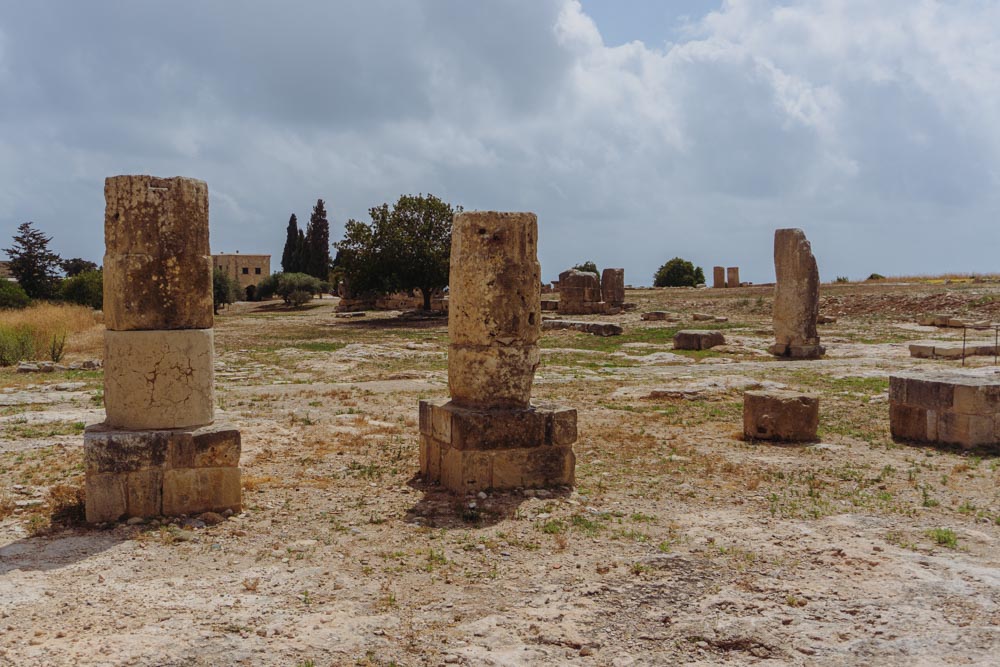
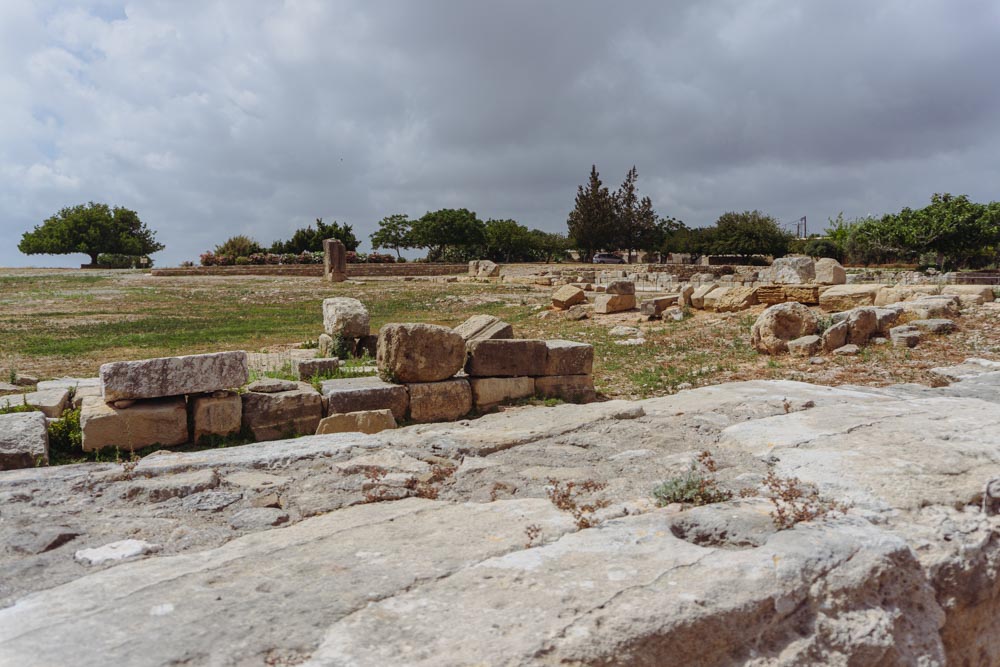
The Sanctuary of Aphrodite Kouklia is not a monumental temple but rather a site with ruins and foundations, along with a small museum. Those travelers who are more slow-paced and who are looking for a shorter day trip (from Paphos or Limassol) and a place with a peaceful atmosphere might be attracted to it.
Connection to ancient Palaipafos
The sanctuary was part of the ancient town of Palaipafos. Now this ancient town is part of the village of Kouklia. The site is linked to the ancient cult of the Great Goddess. The Goddess was associated with fertility and worshipped since the Neolithic period. The first people to adopt this worldview were the Mycenaean Greeks in the 12th century. And, in honor of that Goddess, they decided to build a sanctuary. Different sources mention different names of the first founders. Some state it was Kinyras, the local king, and another one mentions Agapenor from Greece.
The city of Palaipafos remained a cultural and religious center until the 4th century BC, when the last King of Palaipafos, Nikokles, decided to move the capital to Nea Pafos.
All religious and cultural activities ceased in the 4th century A.D., when Christianity began to spread across the whole island.
Later, during the Middle Ages, the town was renamed Couvouclia and once again became important. The Royals decided to use it as an administration center primarily for the sugar-cane plantations and refineries in the Pafos area.
The Myth of Aphrodite and Her Origins
According to myths, Goddess Aphrodite was born from the sea foam. She is a symbol of love, beauty, and fertility. Part of her glory is that she emerged from the chaos. Some might say that she was by underworld forces.
The link between Petra tou Romiou and the sanctuary
The exact place of her birth is at the nearby rock Petra tou Romiou, or the Rock of Aphrodite. It is a dramatic coastal area where one can observe powerful waves crashing onto the shore, creating lines of foam.
Today, many people and island visitors tend to visit the rock, but in ancient times, visiting the sanctuary was also part of the journey. Ancient pilgrims believed that visiting the refuge would bring them love, protection, and fertility blessings.
What You Can See Today
Great Latin and Greek authors such as Homer mention the sanctuary of Aphrodite Kouklia in their writings. Such mentions support the idea that it was a very prominent place with historical significance. I have already mentioned some historical details in the beginning.
But if we look at it as a piece of architecture, although now mostly ruins, there are two main groups of buildings:
Sanctuary I (Southern Shrine)
- Built during the Late Bronze Age.
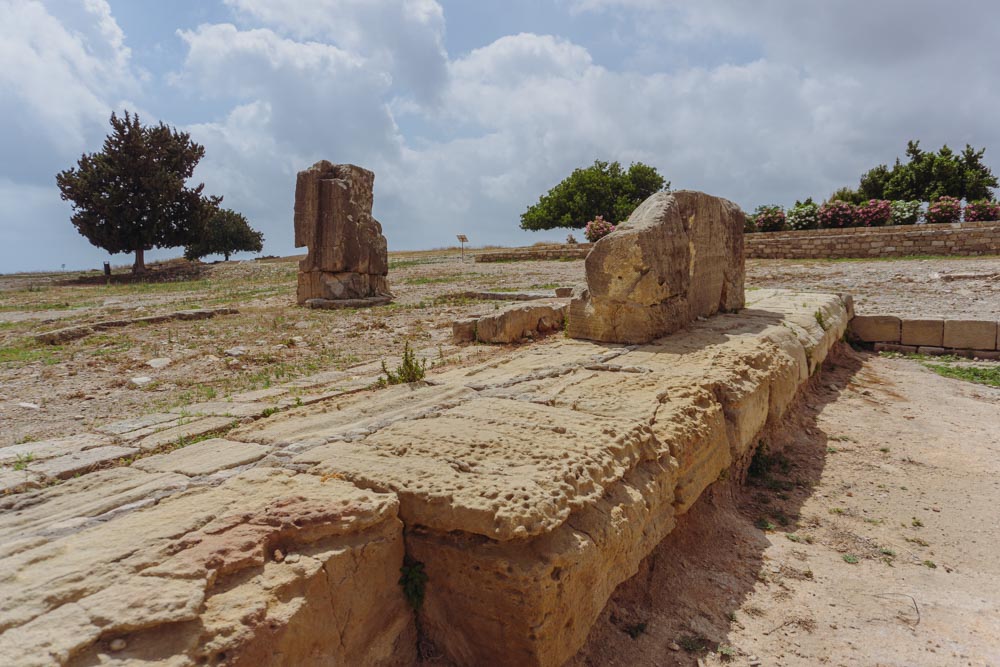
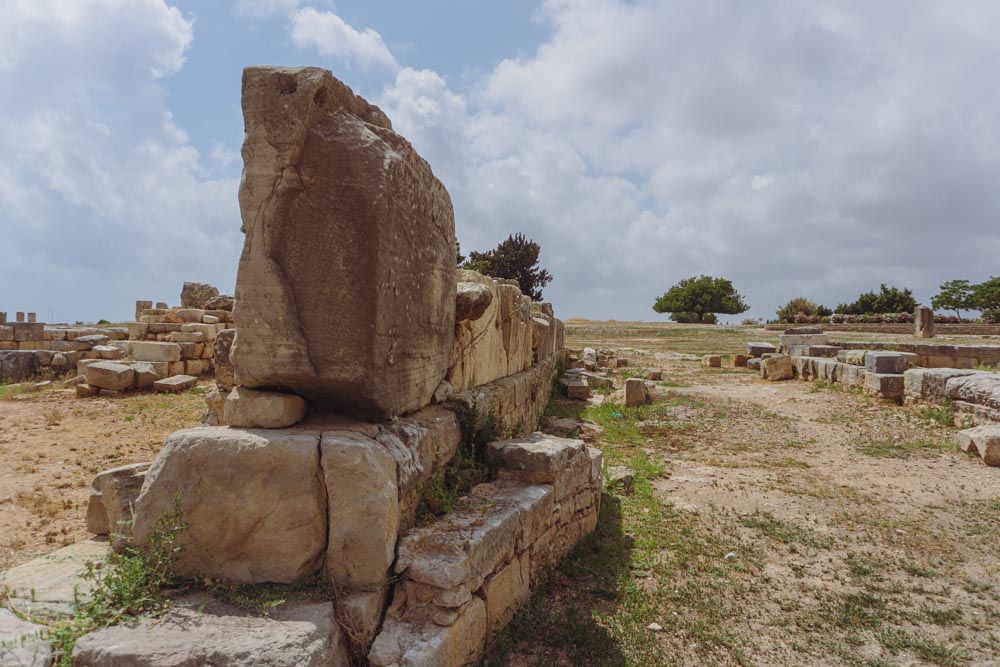
- Features an open courtyard (temenos) enclosed by a monumental limestone wall.
- The western and part of the southern walls are still preserved.
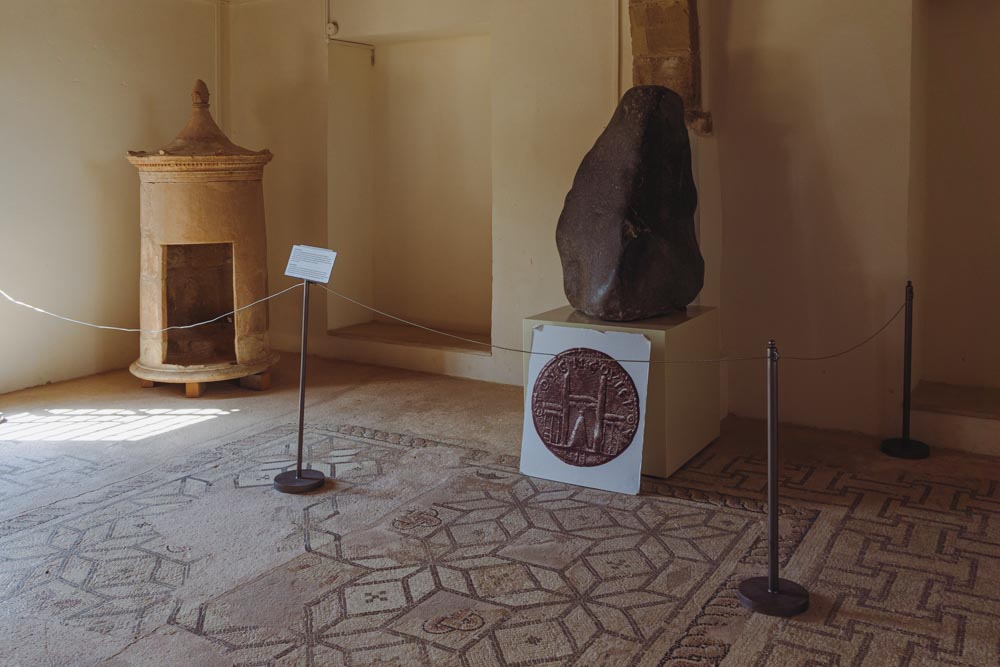
- Includes a hall containing a conical baetyl, symbolizing the power of the Great Goddess.
Sanctuary II (Roman Shrine, Northern)
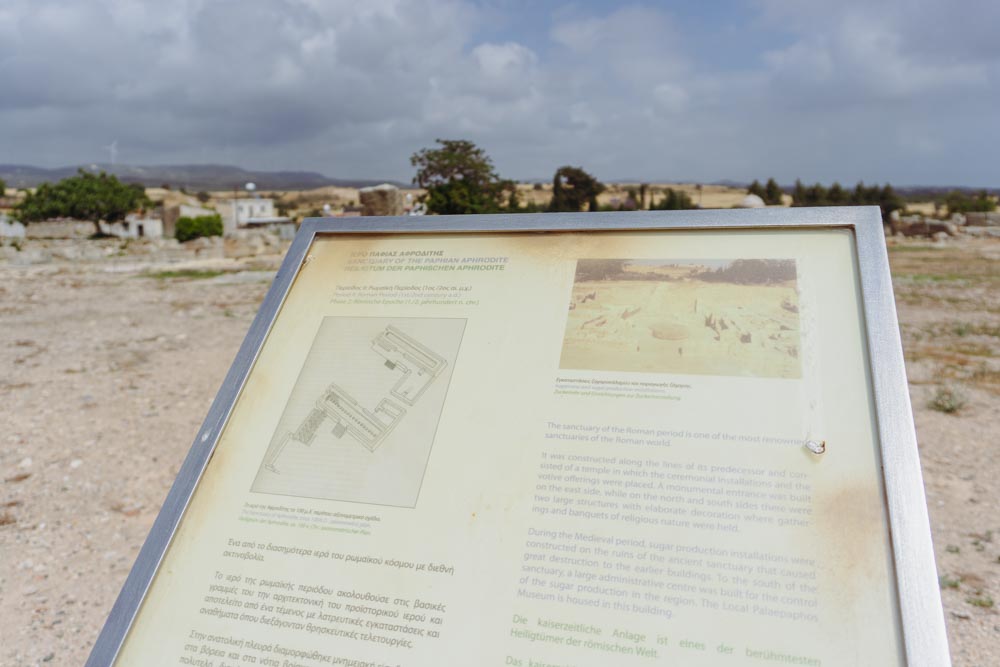
- Constructed at the end of the 1st or beginning of the 2nd century A.D.
- The conical baetyl was also present here, continuing the sacred tradition.
- The new Roman structures enclose a large open courtyard on the south, east, and north sides.
Why the Sanctuary Was Unique in the Ancient World
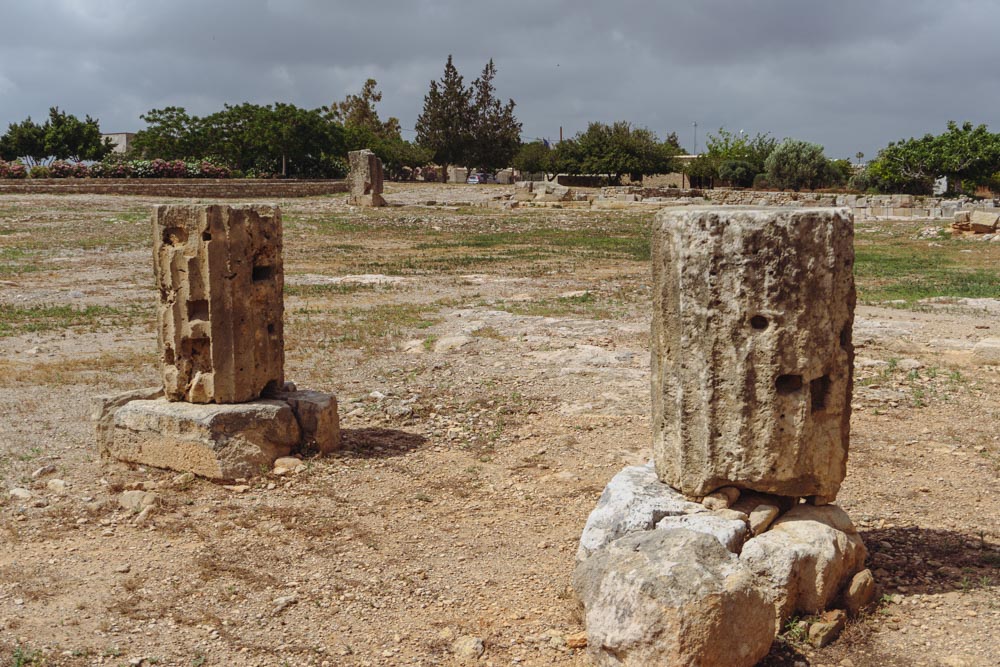
The place was important for worshippers. But they were not gathering around a statue. Those people living and/or visiting Palaipafos are aniconic. That means they were not using statues to represent their Goddess. They placed a sacred stone on the altar and called it a baetyl.
It is also essential to state that the rituals were blood-free. Only perfumes, incense, libations (honey, oil), flowers, fruit, or painted figurines were present. The sources state that “her altar was never wet with blood.”
What is baetyl
Ancient cultures used a baetyl, a sacred stone, in their religious worship. It was often conical or cylindrical, sometimes unworked or carved. If we look at the etymology, the word derives from the Greek baetylus/baitylos (βαίτυλος), which is in turn derived from the Semitic term bytʾl, meaning “beth-el” or “house of god”. People use this Semitic term to refer to open-air sanctuaries.
Origins / Early Use
- Used since the Bronze Age in the Eastern Mediterranean and Near East.
- Found in Mesopotamia, Phoenicia, and Greece, often in sanctuaries before people built temples.
You can find other, more well-known examples of such stones in Petra, Jordan, where they are associated with the Nabataean deities.
Sanctuary of Aphrodite Kouklia Festivals
Not only were individual people coming to do a quiet worship of their beloved deity. As people often gather, even the Sanctuary of Aphrodite Kouklia becomes a vital meeting point for many. There are mentions of a spring festival, Afrodisia, which attracted people from across the island in those ancient times. It’s supposed to happen annually and last for 4 days.
People head to the shrine, where you can witness them reading poetry, playing music, and participating in athletic contests. Meanwhile, the priests were doing their oracles.
Some ancient traditions are still celebrated in Kouklia
- Spring Flower Festival (Anthistiria) – takes place in spring, celebrating nature and renewal.
- Flood Festival (Kataklysmos)– held in June, commemorating Aphrodite’s mythical birth. Attendees plunge into the sea as a symbolic remembrance of the Goddess emerging from the waves at Petra tou Romiou.
Visiting the Sanctuary of Aphrodite Today
You can visit the place by car or bus. If you want to combine the visit with other nearby areas, the best option would be to rent a car.
From Paphos
- Distance: ~25 km (about 30 minutes).
- Take the B6 road southeast toward Kouklia.
- Parking is available near the sanctuary.
From Limassol
- Distance: ~70 km (about 1 hour).
- Take the A6 motorway west toward Paphos, then follow signs for Kouklia/B6.
By Bus:
From Paphos
Local buses run from the central bus station (Karavela) in Paphos to Kouklia several times per day. For example, bus n. 630 (Monday – Saturday from Karavela: 06:30, 09.30, 14:30). And also from Harbour station there is a bus n. 631 that ends at Petra tou Romiou, and it runs more often (From Harbour: Monday – Saturday: 07:25, 09:15, 10:40, 14:20, 15:40, 16:00, 17:30, 18:40, 22:35). One-way ticket costs 2 EUR.
Check the latest Paphos bus departure schedules.
From Limassol
Direct bus routes are limited; they usually require a connection in Paphos. You need to take the intercity bus from Limassol to Paphos, then change for the buses mentioned above. The Inercity bus takes approximately 1 hour & 15 minutes and costs 5 EUR one-way.
Tickets are inexpensive, but travel time is longer than by car.
Opening hours, ticket prices, practical tips
The Sanctuary of Aphrodite Kouklia is part of the Archaeological Site of Palaepaphos, which is open Tuesday to Sunday, 8.30 – 17.00; Monday: Closed. The price is 4,50 and includes entry to the Local Museum of Palaipafos.
Tips for Travelers
The archaeological site isn’t huge, and you can see it in a couple of hours. It all depends on how much you want to spend photographing or reading (or watching) all the available materials in the museum.
You can easily combine your visit to the Sanctuary of Aphrodite with several nearby attractions:
- Kouklia-Stavros Medieval Sugar Mill – explore the remnants of Cyprus’s sugar production history.
- Ancient Olive Factory– a fascinating glimpse into traditional Cypriot olive oil making.
- Mandria Village– charming village with interesting murals and local character.
- Asprokremmos Dam– enjoy scenic views and nature walks.
- Abandoned Villages– discover the ruins of Foinikas (Templar Knights’ village) and Souskiou.
- And of course, don’t miss the legendary Petra tou Romiou (Rock of Aphrodite), the mythical birthplace of the Goddess.
Safety and weather tips
Consider visiting early in the morning or late afternoon for cooler weather and better light for photography.
The best time to visit is spring (March–May) or autumn (September–October), when temperatures are mild, and crowds are lighter. Summers (June–August) can be hot and sunny, so bring sunscreen, a hat, and plenty of water. However, there is a museum and some shelters available in case you want to hide from the sun. Winters are mild but may be rainy or windy, so pack a light jacket.
Is the Sanctuary Worth Visiting? (My Experience)
I spent about two hours at the archaeological site and also took a short walk around the village. The place isn’t as grand as Ancient Kourion, but you may still encounter a few other tourists. It has a lovely, peaceful atmosphere with a subtle romantic vibe.
The Church of Panagia Katholiki, right next to the sanctuary, creates an interesting intersection between ancient and modern times. Occasionally, music from the nearby Liopetro Venue drifts in, adding an unexpected layer to the experience. At first, I thought it was just neighbors playing their music loudly, but it actually makes the atmosphere feel even more immersive.
FAQ
Yes. The sanctuary is the main feature of the Kouklia Archaeological Site, which also includes ruins from the ancient city of Palaipafos, Roman buildings, and a small museum.
The sanctuary dates back to the Late Bronze Age (around 12th century BC). Builders added the Roman shrine (Sanctuary II) around the 1st–2nd century A.D.
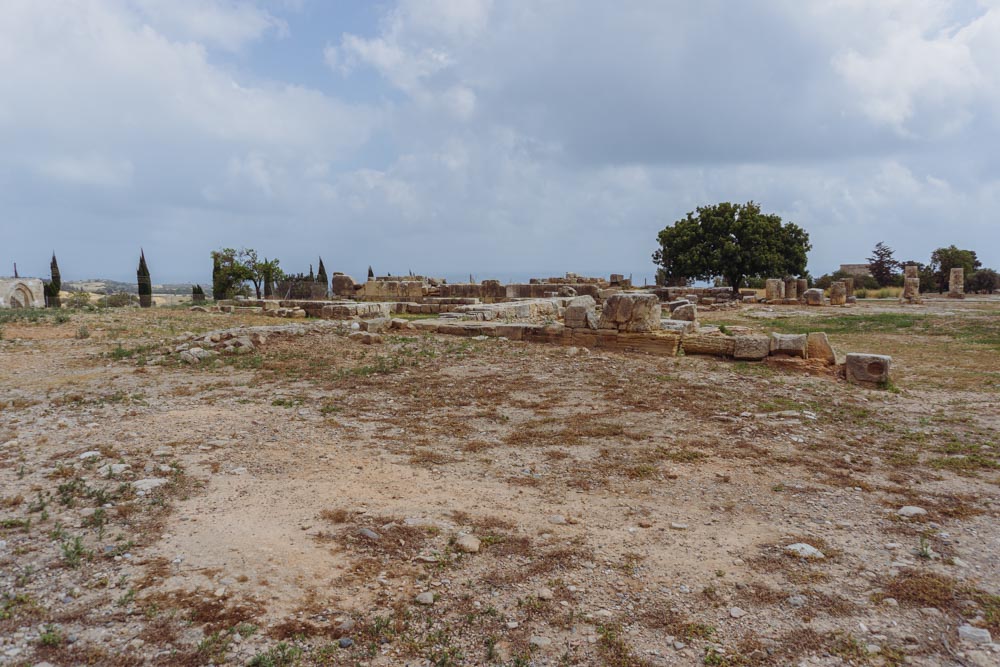
The place is more atmospheric and meaningful than grandiose. There are no towering temples; the stone foundations, halls, and open courtyards convey the site’s historical and religious importance.
Yes, the site is open to visitors without a guide, and information boards explain the key areas.
Sources:
- culture.gov.cy/dmculture/da/da.nsf/All/C855DCAB4B3DD03BC225719B00359F05?OpenDocument
- move2cyprus.com/explore-cyprus/sanctuary-aphrodite-kouklia-paphos/
- ipafosbuses.com/pafos-villages-bus-routes-1/630
- iintercity-buses.com/en/
- intercity-buses.com/en/routes/limassol-paphos-paphos-limassol/
Sources: