Alterlaa Vienna is a housing complex that is easily accessible from the city center. It offers visitors a glimpse into a suburban area with tall residential buildings surrounded by greenery. Compared to Vienna’s historic center, it can feel like being in a different city or even a different country. In this article, I’ll share my impressions of the area and offer some tips on what to expect when photographing it.
Alterlaa Church
What Is Wohnpark Alterlaa?
Wohnpark Alterlaa is located in the southwestern part of Vienna, in the 12th district. Construction began in 1973 and continued until 1985.
The Idea Behind Wohnpark Alterlaa
The complex was designed by architect Harry Glück and his collaborators. Their vision was to create more than just a place to live. Alterlaa was planned as a self-contained residential environment where people could enjoy access to everyday services, recreational facilities, and green spaces without having to travel across the city. The idea was to make amenities associated with a comfortable lifestyle accessible to ordinary residents, not just the wealthy.
Exploring Alterlaa for the First Time
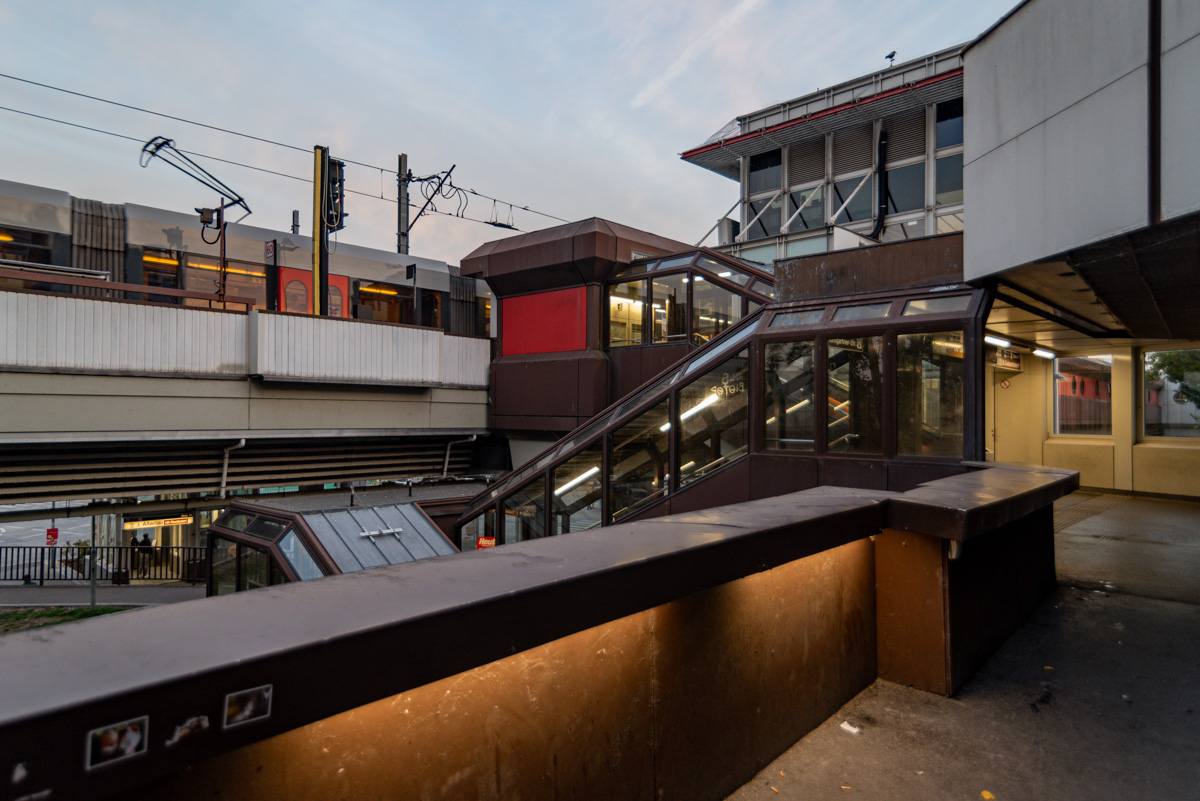
When you arrive at the Alterlaa U-Bahn station, one of the first things you notice is the number of shops, small businesses, restaurants, and kiosks. The residential towers are not immediately visible from every part of the station area. As you move through the covered and shared spaces, you eventually reach an open area that feels almost like a small town square. There is also a shopping centre integrated into the complex. The layout can feel confusing at first, especially if you are expecting to see the towers as soon as you arrive.
Some of the enclosed shopping and pedestrian areas might even remind you of the large residential complexes that occasionally appear in viral videos from China. Yet once you find your way outside and see the enormous buildings rising above the surrounding greenery, the setting feels distinctly European.
Alterlaa U-Bahn Station
A Residential Complex with Its Own Identity
Today, Wohnpark Alterlaa consists of approximately 3,000 apartments and is home to around 9,000 residents. The three main residential blocks are connected by a broader network of sharedfacilities, landscaped areas, and pedestrian spaces. The apartments were designed with generous outdoor areas, including balconies and terraces. Rooftop and indoor swimming pools, saunas are another rad feature of the complex.
Alterlaa and Vienna’s Social Housing Tradition
Alterlaa is not the first example of Vienna’s approach to combining housing with shared amenities. Karl-Marx-Hof, built between 1927 and 1930, is another landmark of the city’s social housing tradition. Its large courtyards, green spaces, and communal facilities reflect the idea that housing should provide more than a roof over people’s heads. Although Karl-Marx-Hof and Alterlaa belong to different architectural periods, both demonstrate how residential developments can incorporate facilities that support everyday community life.
Alterlaa Compared to Petržalka and Novi Beograd
Large housing estates can look very different depending on how they are planned. In Slovakia, Petržalka in Bratislava is a useful point of comparison. It is an extensive residential district made up of numerous housing estates, rather than one clearly defined architectural complex. Although many apartment blocks have been renovated and their facades repainted in brighter colours, the sheer scale of the district creates a different urban experience. For some residents, the density and anonymity of large housing estates are part of their appeal. For others, they can make a neighbourhood feel impersonal.
Alterlaa offers a different approach. Although it is a large development in its own right, its three distinctive residential blocks create a recognizable architectural identity. Rather than spreading residential buildings across an entire district, the project concentrates thousands of apartments within a single, carefully planned development.
A comparison with New Belgrade, or Novi Beograd, is also interesting. This part of Belgrade is known for its extensive modernist brutalist housing estates and large-scale urban planning. Like Petržalka, it covers a much broader urban area than Alterlaa. Alterlaa, by contrast, is a more concentrated architectural ensemble that can be explored as one destination. The comparison highlights two different scales of post-war residential planning: entire districts built around large housing estates and individual complexes designed to function as small urban environments.
When Architecture Is Only Part of the Story
In Bratislava, the Pentagon residential complex in Vrakuňa offers a very different example of how a housing development can acquire a public reputation. The complex has long been associated with drug-related problems and concerns about safety. However, this reputation does not tell the whole story of the people who live there or their everyday experiences. I would not consider it a direct architectural equivalent to Alterlaa, but it illustrates how the perception of a residential area can be shaped by social conditions as much as by its buildings.
What Makes Alterlaa's Architecture Unique?
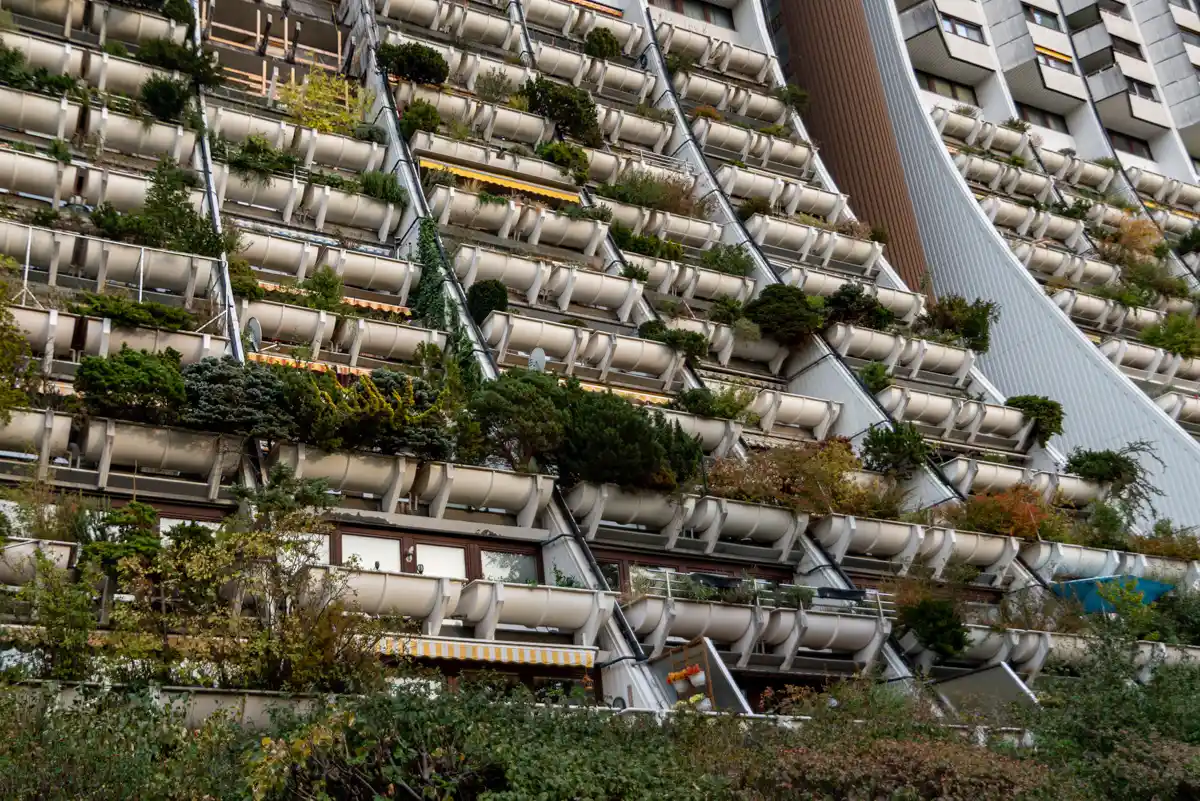
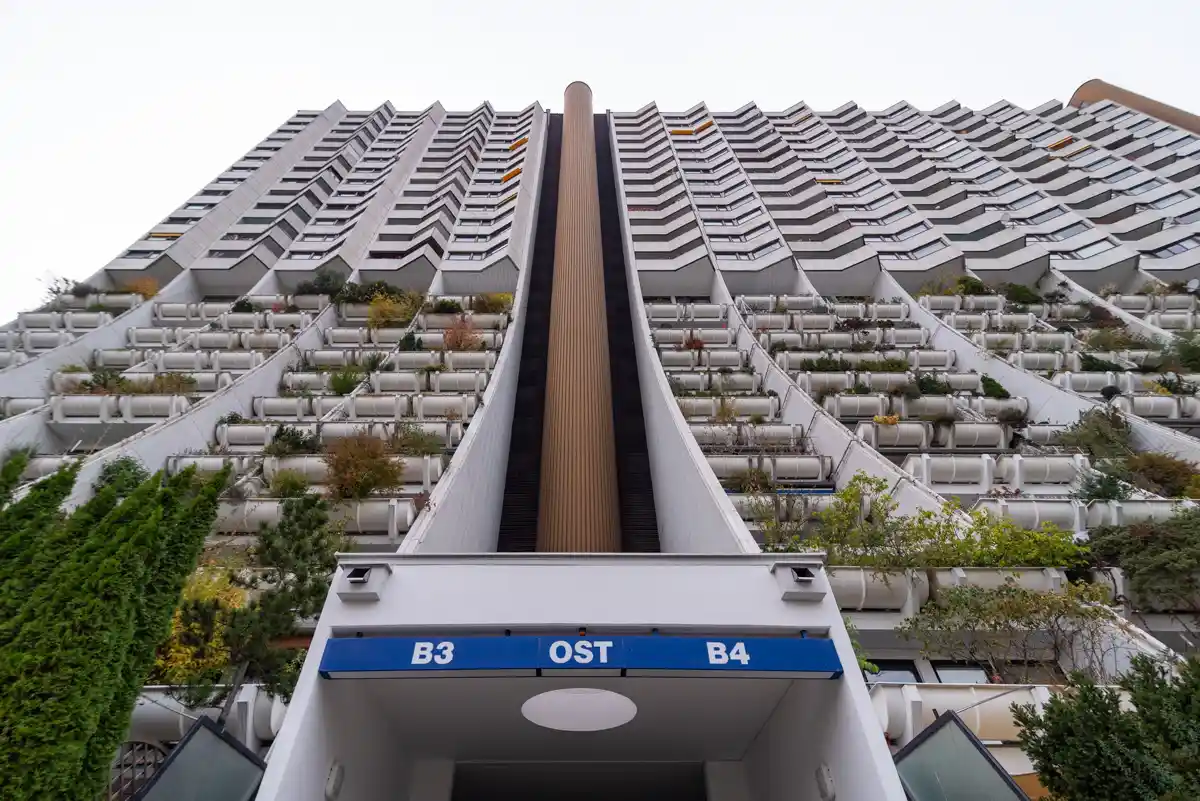
Wohnpark Alterlaa is often associated with the idea of a vertical garden city. Instead of separating high-density housing from nature, the complex combines tall buildings with private terraces.
The Distinctive Terraced Facades: The stepped balconies create a recognizable silhouette and give the massive residential blocks a more layered appearance.
High-Rise Living Surrounded by Greenery: Trees, landscaped areas, and planted terraces soften the imposing scale of the buildings.
Repetition, Scale, and Geometric Patterns: Repeating balconies and strong horizontal lines create interesting patterns.
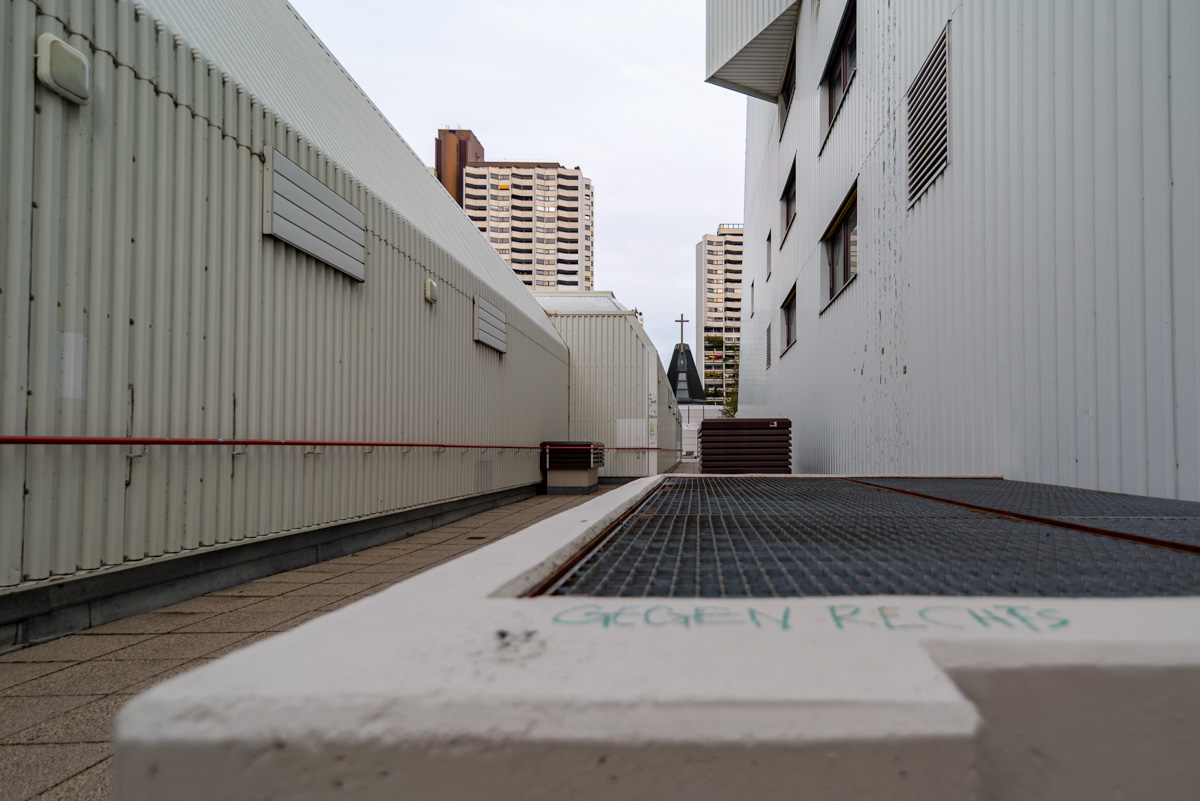
A Church Hidden Within the Complex: The church is not immediately visible when you first arrive. Exploring the shared spaces reveals details that might otherwise be easy to miss.
How to Get to Alterlaa from Central Vienna
Alterlaa is connected to the rest of Vienna by the U6 underground line, which stops at Westbahnhof. The journey from Westbahnhof to Alterlaa takes around 15 minutes. If you are travelling from Wien Hauptbahnhof (Vienna Central Station), you will need to change trains at least once, and the journey takes approximately 20 to 30 minutes. The U6 also stops at Spittelau, which is close to Karl-Marx-Hof, another notable example of Vienna’s social housing architecture that I have already mentioned.
Alterlaa is an interesting location for architectural photography. Capturing the entire complex requires a different approach from photographing its individual buildings. Here are a few things to keep in mind when planning your visit.
Bring a wide-angle lens
It is useful for photographing the tall buildings from ground level, especially when you are standing between them. You can also experiment with the geometric lines around the church and the open square.
Visit on a weekday if you want to explore the shops
Saturday can also be a good option if you want to combine architectural photography with a visit to the shopping centre. Check opening hours in advance, as individual businesses may have different schedules.
Look beyond the main facades
Some of the most interesting compositions can be found between the buildings, around the church, and in the shared pedestrian areas.
Move farther away for panoramic views
From the centre of Alterlaa, it is difficult to capture all the residential blocks in a single frame. You will need to find a more distant viewpoint to show the scale of the entire complex.
Look for Sunset Views of Alterlaa
If you want to photograph the entire complex rather than individual buildings, try exploring the area around the neighbouring U-Bahn stations. I accidentally travelled one stop farther, to Erlaaer Straße. On my way back I caught a view of the sun setting behind Alterlaa’s tall residential buildings. You can use my online calculator to check the sunset time and the golden and blue hours before your visit.
Consider Drone Photography
A drone could offer a better aerial perspective on Wohnpark Alterlaa. However, check the current flight restrictions and obtain any necessary permissions before flying. Since Alterlaa is a residential complex, respect residents’ privacy when capturing and publishing aerial footage.
Consider staying nearby if you want more time to photograph the area
I had difficulty finding accommodation close to Alterlaa on Booking.com and Airbnb. There may still be private apartments available in the surrounding district, so it is worth checking the exact location before booking.
Pedestrian-Friendly Spaces Away from Traffic
One thing I noticed while exploring Wohnpark Alterlaa was the relative absence of cars around the residential buildings. Apart from vehicles associated with nearby roadworks, the shared outdoor spaces felt largely free from traffic. This makes it easier to focus on the architecture, landscaped areas, and pedestrian walkways without cars dominating the view.
Political Graffiti and Local Sticker Art
Beyond the architecture, I also noticed graffiti with messages such as “Gegen Rechts” and sticker art associated with a local feminist group. The visual language had a distinctly left-wing, feminist feel.
Find Accommodation near Alterlaa
If you plan to explore Vienna's architecture over several days, staying in an area with convenient public transport connections can make your itinerary easier.
Or you can use the interactive map below to explore nearby accommodation options and compare places that suit your plans and budget.
Is Alterlaa Worth Visiting?
If you are interested in architecture, Wohnpark Alterlaa is definitely worth a visit. I spent around two to three hours exploring the complex on foot.
However, you may want to allow more time if you plan to photograph the area from different angles, wait for sunset, or explore the interiors. Access to the residential buildings may not be straightforward, as they are private living spaces rather than tourist attractions. I didn’t try to enter any of the buildings myself because I had limited time and was happy to spend those few hours exploring the complex on foot.
Overall, Alterlaa offers a different perspective on Vienna, especially if you want to look beyond the city’s historic architecture and discover its modernist residential landscapes.
We use cookies to optimize your experience, personalize content, and analyze our traffic. By clicking "Accept All", you agree to our use of cookies for a smoother and faster browsing experience. Learn more in our Privacy Policy.
Contains information related to marketing campaigns of the user. These are shared with Google AdWords / Google Ads when the Google Ads and Google Analytics accounts are linked together.
90 days
__utma
ID used to identify users and sessions
2 years after last activity
__utmt
Used to monitor number of Google Analytics server requests
10 minutes
__utmb
Used to distinguish new sessions and visits. This cookie is set when the GA.js javascript library is loaded and there is no existing __utmb cookie. The cookie is updated every time data is sent to the Google Analytics server.
30 minutes after last activity
__utmc
Used only with old Urchin versions of Google Analytics and not with GA.js. Was used to distinguish between new sessions and visits at the end of a session.
End of session (browser)
__utmz
Contains information about the traffic source or campaign that directed user to the website. The cookie is set when the GA.js javascript is loaded and updated when data is sent to the Google Anaytics server
6 months after last activity
__utmv
Contains custom information set by the web developer via the _setCustomVar method in Google Analytics. This cookie is updated every time new data is sent to the Google Analytics server.
2 years after last activity
__utmx
Used to determine whether a user is included in an A / B or Multivariate test.
18 months
_ga
ID used to identify users
2 years
_gali
Used by Google Analytics to determine which links on a page are being clicked
30 seconds
_ga_
ID used to identify users
2 years
_gid
ID used to identify users for 24 hours after last activity
24 hours
_gat
Used to monitor number of Google Analytics server requests when using Google Tag Manager
1 minute
Marketing cookies are used to follow visitors to websites. The intention is to show ads that are relevant and engaging to the individual user.
This script provides interactive maps and affiliate tools for searching and booking accommodations and flights. Cookies are used to correctly display prices, availability, and to anonymously track affiliate booking commissions.