
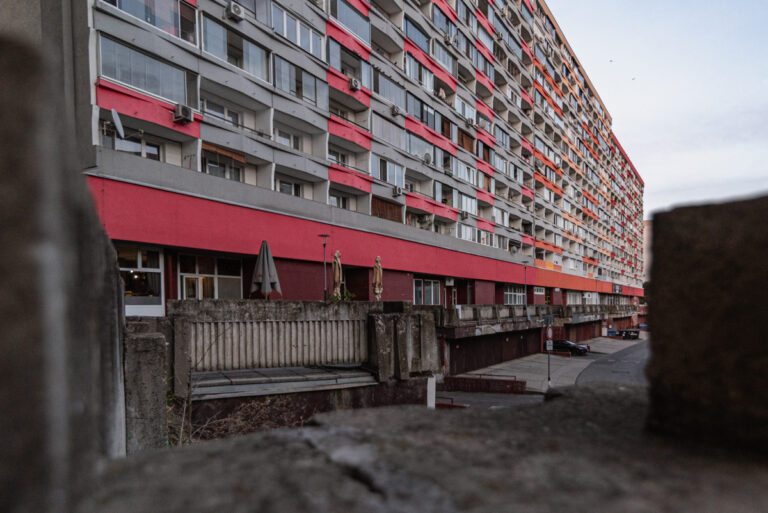
Petržalka is often described as the “largest concrete jungle in Central Europe,” but behind its endless rows of panel housing lies one of Bratislava’s most visually complex urban landscapes. Built during the socialist expansion of the 1970s and 1980s, the Petržalka paneláky were designed as a city within a city. A massive housing experiment shaped by modernist planning, prefabricated architecture and monumental scale.
Today, Petržalka exists somewhere between preservation and transformation. Many original concrete surfaces have disappeared beneath colorful renovations and thermal insulation. Yet fragments of its architectural past still survive throughout the district. Hidden underpasses, geometric parking structures, late socialist modernist buildings and brutalist-inspired playgrounds continue to create a raw visual contrast against the newer facades surrounding them.
For photographers interested in urban textures, Eastern European housing aesthetics and post-socialist cityscapes, Petržalka remains one of the most fascinating places to explore in Bratislava.
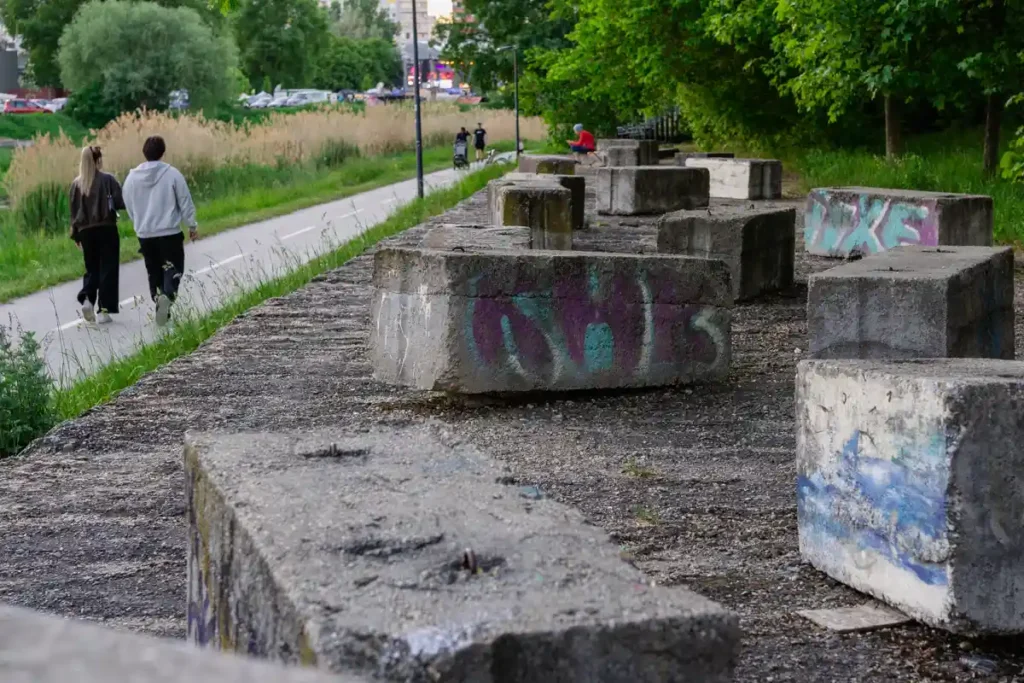
Why Explore Petržalka for Brutalist Traces
Petržalka is a district of Bratislava and the largest residential area in Slovakia. Its name is relatively recent in historical terms. The settlement itself is much older and appears in historical records as early as 1225 under different names, including Mogorscigel, Engerau, and Ligetfalva. The name “Petržalka” only became established in the 20th century and is believed to be derived from “petržal” (parsley), reflecting the area’s former role as agricultural land supplying vegetables to the nearby city.
In terms of scale and urban planning, Petržalka is often compared to districts like New Belgrade, another large post-war modernist housing development. Both areas were designed as self-contained residential zones built around standardized panel housing, wide roads, and functional public infrastructure.
Today, Petržalka is not a preserved brutalist district, but a large-scale urban environment shaped by socialist-era planning, panel housing construction, and later renovations. While many buildings have been modernized or visually altered, the underlying structure of the district still reflects its original functional design.
A key part of its visual identity is the term “Petržalka paneláky”, which refers to the extensive prefabricated housing blocks that define the skyline. “Paneláky” comes from “panels,” meaning concrete slabs used in mass housing construction during the socialist period, allowing entire districts to be built quickly and at scale.
Instead of iconic monuments, Petržalka offers a more subtle architectural landscape. A mix of late socialist modernist buildings, infrastructure, and public spaces designed for function rather than aesthetics. Some elements remain untouched, while others have been renovated or covered with new façades.
For urban photography, this creates a layered environment where different stages of transformation coexist. Petržalka paneláky becomes less about individual buildings and more about reading the evolution of large-scale housing systems across Eastern Europe.
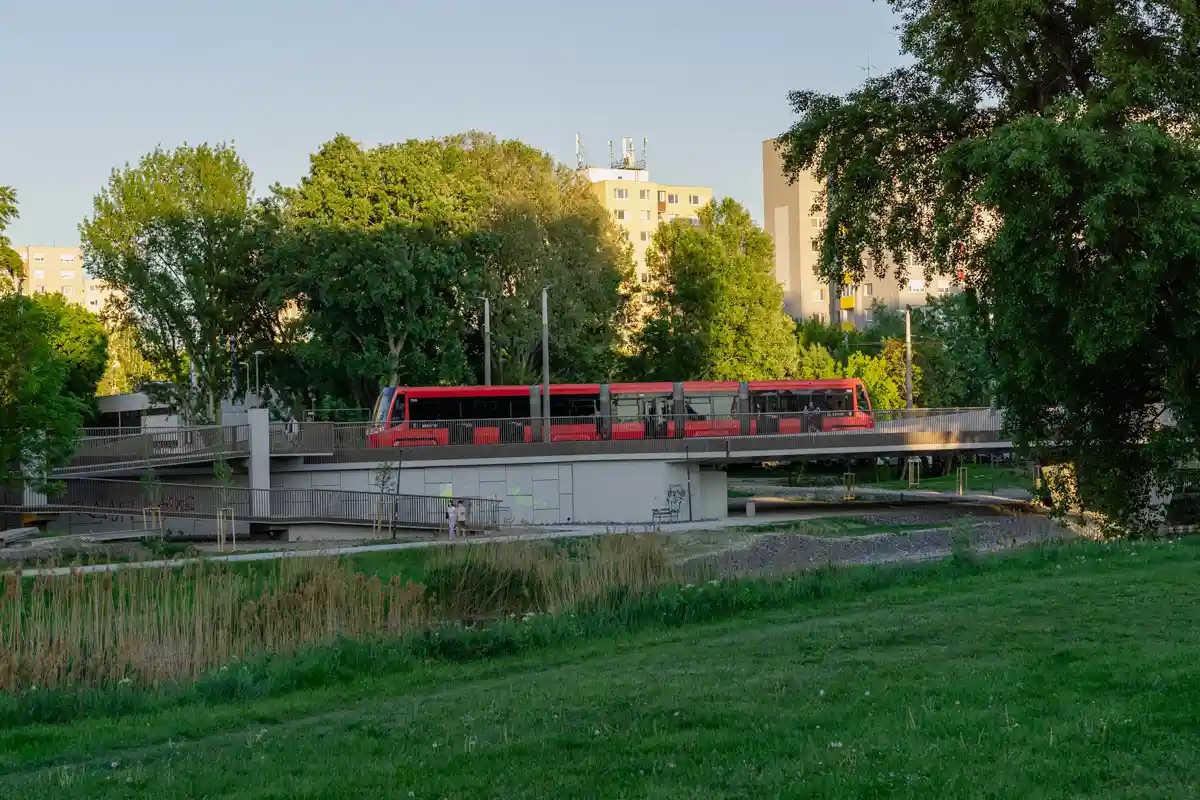
Map of Brutalist & Concrete Spots in Petržalka
To explore Petržalka’s remaining concrete and modernist structures, it is necessary to move beyond the main residential avenues and into the inner residential sectors. Many of the most interesting architectural traces are scattered across public infrastructure, housing clusters, and functional urban zones rather than concentrated in one place.
Key areas on this map include:
- Northern entrance zone around Incheba Expo Bratislava and the SNP Bridge surroundings
- Central axis, including Technopol and the Lúky housing sector
- Western residential edge, with hospitals, health centers and large parking structures near the Chorvátske rameno canal
- Peripheral zones, where smaller infrastructural remnants and Cold War-era structures can still be found near the district boundaries
Petržalka paneláky is now connected to Bratislava’s city center by a modern tram line, making most locations significantly more accessible than in the past.
Key Brutalist locations in Petržalka
This section highlights selected locations where traces of that original architectural logic are still visible today. While many of these sites have been partially renovated or visually altered over time, they still retain elements of their original materiality, scale, and design approach, making them relevant for urban photography and architectural exploration.
Brutalist Parking Structure
- Location: Medveďovej 1A
- Nearest public transport: Bulíkova bus stop
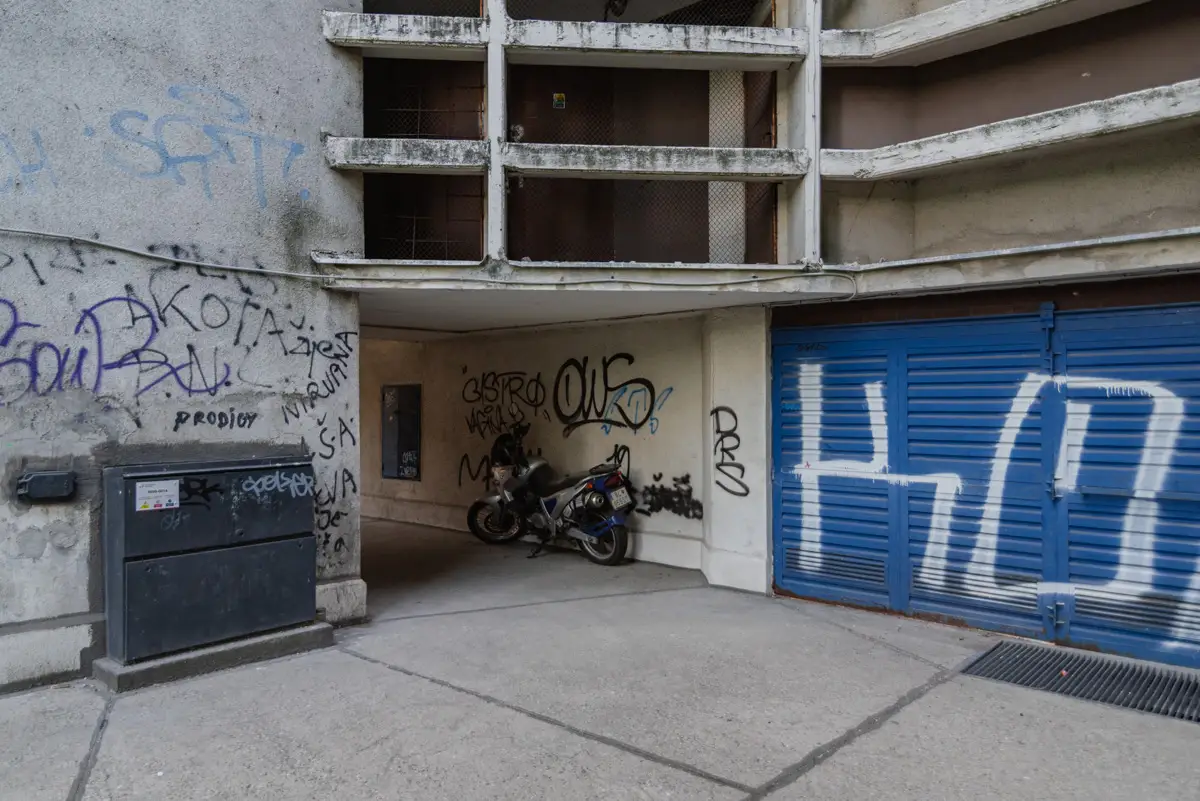
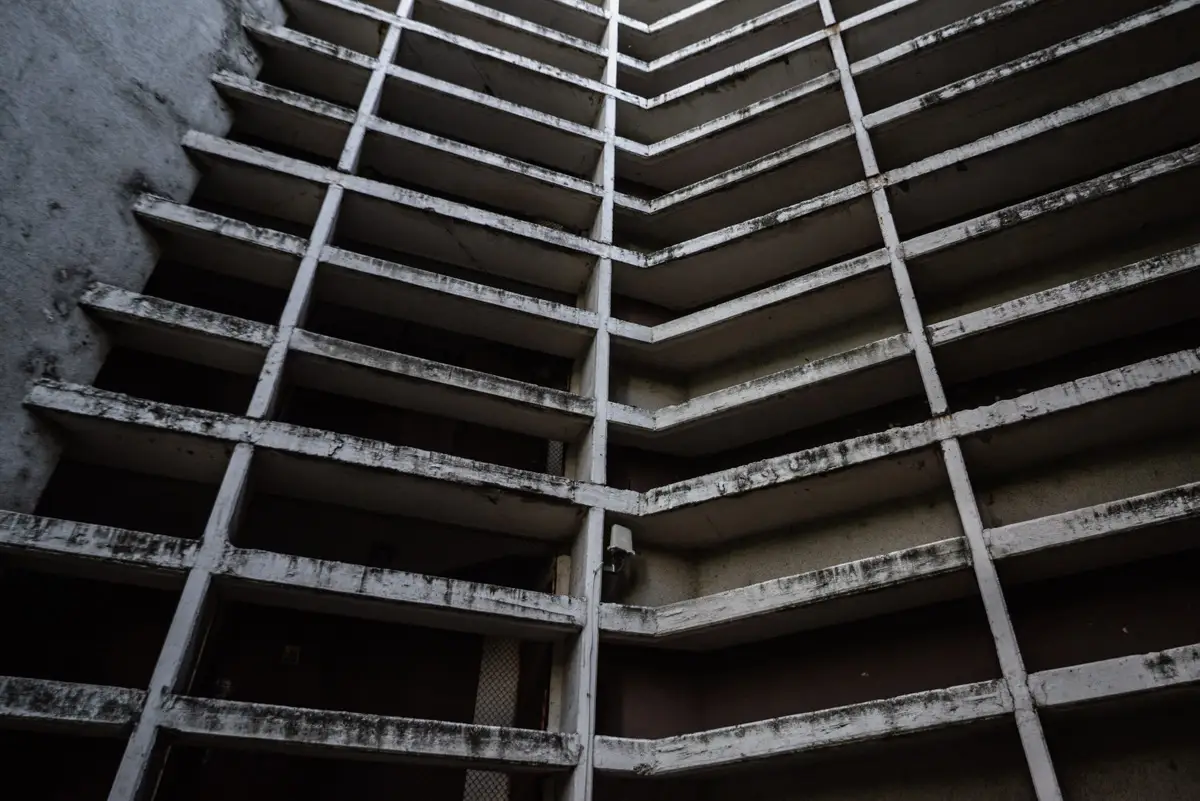
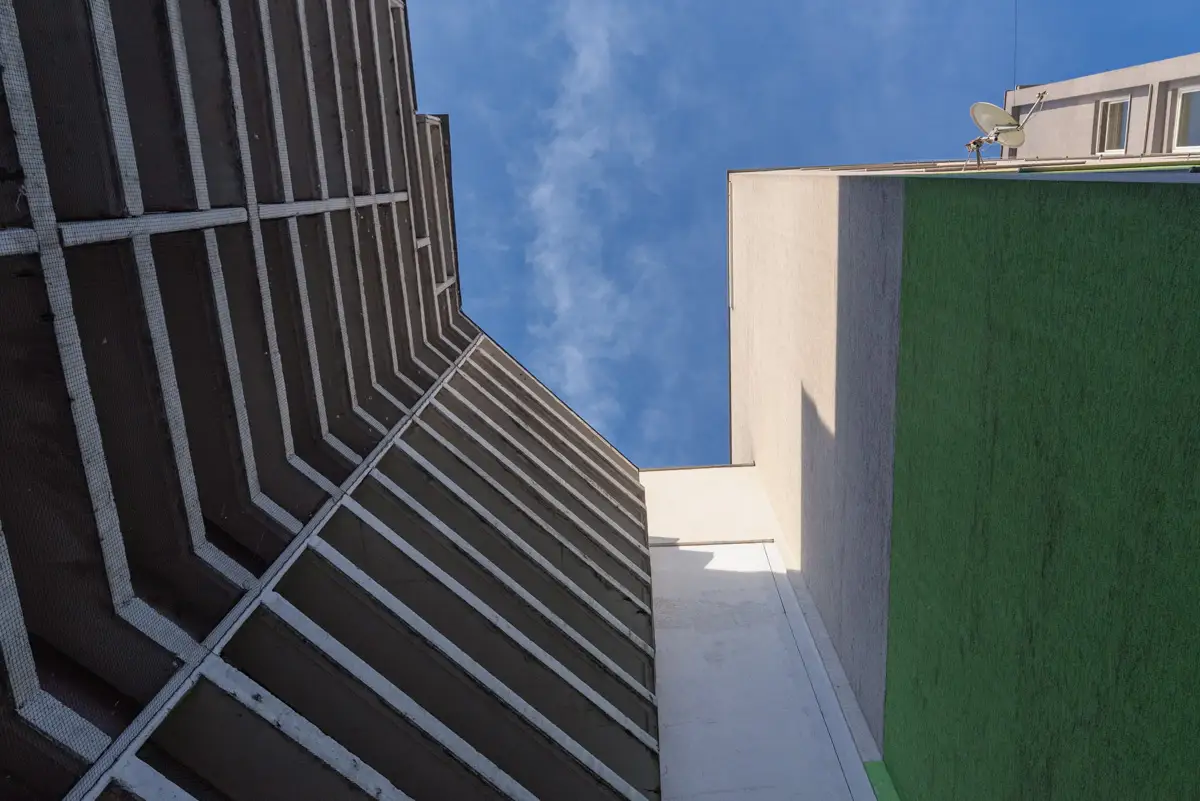
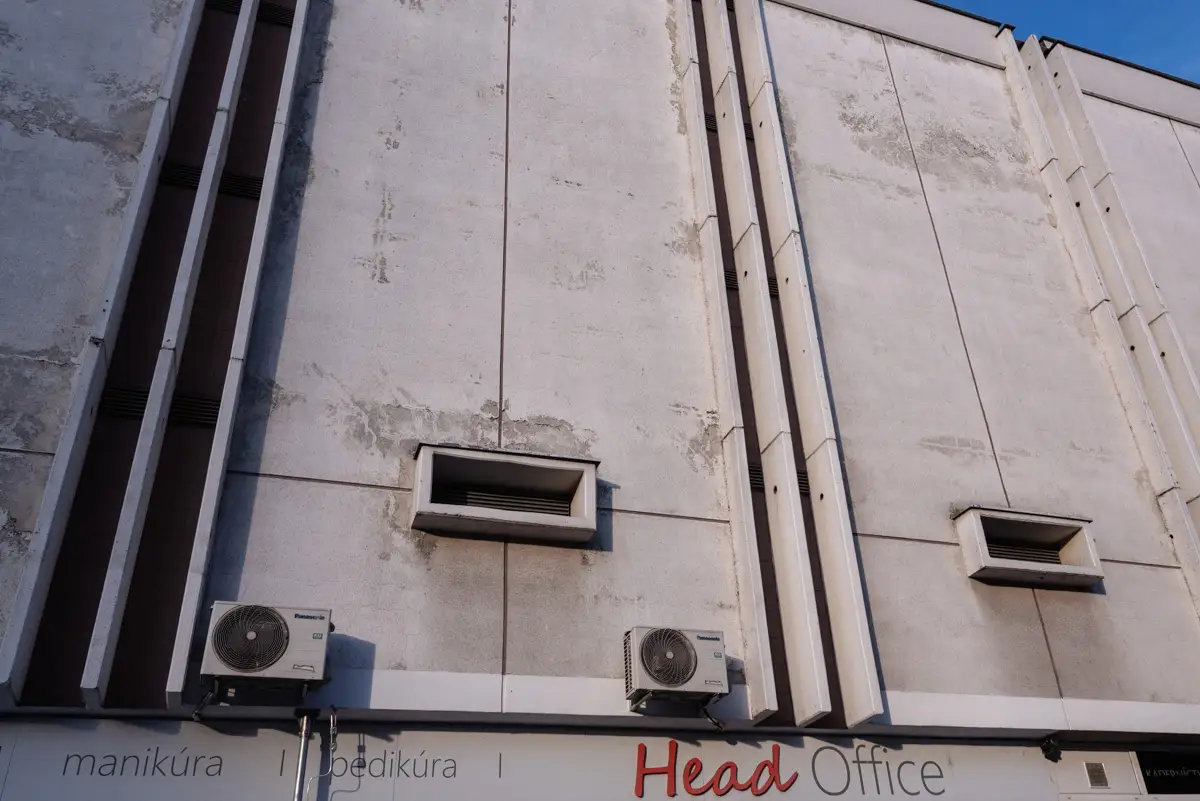
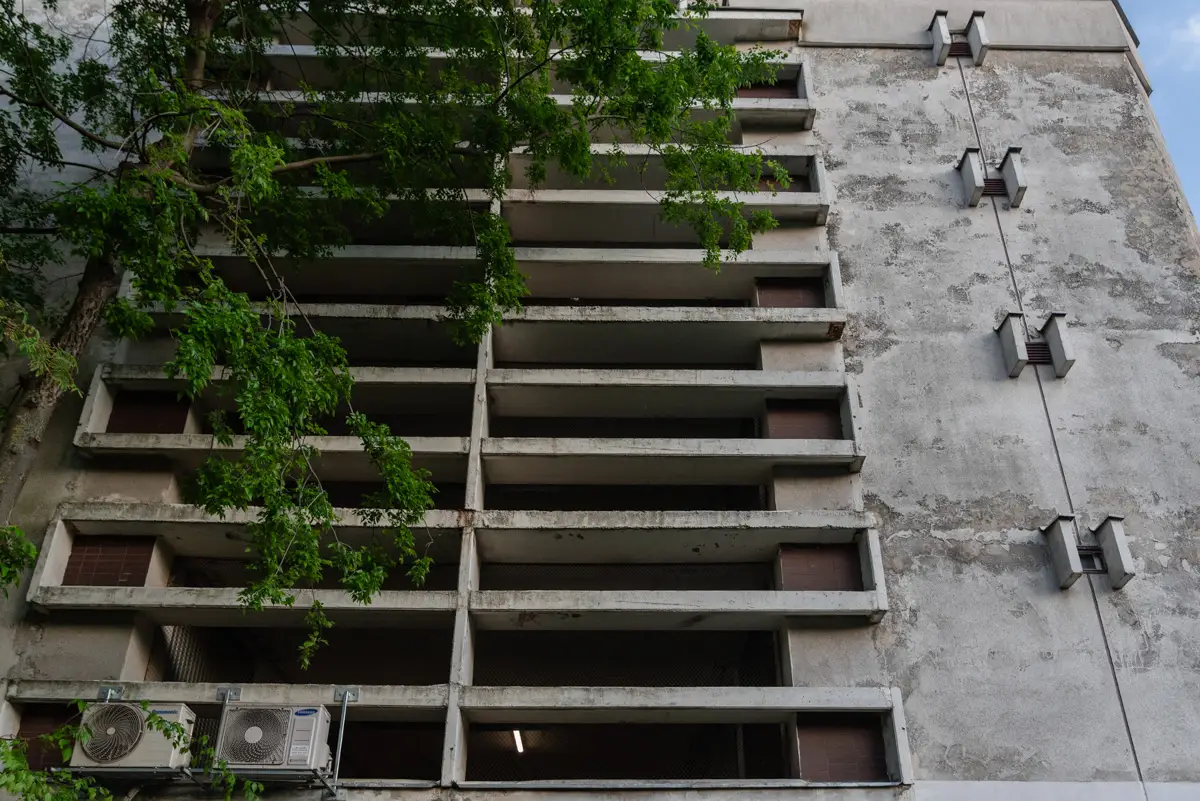
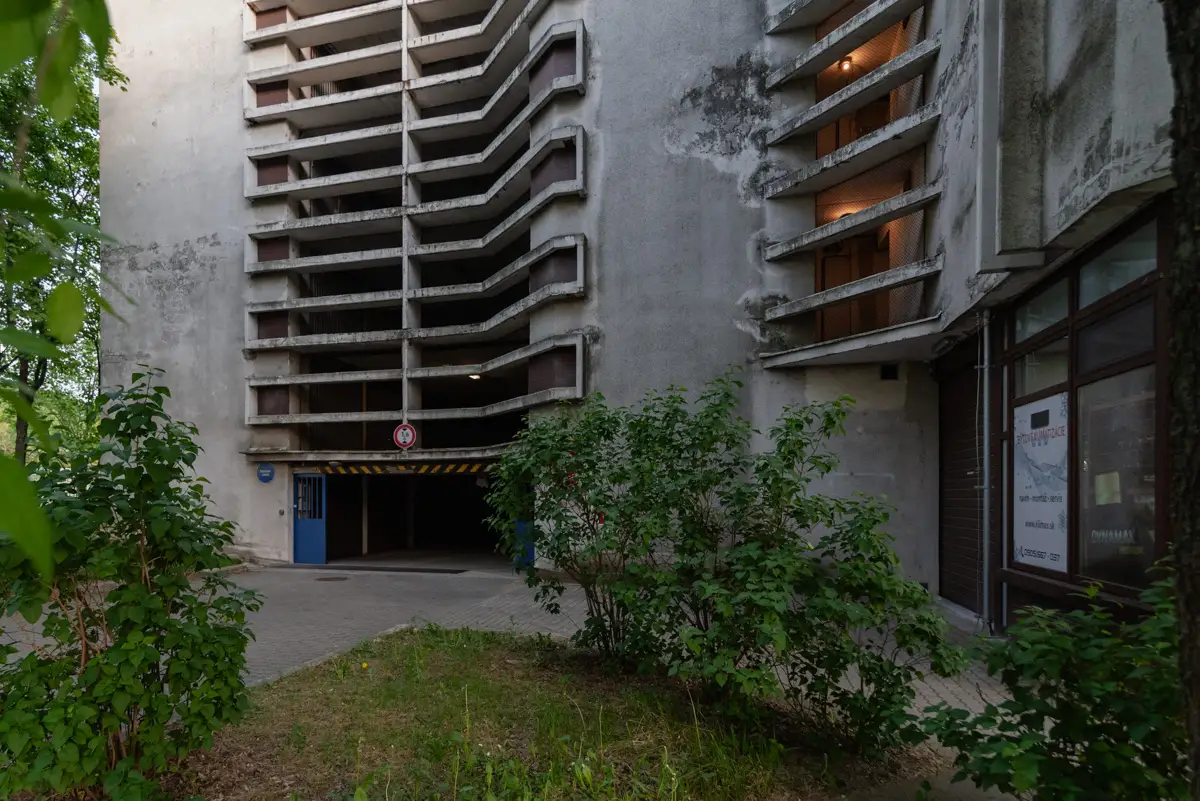
At first glance, a parking structure may seem like one of the most ordinary forms of urban infrastructure. However, the parking garage on Medveďovej street stands out as a rare example where a highly functional building was approached with a strong architectural identity. Designed by Slovak architect Vladimír Dedeček in 1993 and completed in 1995, the structure was originally built for employees of Všeobecná úverová banka.
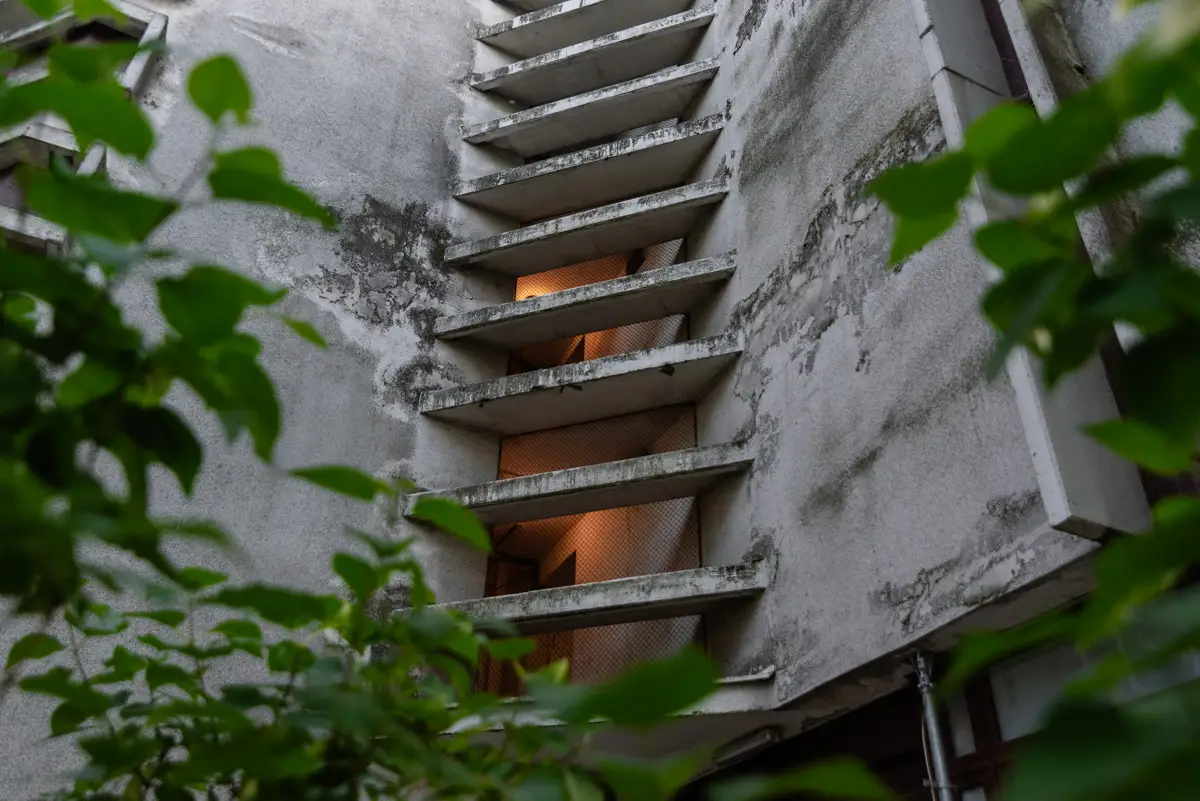
The multi-level garage was designed to accommodate around 300 cars, yet its exposed concrete surfaces, repetitive structural grid, and monumental proportions give it a distinctly late-modernist and brutalist character. Unlike many renovated residential blocks in Petržalka, the building still preserves much of its original raw aesthetic, making it visually striking despite its utilitarian purpose.
For photography, the garage offers strong geometric compositions, repeating horizontal lines, graffiti and contrasting light conditions across its open concrete levels.
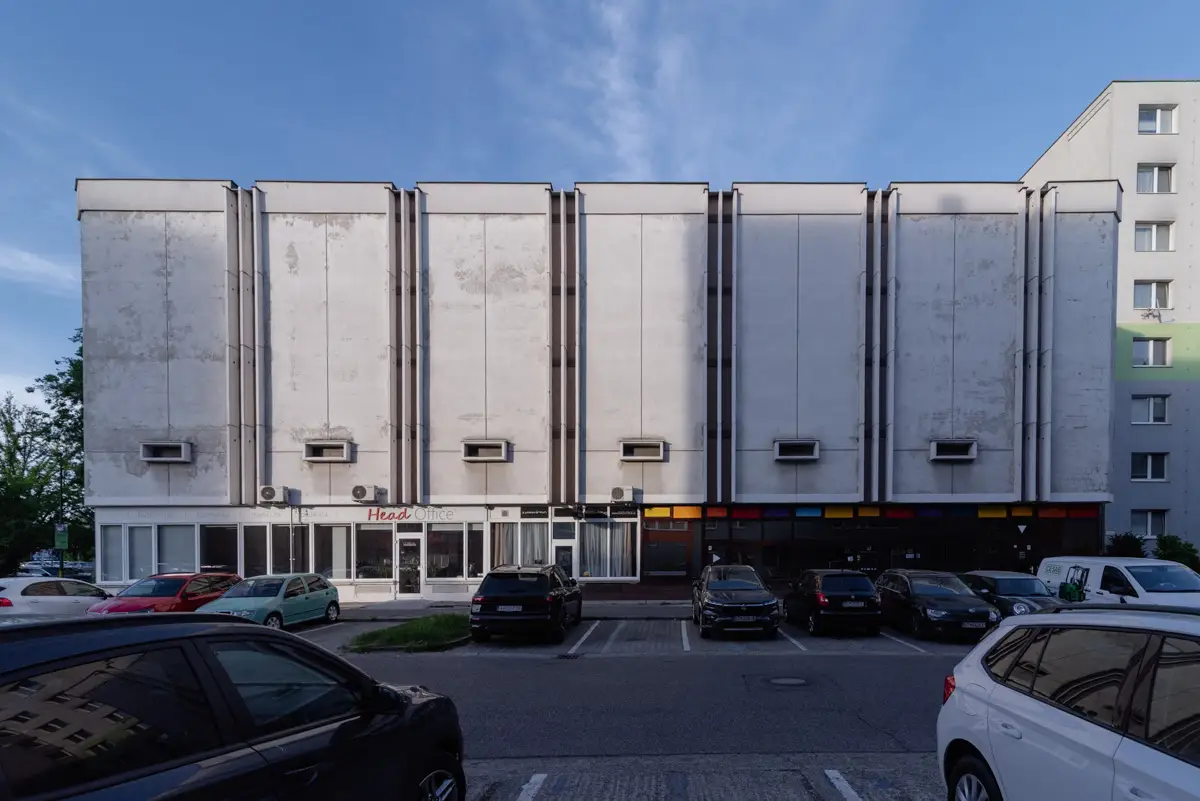
Incheba Expo Bratislava
- Location: Viedenská cesta 5
- Nearest public transport: Einsteinova, Pri Sade
Originally conceived as part of a much larger modernist vision for the right bank of the Danube, Incheba Expo Bratislava remains one of the most monumental architectural complexes in Petržalka. The exhibition grounds were designed by Slovak architect Vladimír Dedeček, one of the key figures of late modernist and brutalist architecture in former Czechoslovakia. Construction of the complex began in the late 1970s and continued in phases until the mid-1990s.
The complex combines exhibition halls, large-scale infrastructure, open parking areas and a dominant high-rise tower overlooking the Danube riverfront. Although parts of the original urban vision were never completed, the remaining structures still preserve Dedeček’s characteristic approach to monumentality, oversized scale and exposed structural forms.
Unlike the colorful residential zones deeper inside Petržalka, the Incheba area retains a more industrial and infrastructural atmosphere. It is a distinctly late-socialist urban environment that feels visually separated from the rest of the district.
For photography, the area works especially well for large-scale compositions, symmetry, and cinematic urban scenes — particularly during overcast weather.
Socialist-Era Police building
- Location: Námestie hraničiarov 1
- Nearest public transport: Námestie hraničiarov (bus stop)
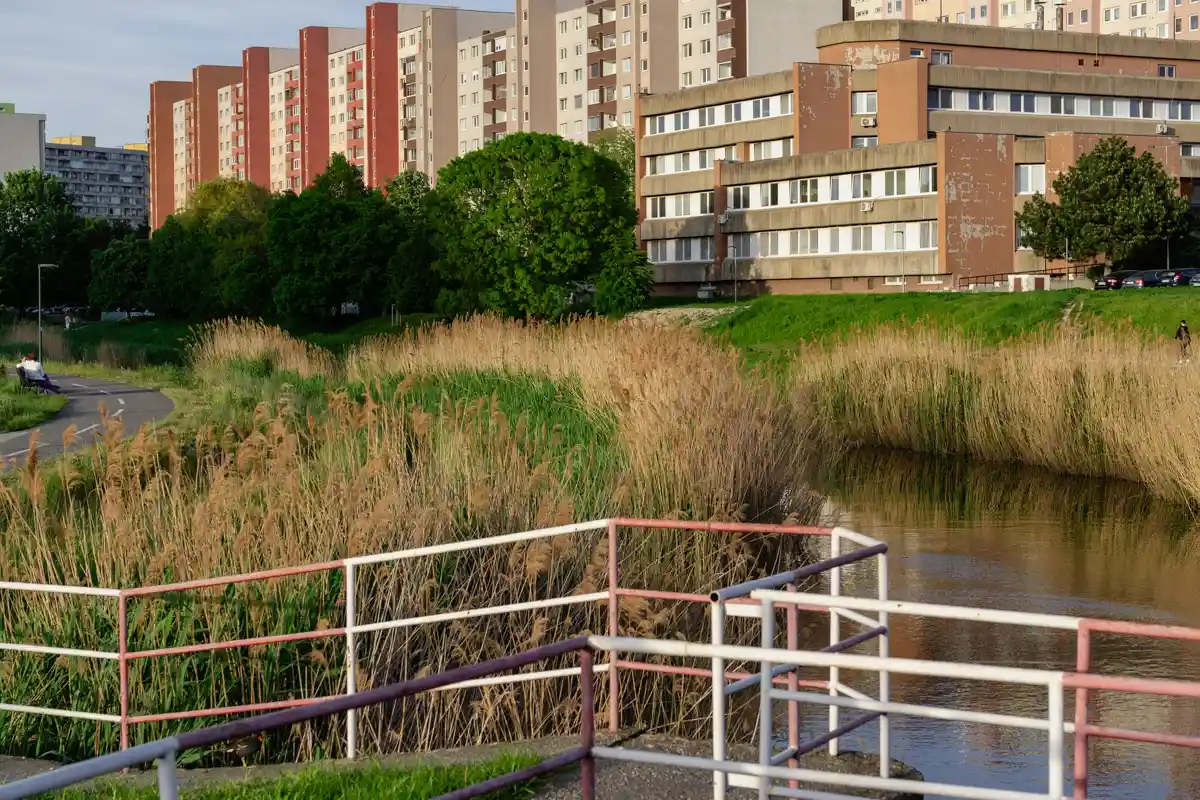
Located near one of Petržalka’s main residential corridors, the police building at Námestie hraničiarov is a striking example of late socialist institutional architecture. Its heavy concrete massing, recessed windows, and oversized overhangs give the structure a fortress-like appearance that reflects the visual language of state buildings from the late Cold War period.
Originally conceived as part of the district’s administrative infrastructure, the building was designed with functionality and authority in mind rather than openness or ornament. Unlike many renovated structures in Petržalka, its original façade still remain visible today. Aging surfaces, exposed concrete details, and deteriorating plaster contribute to the building’s distinctly dated appearance, reinforcing its raw late-socialist character.
Architecturally, the structure leans toward a heavier form of brutalism, emphasizing solid volumes and repetitive geometric framing.
For photography, the building works particularly well for detail-oriented compositions focused on texture, symmetry, and repetition. The concrete window framing are especially effective for abstract urban shots and moody architectural photography.
Hospital and Health Centers
- Location: Antolská 11, Šustekova and Strečnianska health center areas
- Nearest public transport: Nemocnica Antolská / Ľubovnianska (bus stops), Šustekova and Strečnianska (bus stops)
The Nemocnica sv. Cyrila a Metoda complex represents one of the largest surviving examples of late socialist modernist healthcare architecture in Petržalka. Designed during the 1980s by the state institute Zdravoprojekt Bratislava and completed between 1986 and 1997, the hospital was originally planned as a major healthcare center for the rapidly expanding housing estate.
Architecturally, the complex combines massive rectangular hospital blocks with softer curved elements that break the otherwise rigid geometry of the structure. The main entrance is especially striking: a rounded circular form inserted into the larger grid-like composition of the building, creating a strong contrast between curved and angular architectural language. Behind the entrance area, semi-circular concrete forms and open courtyard spaces add another sculptural layer to the otherwise highly functional complex.
Unlike heavily renovated residential zones, parts of the hospital still preserve their original late-modernist atmosphere through exposed structural elements, oversized corridors, and monumental proportions. Health centers on Šustekova and Strečnianska continue this architectural vocabulary on a smaller scale, combining utilitarian public design with traces of socialist-era material aesthetics.
For photography, these locations work especially well for compositions focused on contrast — curves versus rigid grids.
Original Concrete Residential Blocks
- Location: Medveďovej 21, Ovsište area
- Nearest public transport: Ovsištské námestie (bus stop)
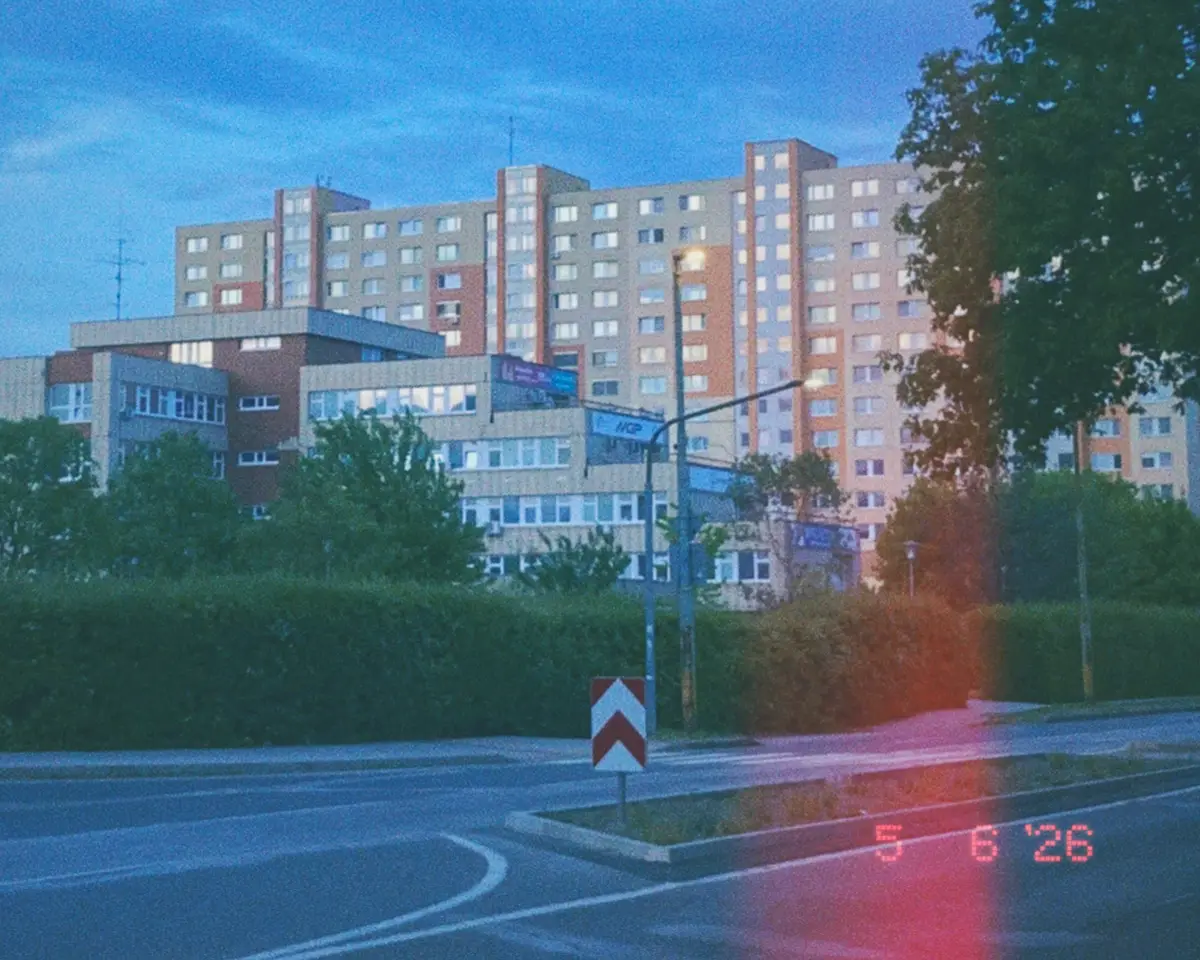
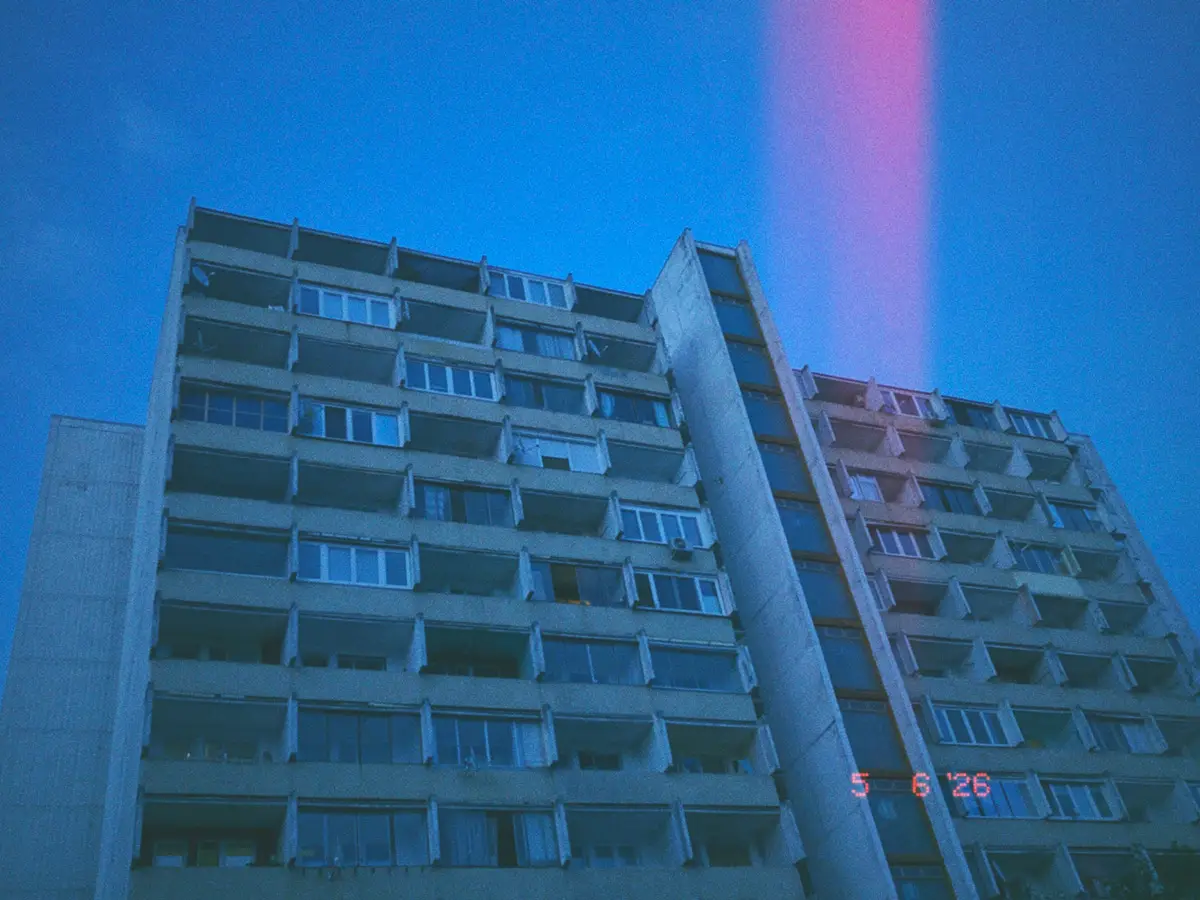
While many residential buildings in Petržalka have been repainted or fully renovated, a small cluster of original concrete panel blocks can still be found near Ovsištské námestie. These buildings preserve more of their raw prefabricated appearance, offering a glimpse into the district’s original visual identity before the wave of colorful façade renovations transformed much of the housing estate.
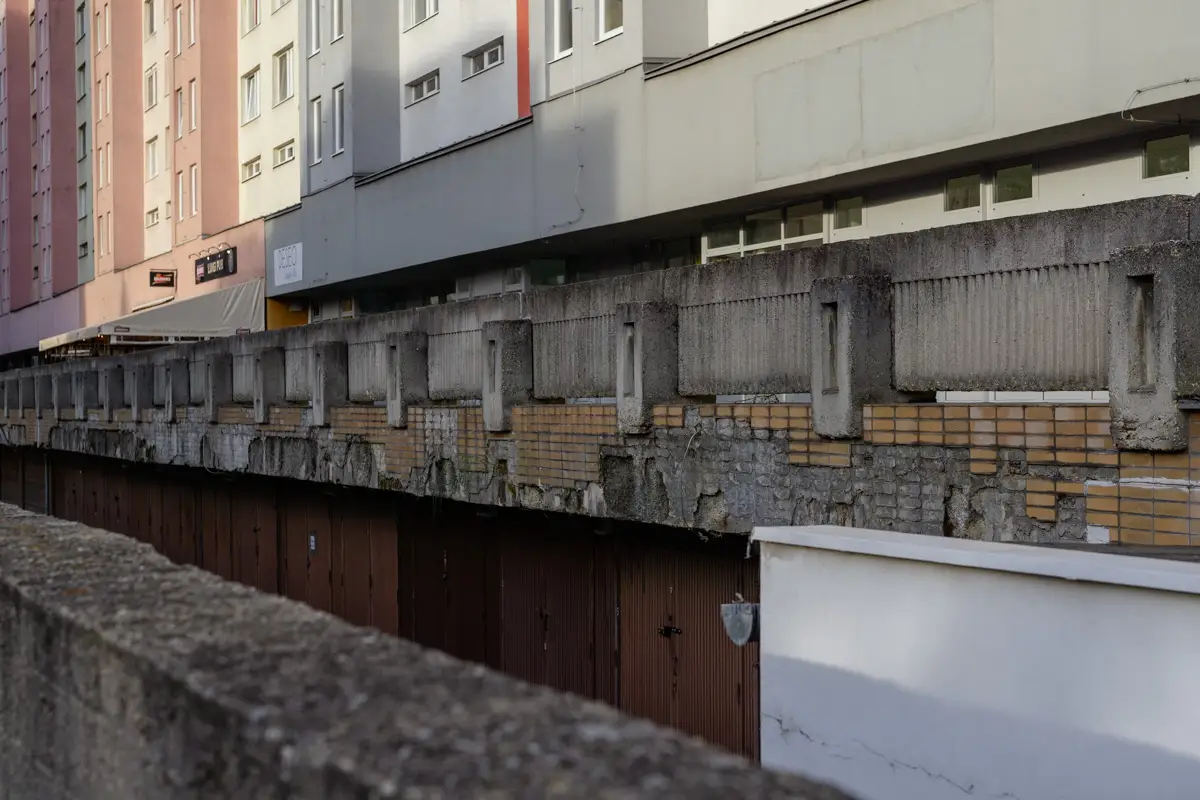
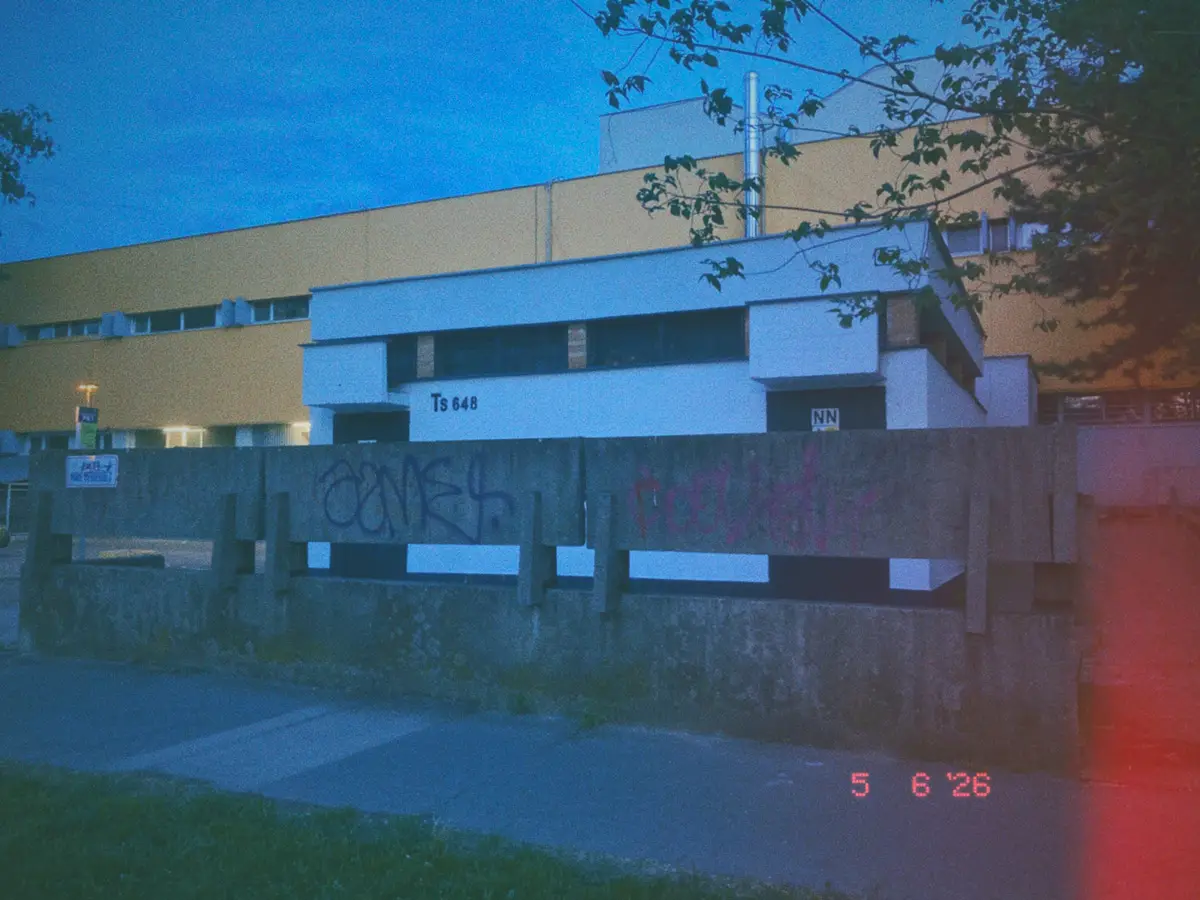
The nearby shopping center area also contains several interesting late-socialist urban details, including a large concrete wall structure that still retains a distinctly brutalist character. All this elements create a space with more authentic impression of Petržalka’s original architectural atmosphere.
One of the most recognizable features of the square is its clock tower. Its bell can often be heard across the neighborhood, especially during the evening hours. Combined with the aging concrete surfaces and quiet residential surroundings, the area has a distinctly nostalgic and almost cinematic atmosphere.
Technopol and late Socialist Modernism
- Location: Kutlíkova 17
- Nearest public transport: Technopol (tram and bus stop)
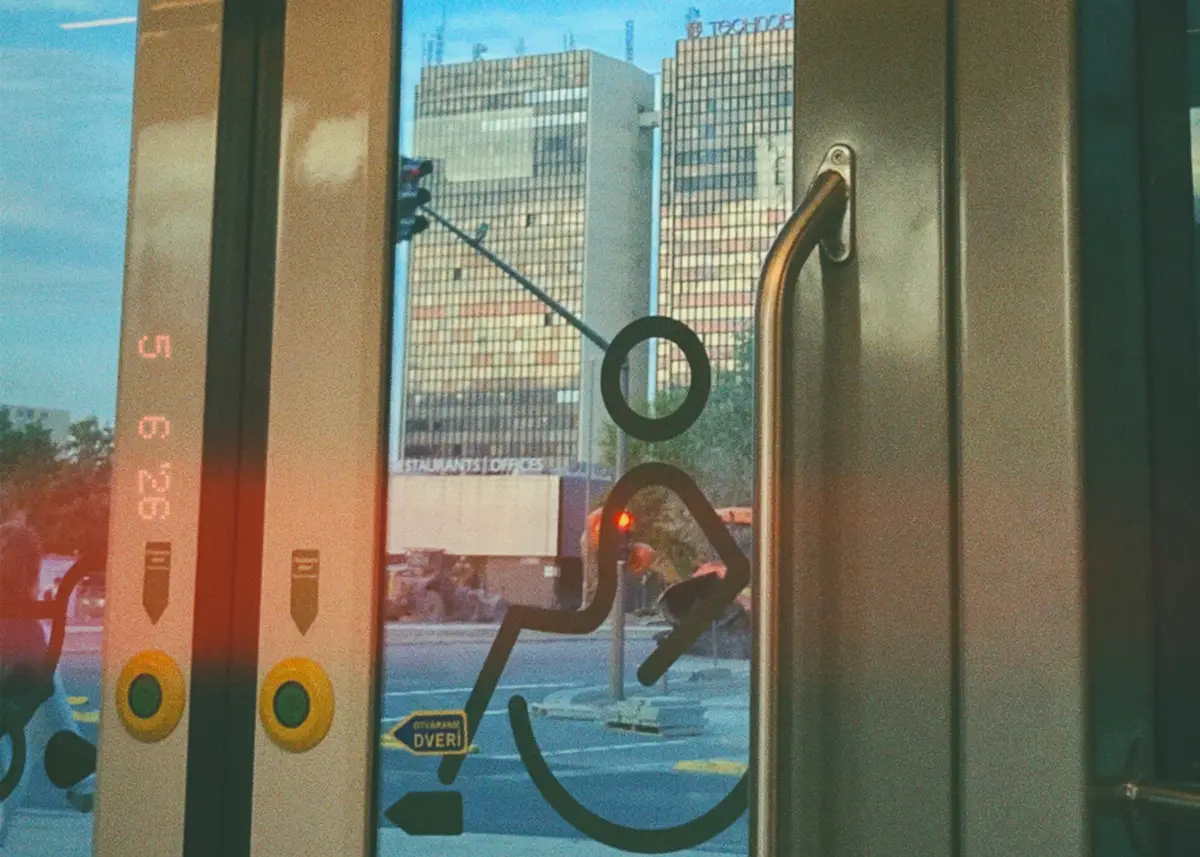
Completed in the 1980s, Technopol became one of the symbolic administrative and technological centers of Petržalka during the late socialist period. The massive complex was originally designed as a multifunctional center combining offices, research spaces, services, and public infrastructure for the rapidly expanding housing estate. Its monumental scale, repetitive façade system, and strong horizontal composition reflect the late phase of socialist modernism in Czechoslovakia.
Despite its ambitious vision, Technopol later became associated with various economic and political controversies linked to privatization, abandoned office spaces.
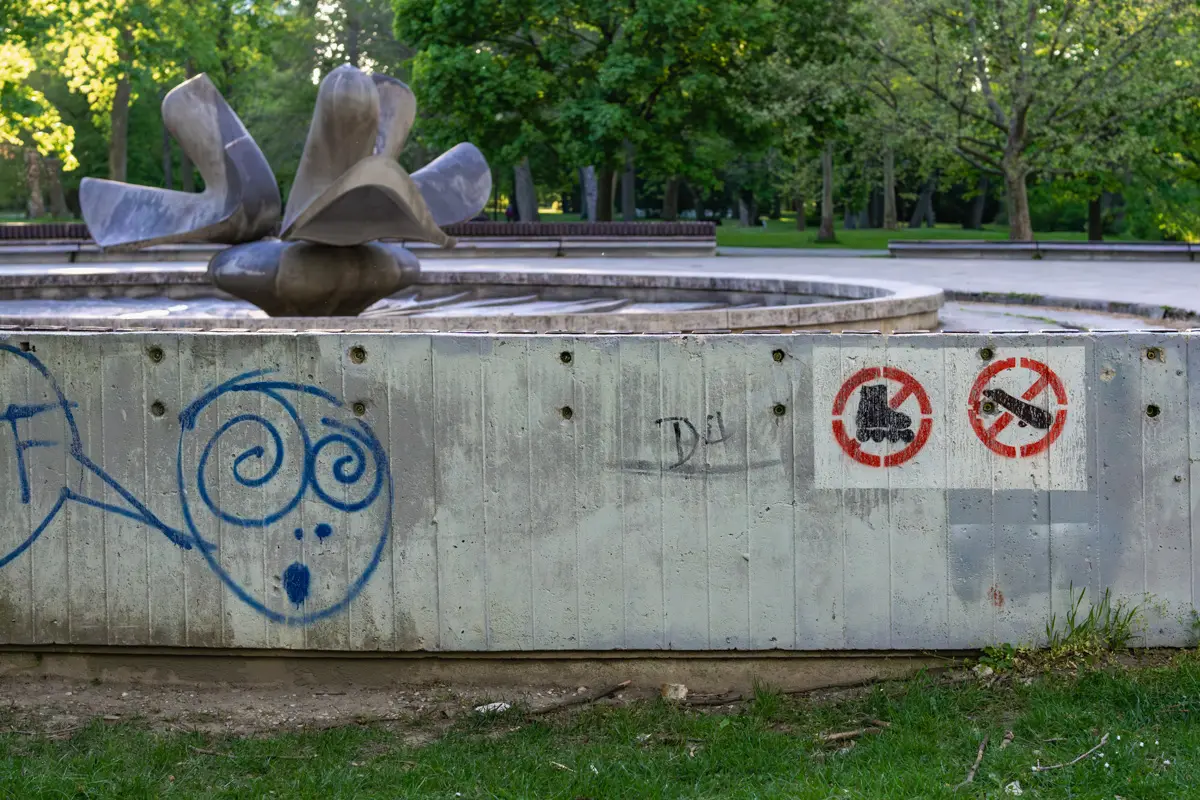
In front of the complex, a large fountain plaza softens the otherwise rigid geometry of the architecture.
For photography, Technopol offers strong contrasts between reflective glass, aging concrete, open plazas, and the surrounding panel housing. The fountain area is especially interesting during evening light, when the oversized scale of the complex becomes more pronounced against the dense residential environment around it.
Brutalist-Inspired Playgrounds
- Locations: Scattered throughout Petržalka, particularly around Ovsište, Haanova street, and residential areas near Námestie hraničiarov
- Nearest public transport: Ovsištské námestie, Šustekova, and Námestie hraničiarov stops
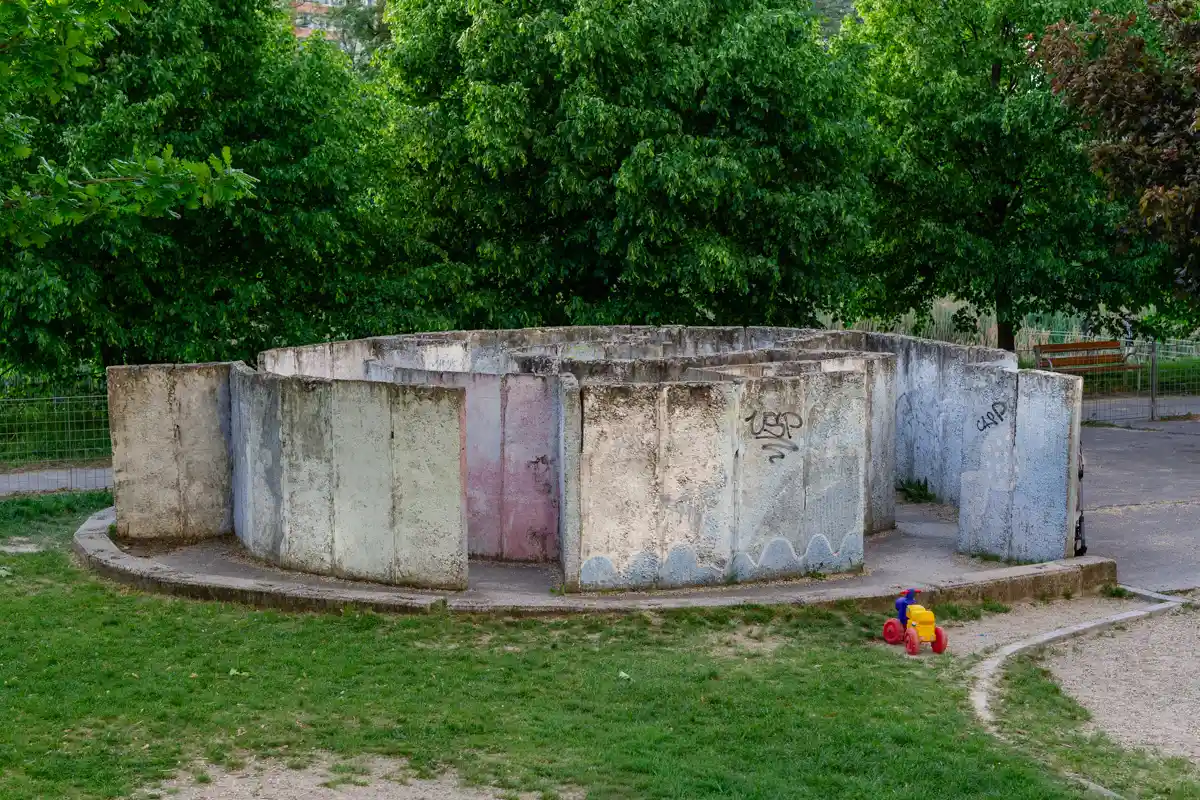
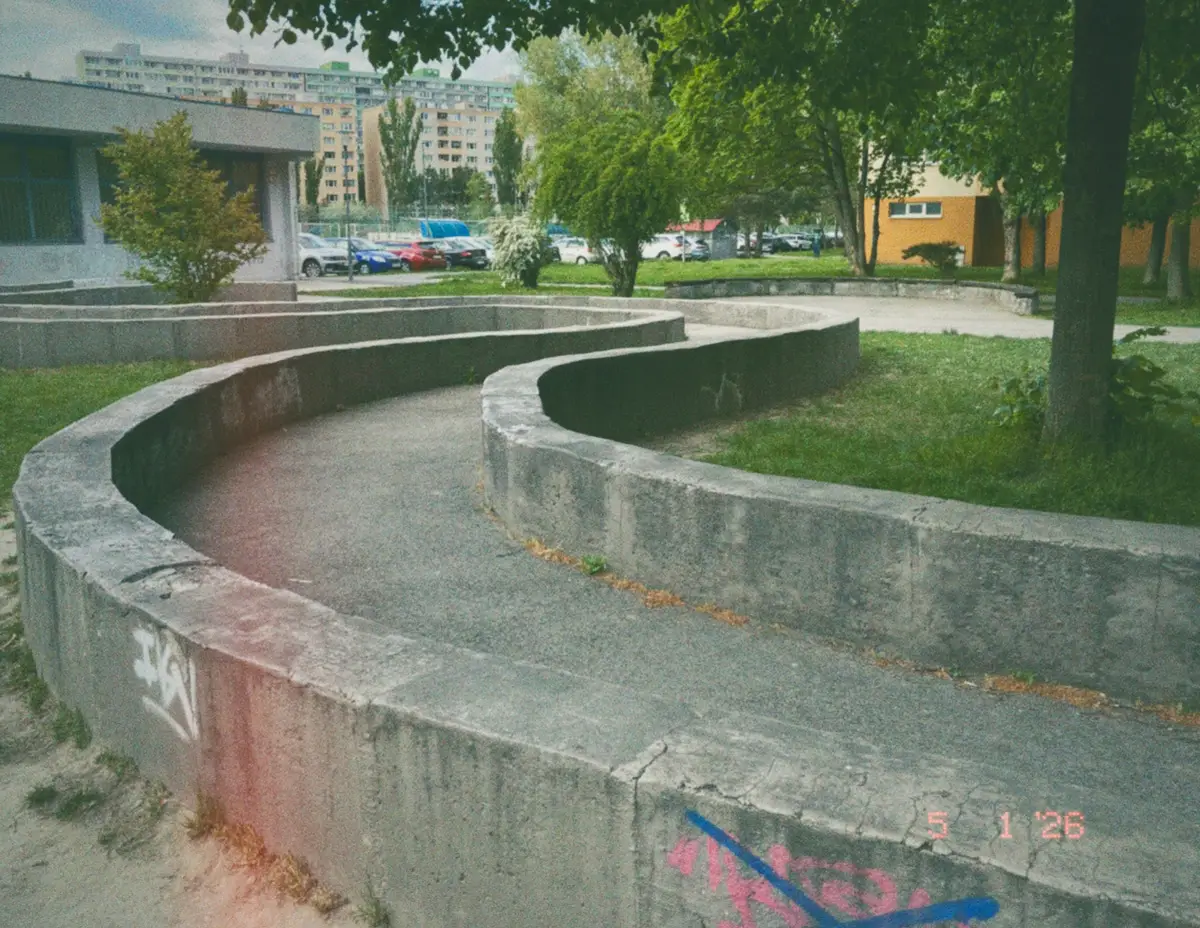
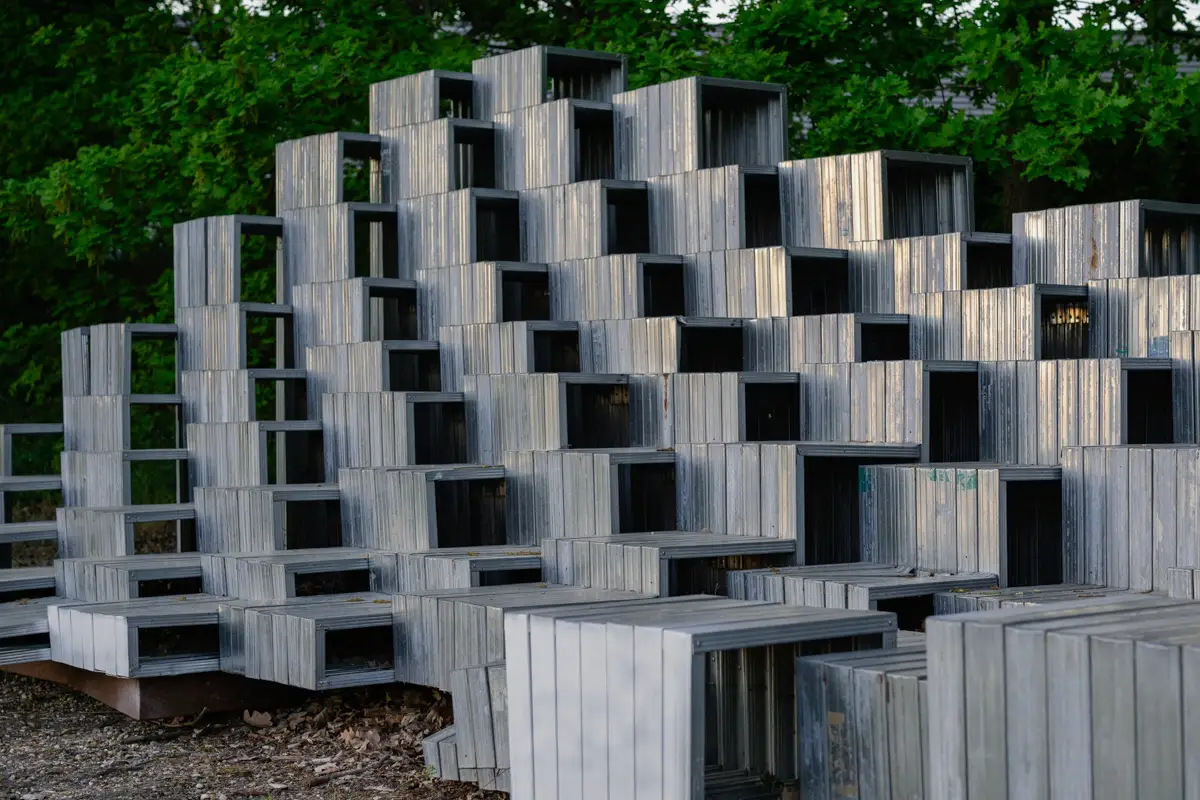
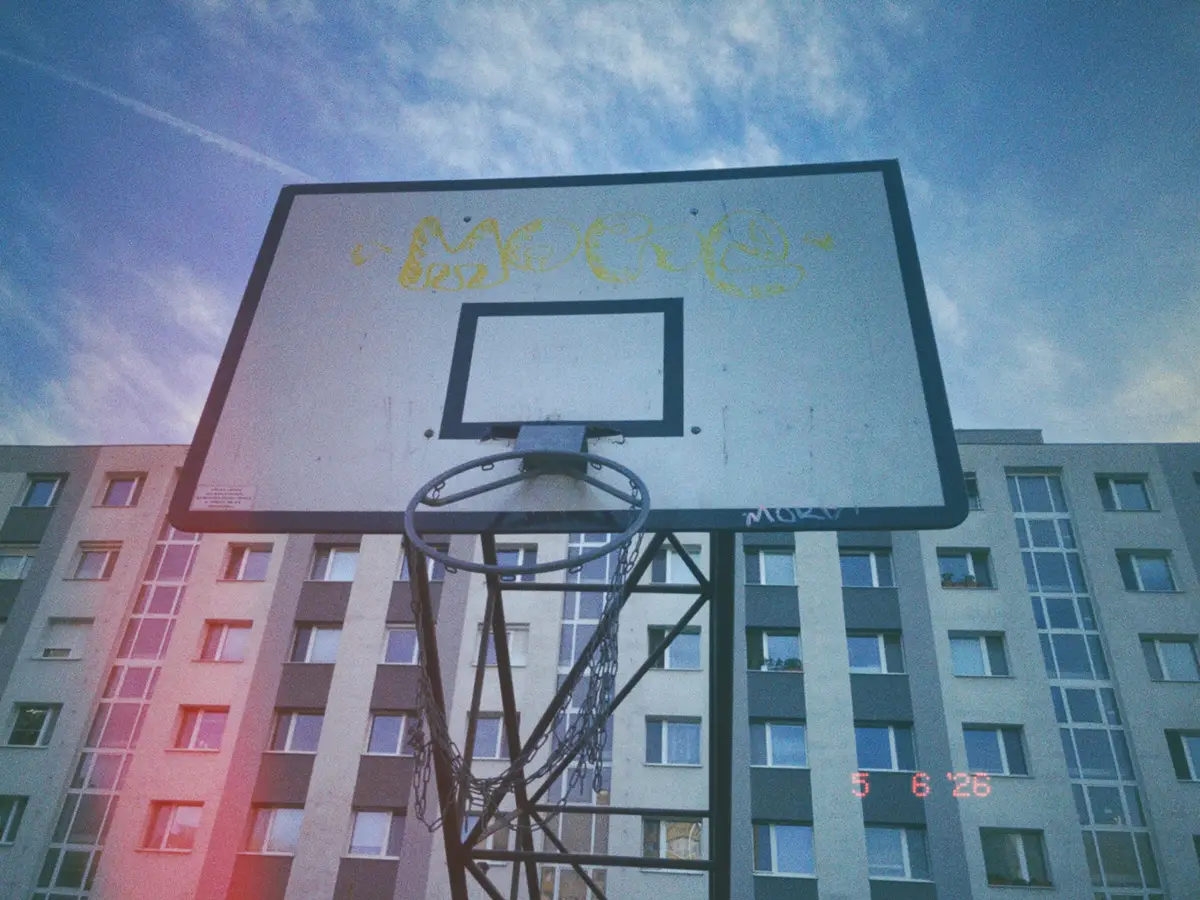
Beyond its large residential blocks and institutional buildings, Petržalka paneláky still contains smaller remnants of socialist-era public design hidden within playgrounds, courtyards, and pedestrian zones. Many of these spaces feature low concrete walls, geometric barriers, and maze-like layouts originally designed to organize movement and create communal play areas between the housing blocks.
Several locations also retain older metal playground structures, including rotating platforms and climbing bars that were once common across Eastern European housing estates. Although simple in design, these elements now feel almost sculptural against the renovated facades.
For photography, these playgrounds offer a different perspective on Petržalka’s architectural identity — less monumental, but more personal and atmospheric.
Renovated Housing Blocks and Color Contrasts
- Locations: Fedinova, Osuského, Blagoevova and Námestie hraničiarov areas
- Nearest public transport: Fedinova, Námestie hraničiarov, and Blagoevova bus stops
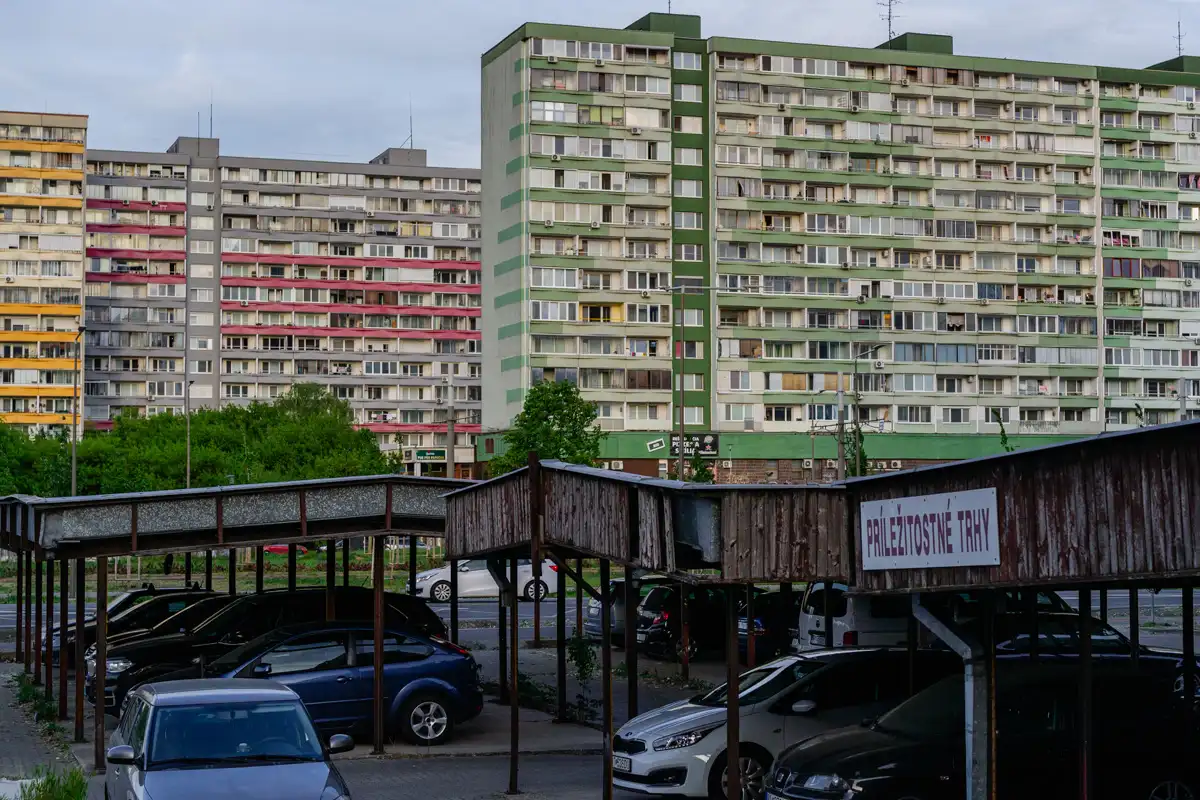
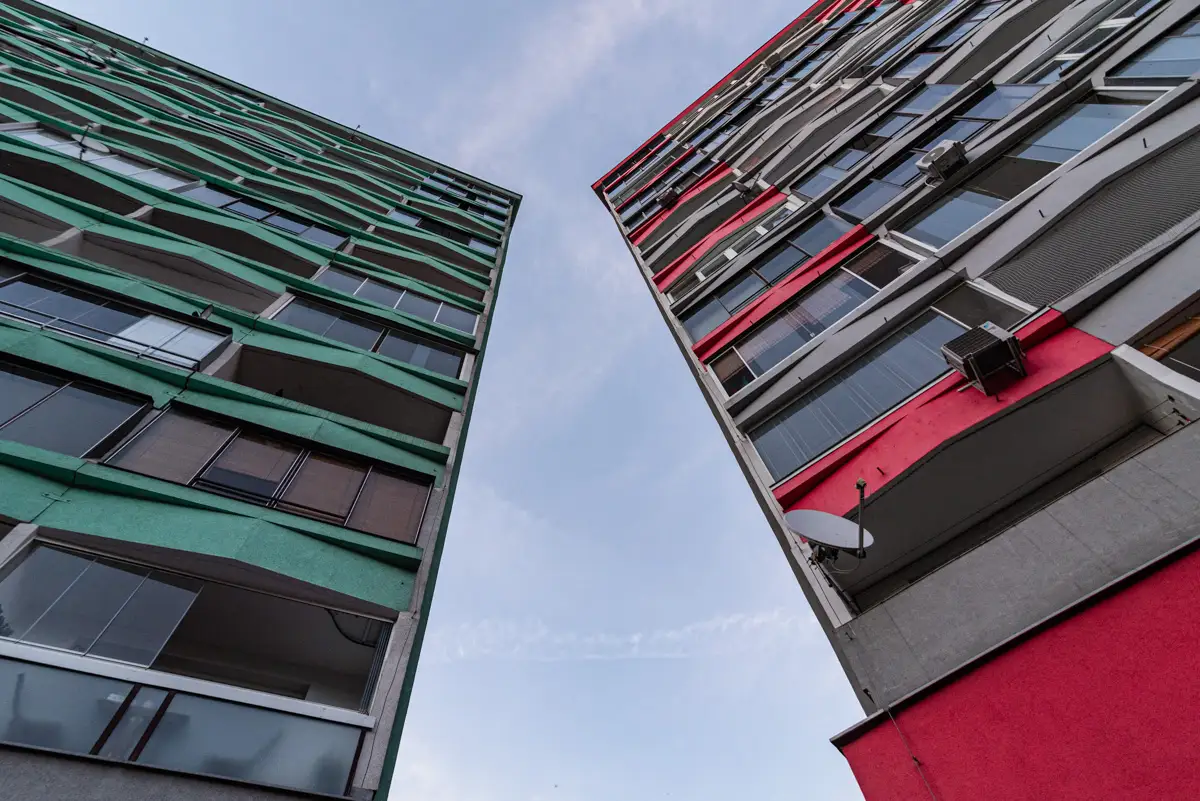
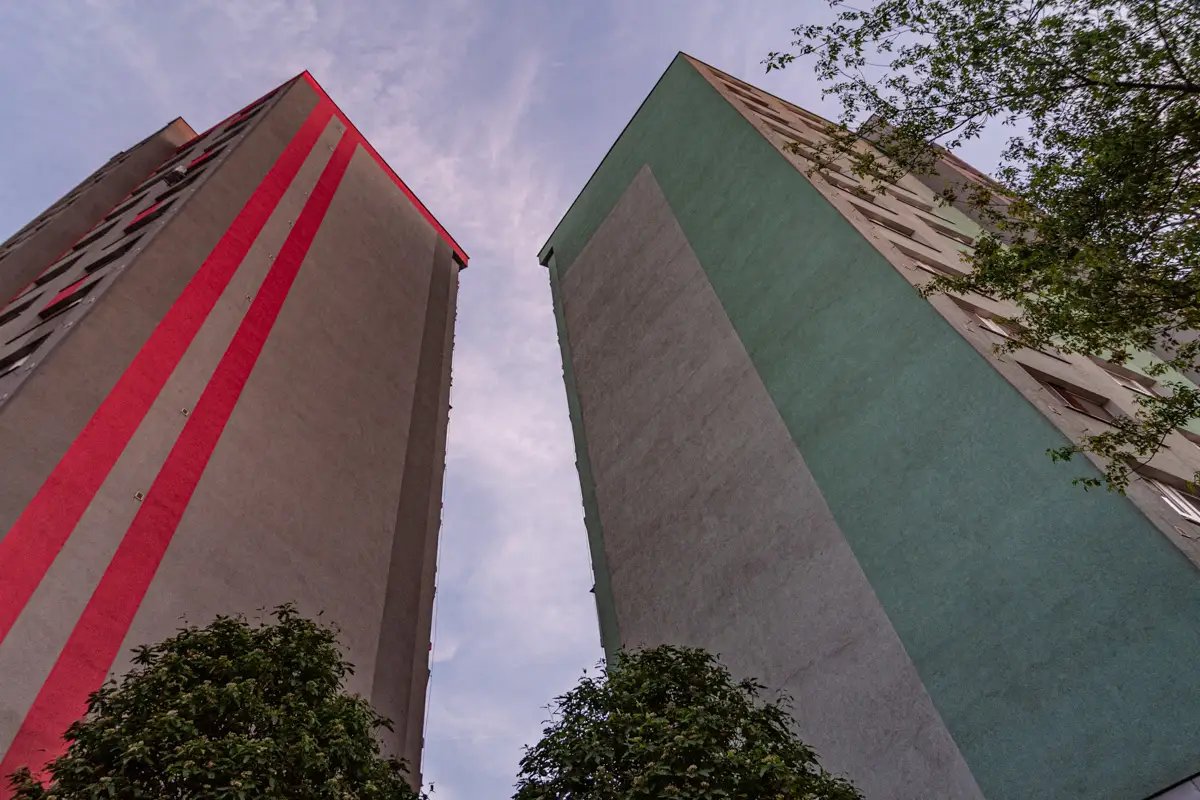
One of the most visible transformations in Petržalka has been the large-scale renovation and repainting of its residential blocks. What was once a predominantly gray concrete housing estate gradually evolved into a landscape of colorful façades. Insulation layers and contemporary surface treatments have dramatically changed the district’s visual identity.
At the same time, several efforts have attempted to preserve traces of Petržalka’s late-socialist artistic heritage. During the 1980s, eight monumental murals were created on the side façades of selected twelve-story panel buildings. These large-scale artworks, some reaching up to 450 square meters, were originally designed to visually soften the monotony of the housing estate. They were also great orientation points within the repetitive urban grid.
Most of the murals disappeared after 2000 during the mass renovation and insulation of the residential blocks. However, the civic association Konduktor later began restoring selected works, gradually bringing fragments of this visual layer back into the district.
Among the restored murals are:
- Mier by Jozef Porubčin on Osuského street,
- Mierová pieseň by Ján Ilavský near Námestie hraničiarov,
- Znaky Bratislavy by Peter Günther on Blagoevova street,
- Radostný život by Ján Ilavský on Fedinova street.
Hidden Underpasses, Walls and Infrastructure Elements
- Locations: Blagoevova, Zrkadlový háj, Jungmannova street and various residential sectors across Petržalka
- Nearest public transport: Zrkadlový háj, Ekonomická univerzita, and Romanova stops
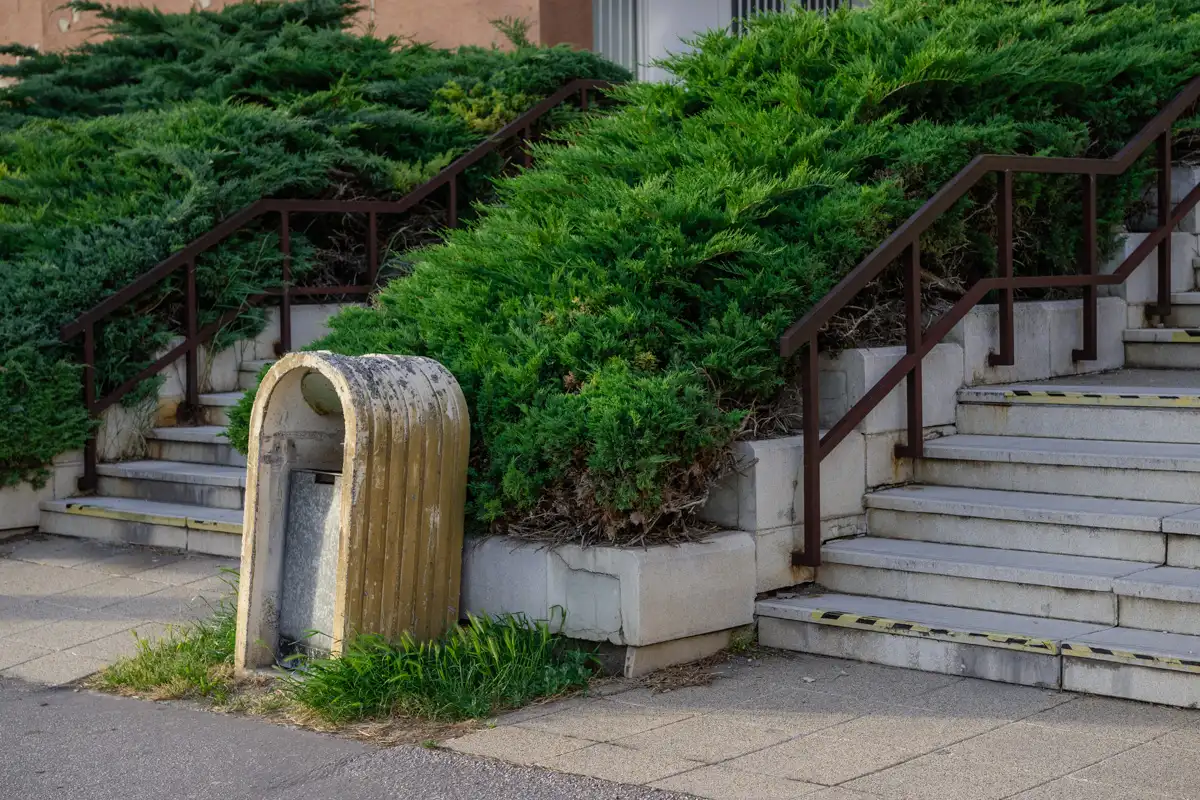
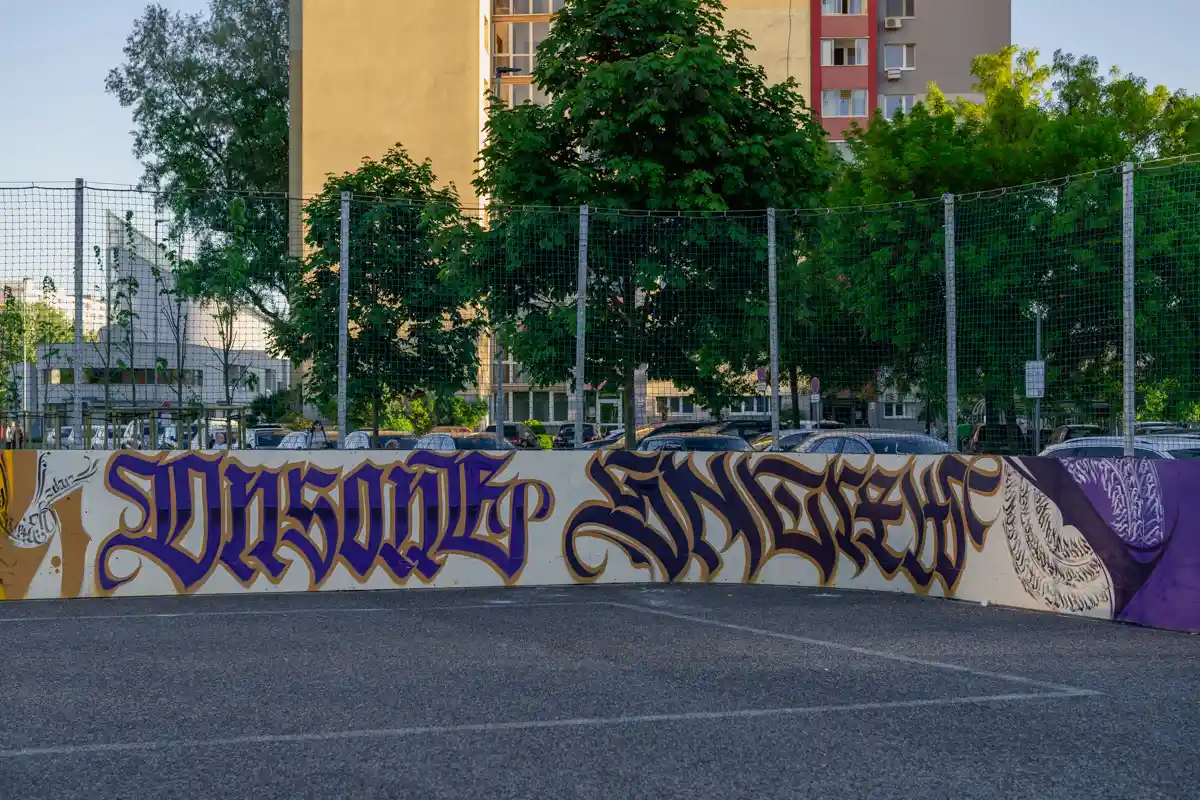
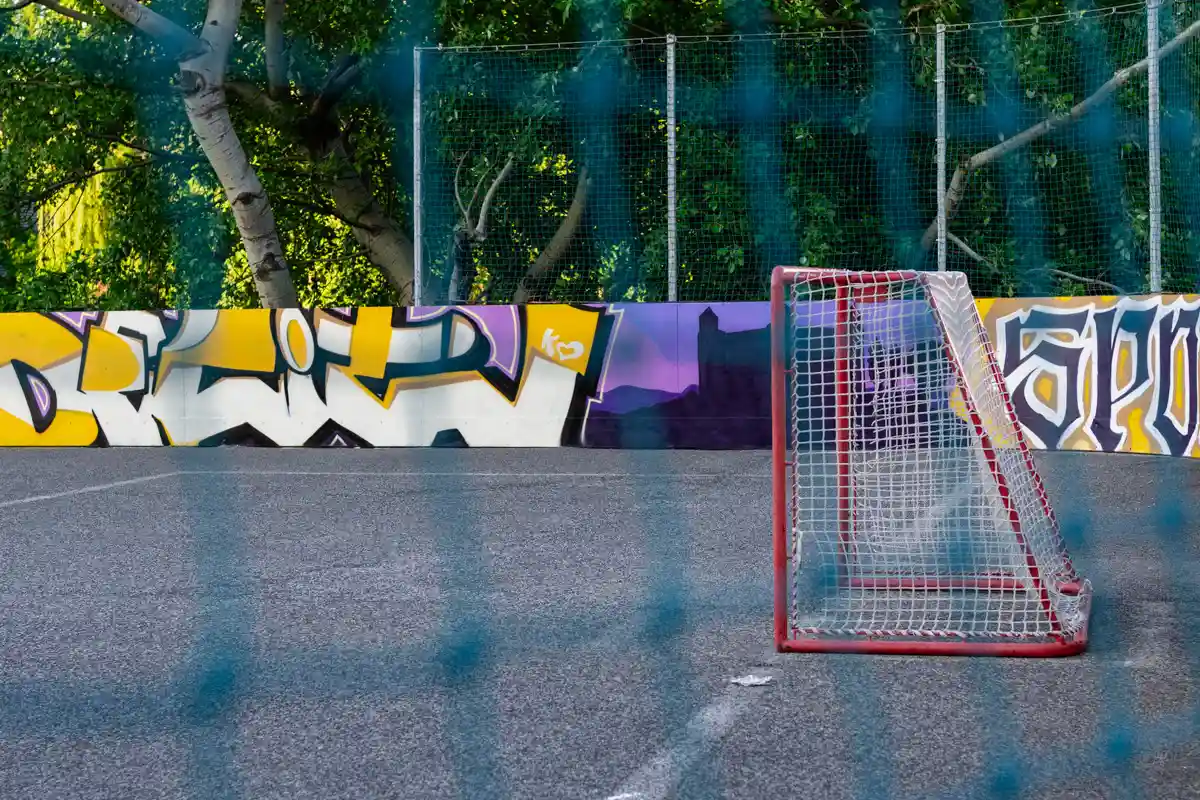
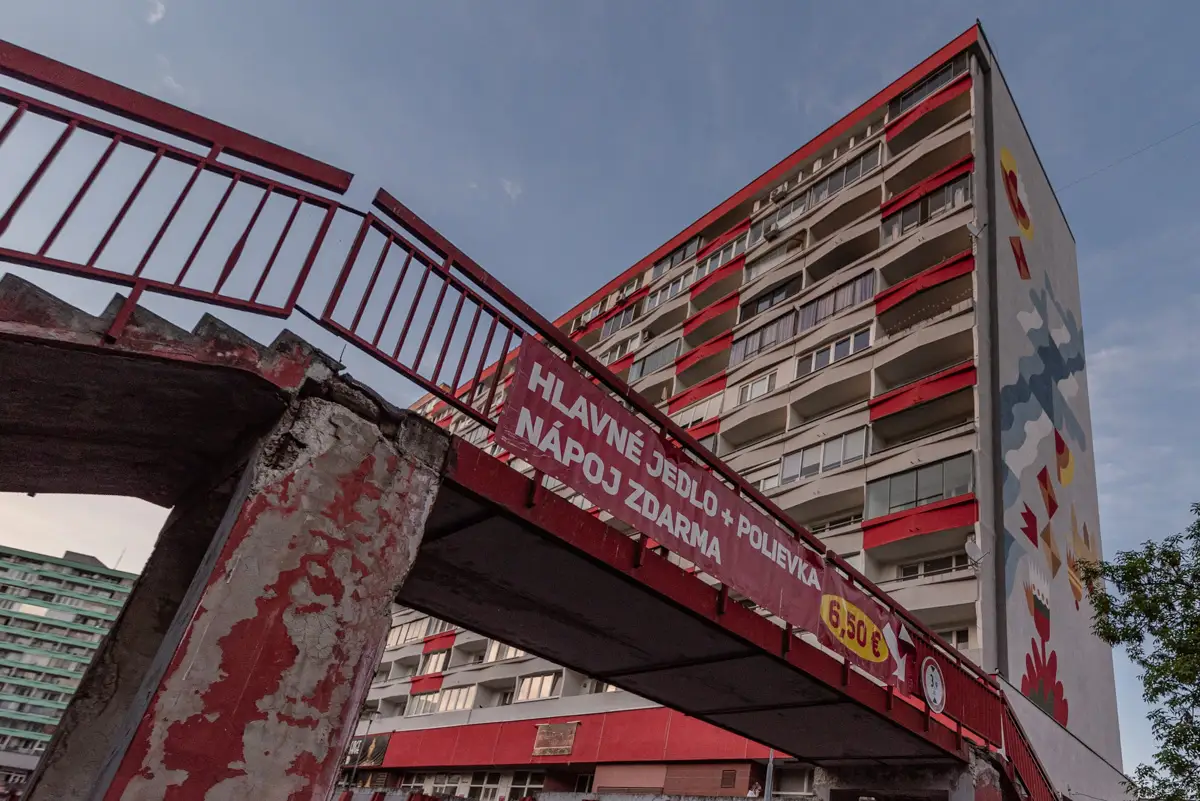
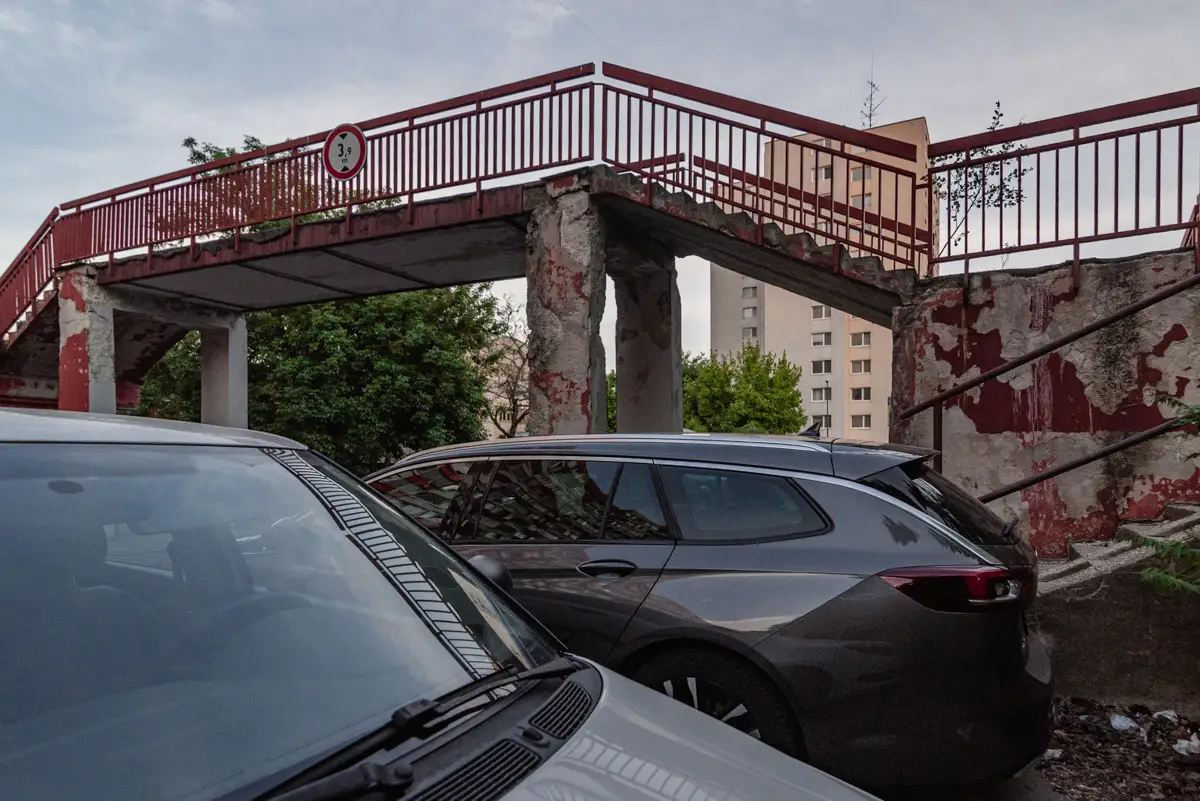
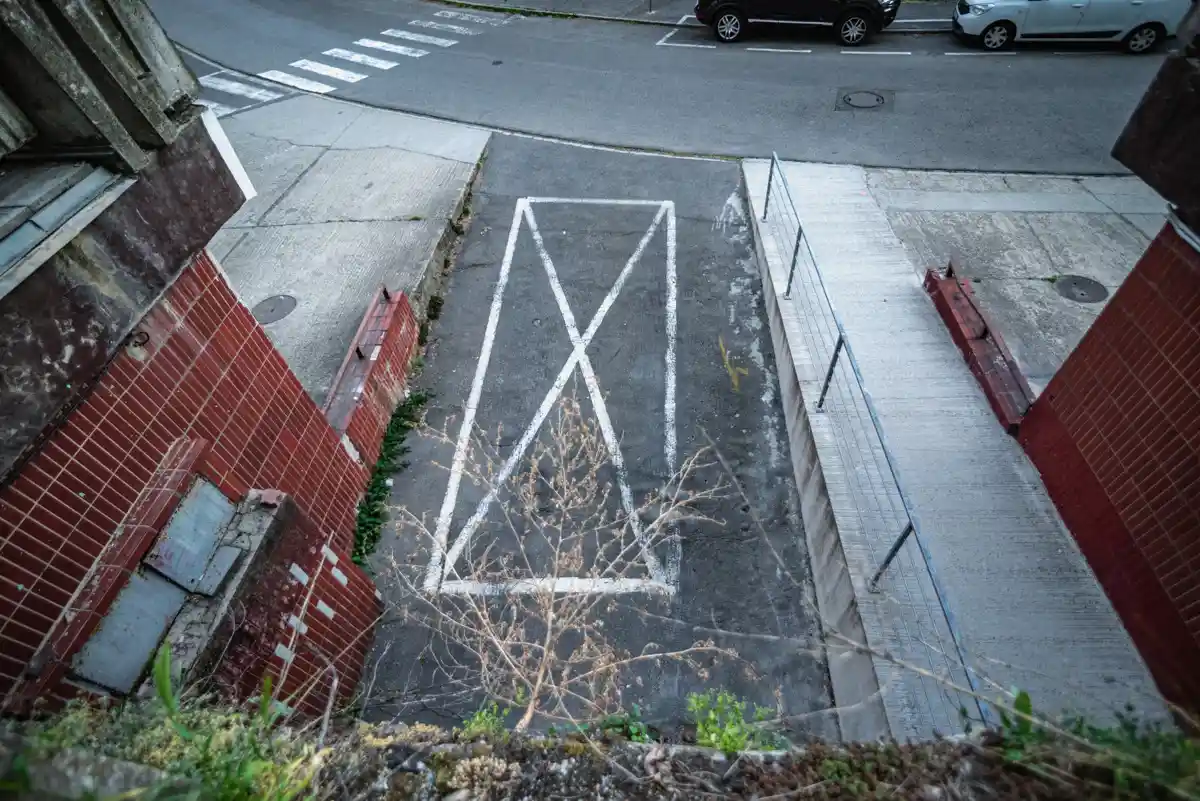
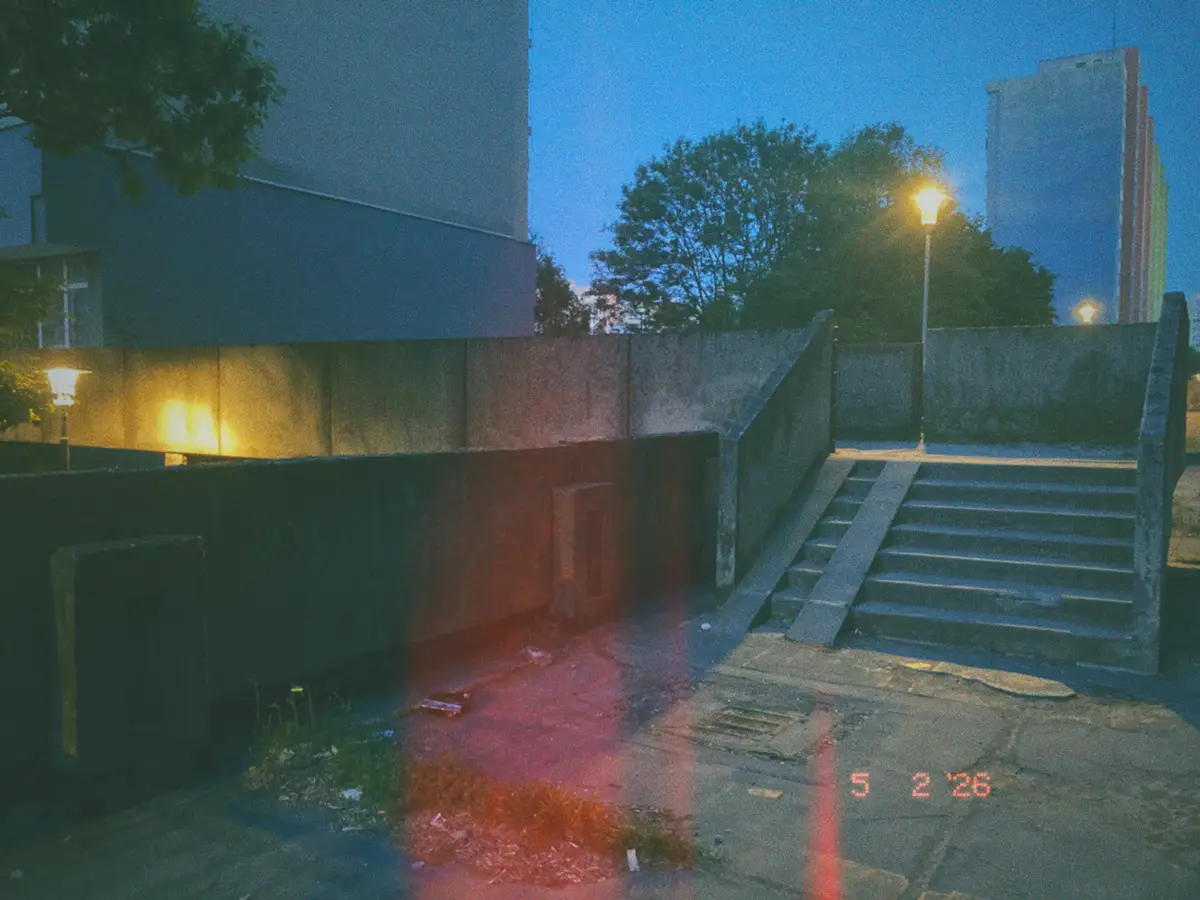
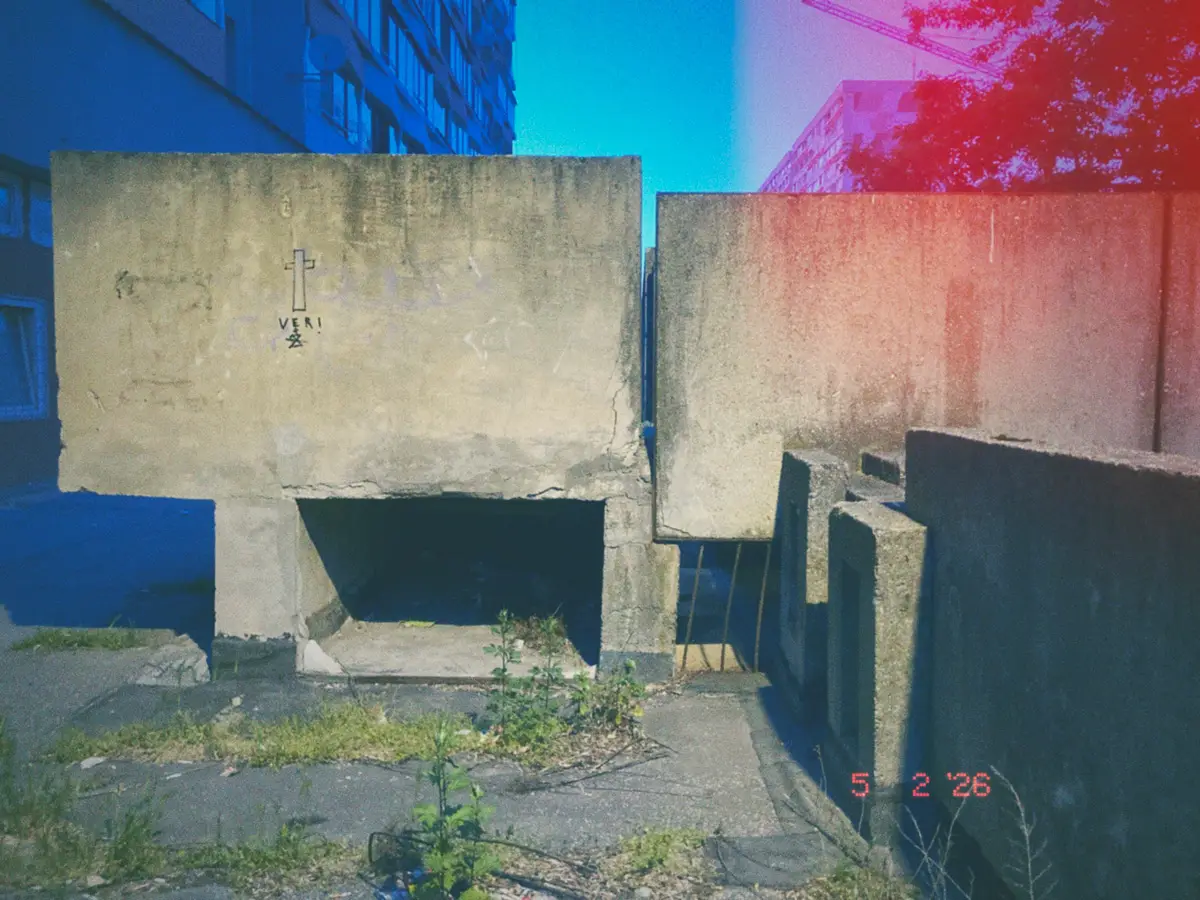
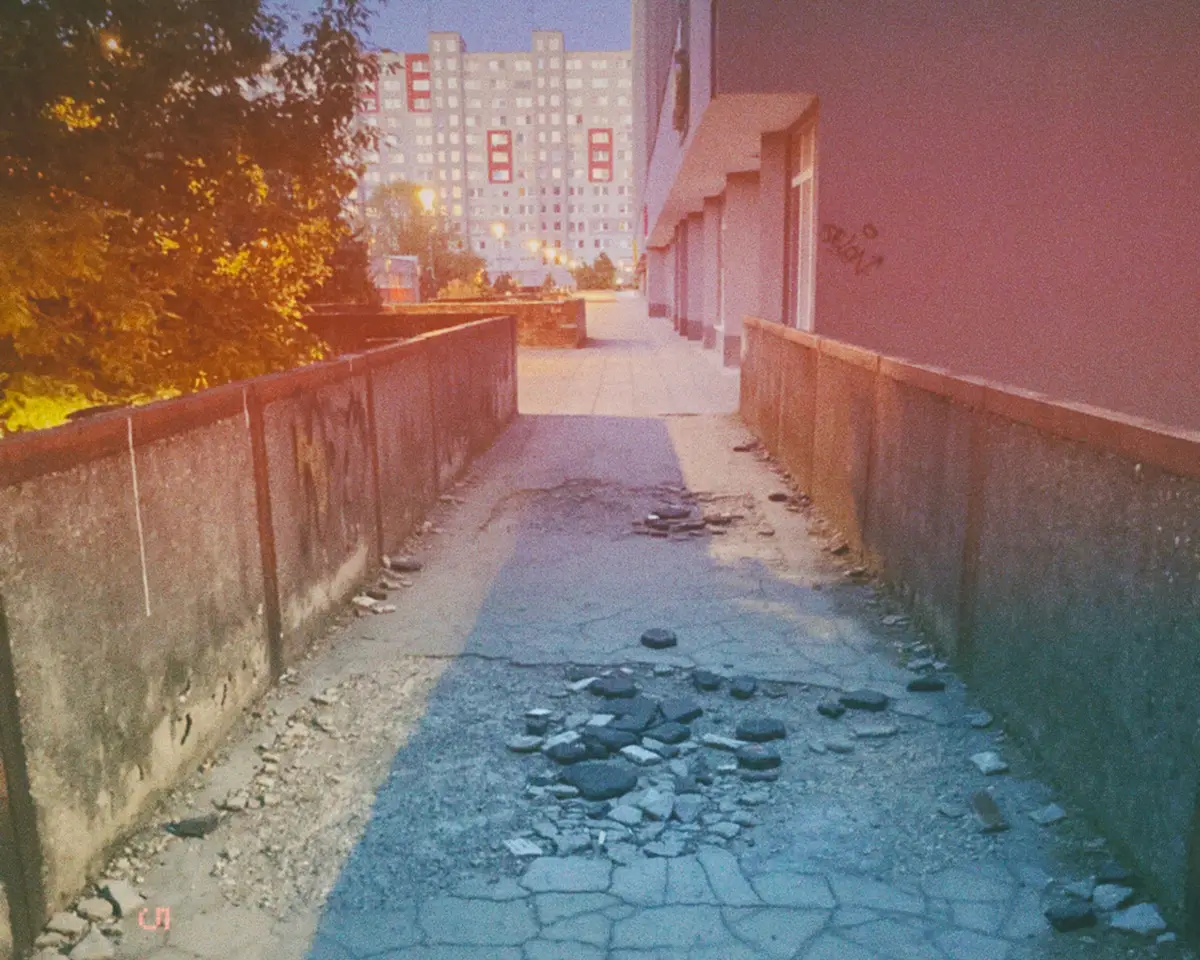
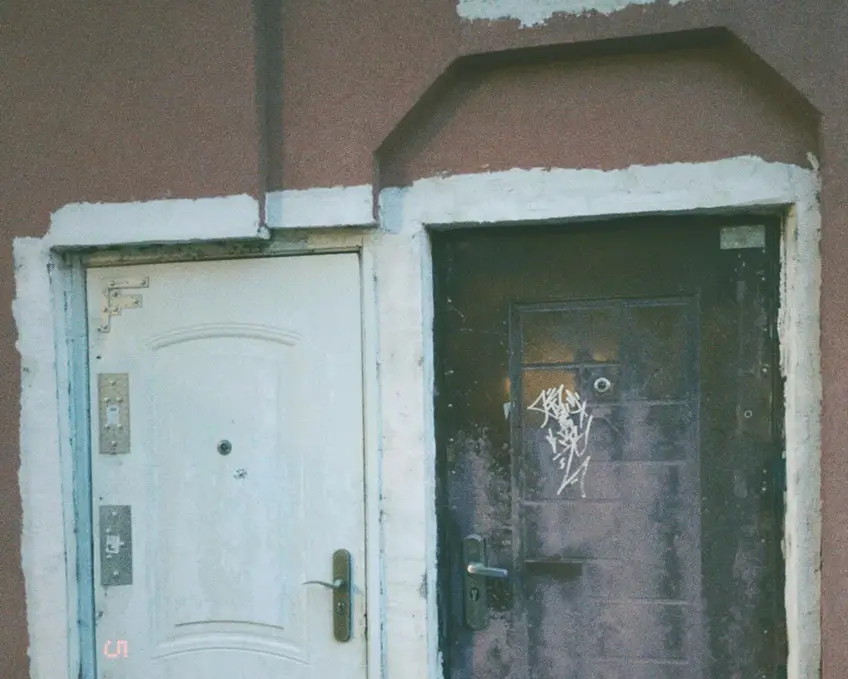
Elevated walkways, concrete terraces, underpasses, retaining walls, and pedestrian bridges still appear between residential blocks, often hidden behind newer renovations or overgrown public spaces.
Many of these structures were originally designed to separate pedestrian movement from roads and parking zones, creating multi-level public spaces integrated directly into the housing system. In several areas, residents still enter apartment buildings through raised terrace platforms connected by staircases and elevated pathways above the surrounding streets.
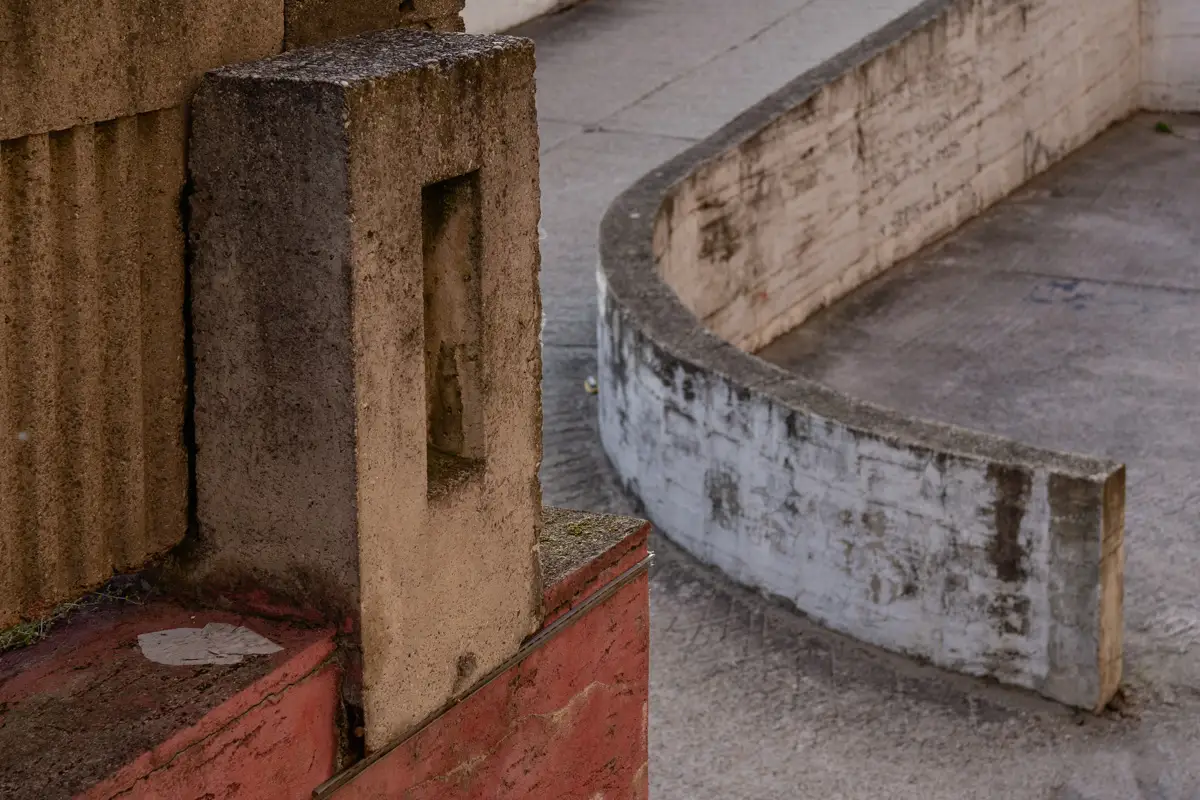
Today, many of these spaces exist in varying states of decay. Some pedestrian bridges have already been closed off, while others remain partially accessible despite visible aging and deteriorating concrete surfaces.
These transitional spaces often feel more atmospheric than the larger buildings themselves. Cracked concrete, empty staircases, layered walkways, and partially abandoned public zones create strong post-socialist urban scenes with almost dystopian character.
Socialist-Era Statues and Fountains
- Locations: Furdekova, Bulíkova, Hrobákova, Ľubovnianska, and Sad Janka Kráľa areas
- Nearest public transport: Bulíkova, Hrobákova, Ľubovnianska, and Sad Janka Kráľa stops (or Most SNP area)
Petržalka and its wider surroundings still preserve several examples of socialist-era public art placed in parks, courtyards, and pedestrian zones.
One of the most distinctive fountains in the area is Pijúce holubice (Drinking Doves), located in Sad Janka Kráľa park. It is one of the oldest public parks in Central Europe. The sculptural fountain depicts stylized birds and reflects the softer, more playful side of late socialist public art.
Within Petržalka itself, several notable sculptural works remain in public spaces such as:
- Strom života (Tree of Life) by Anton and Oľga Vrankovi on Furdekova street,
- Oddanosť strane (Devotion to the Party) by Ján V. Hučko on Bulíkova street,
- Rodina (Family) on Hrobákova,
- Milenci (Lovers) by Emil and Zlatica Venkovová,
- Jar (Spring) by Peter Roller near Ľubovnianska street.
These works reflect different aspects of socialist-era public art, from ideological symbolism to more universal human themes.
Cold War Bunkers and Forgotten Structures
- Locations: Economics University area (EUBA), Danube riverside zones, and southern Petržalka border near Austria
- Nearest public transport: Ekonomická univerzita (bus stop), Nesto, Betliarska
Petržalka still contains several lesser-known remnants from the Cold War period, scattered across its southern edge and infrastructural zones. They represent isolated fragments of defensive and functional architecture.
One of the most accessible examples is a small bunker structure located near the area of University of Economics in Bratislava. Another unusual structure nearby is a large sculptural installation combining art, timekeeping, and sport. It is an equatorial sundial created in 1988 by sculptor Štefan Prokop in collaboration with architects Ladislav Beisetzer, Ján Šimek, and Ján Jakubík.
Positioned along the Danube near the Port Bridge, it is the largest sundial in Slovakia. It was originally designed as a functional public artwork and it still shows true solar time in sunny conditions. Today, parts of its rear surface are used informally for climbing and outdoor activities.
A more significant Cold War remnant can be found near the Nesto area bus stop. For example the preserved bunker B-S 8 “Hřbitov” with the cemetery near the forest edge. This defensive structure is part of the former Czechoslovak border fortification syste. It still remains accessible as a physical reminder of the region’s military history. Nearby, sections of an original anti-tank ditch are also preserved in the landscape.
Brutalism vs. Renovation – How Petržalka Changed Over Time
In the 1980s, Petržalka paneláky was a vast expanse of uniform grey panel housing, often criticized for its monotonous and harsh atmosphere. From an architectural perspective, however, it had a strong visual consistency and a clear structural honesty, where the joints and seams of the concrete system were fully visible.
With the arrival of large-scale thermal insulation (zatepľovanie) after the 1990s, these “honest” construction details were gradually covered by layers of foam and plaster. While this made the district more comfortable and energy-efficient, it also softened much of its original brutalist expression.
For urban photography, this creates a bittersweet contrast: Petržalka paneláky is more livable today, but much of its original concrete identity and “brutalist soul” is now hidden beneath renovation.
Photography Tips
Petržalka is best approached as a place of scale and repetition, where the visual impact comes from structure rather than individual landmarks. A telephoto lens (around 85–200mm) works especially well to compress the dense housing blocks. It helps to turn rows of windows and balconies into repeating abstract patterns.
Look for geometry in everyday infrastructure. The district often works best when you focus on fragments rather than wide establishing shots.
Lighting also plays a key role. Clear sunny weather enhances color contrasts between renovated façades and remaining concrete surfaces. Winter conditions strip the environment back to its structural basics by removing foliage and revealing more of the built geometry.
Blue hour is particularly effective for highlighting taller residential blocks and giving them a more atmospheric, almost mystical feel. At this time of day, artificial lights start to contrast strongly with the fading natural light.
Some of the photos featured in this blog post were also edited using the Dazz Cam D Exp filter to enhance their retro analog atmosphere.
Is Petržalka Still Brutalist?
The short answer: yes, but you have to look deeper.
Petržalka is no longer the “grey monster” of the 1980s housing estate, often portrayed as an anonymous field of concrete. It remains a unique hybrid.
In the 1990s, the district was widely associated with social problems and a rough urban atmosphere, including perceptions linked to crime and drug activity during the turbulent transition period after socialism. This reputation strongly shaped how Petržalka was viewed, even as the physical environment itself continued to evolve.
Today, that image has largely shifted. Alongside renovated Petržalka paneláky housing blocks and softened façades, new layers of architecture have appeared, including modern residential and religious buildings such as contemporary churches. These newer structures introduce a different visual language into the district, standing in direct contrast to its original socialist-era fabric.
Rather than a preserved brutalist environment, Petržalka is best understood as a layered urban system. Fragments of its concrete past, post-socialist transformation, and modern development coexist in a single, continuously changing landscape.
Sources:
- SME – Jazyková poradňa
https://jazykovaporadna.sme.sk/q/2949/ - Instagram – visual reference
https://www.instagram.com/p/DWqKwPpjD16/ - SME.sk – Incheba Expo Bratislava
https://www.sme.sk/bratislava/c/najvacsie-vystavisko-v-bratislave-je-uz-30-rokov-incheba-expo - SPDE.sk – Nemocnica sv. Cyrila a Metoda
https://spde.sk/projekty/nemocnica-s-poliklinikou-sv-cyrila-metoda/ - Petržalka.sk – muraly a sídlisko
https://www.petrzalka.sk/2025-10-02-v-petrzalke-sa-objavila-uz-stvrta-z-osmich-monumentalnych-malieb-pripominajucich-vystavbu-sidliska/ - Umenie mesta – public art archive
https://umeniemesta.sk/en/artworks/recODrbae3QmdVL6T - Novinky.cz – paneláky vs. umenie v Petržalke
https://www.novinky.cz/clanek/bydleni-panelaky-vs-umeni-zdanlive-nesouroda-dvojice-v-kontexte-bratislavskej-petrzalky-40495848 - iDNES.cz – Petržalka housing estate
https://www.idnes.cz/cestovani/kolem-sveta/bratislava-petrzalka-slovensko-sidliste-panelak.A190911_192731_kolem-sveta_hig - Google Maps – Petržalka reviews & location
https://www.google.com/maps
Sources: