
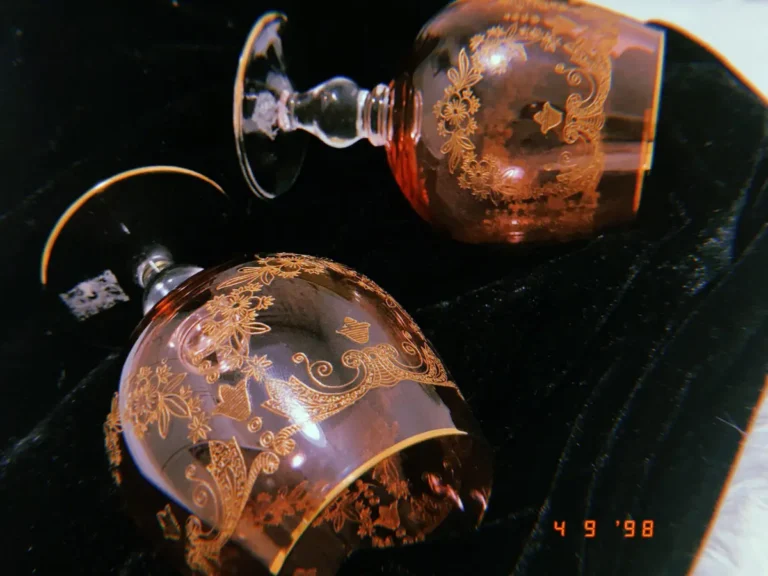
If you’re wondering what kind of souvenirs from Slovakia to buy on your trip, I have some tips for you. Many of them are available in souvenir shops. This shops are usually found in city centers and near popular tourist attractions. You might already know some of them, but others may come as a surprise.
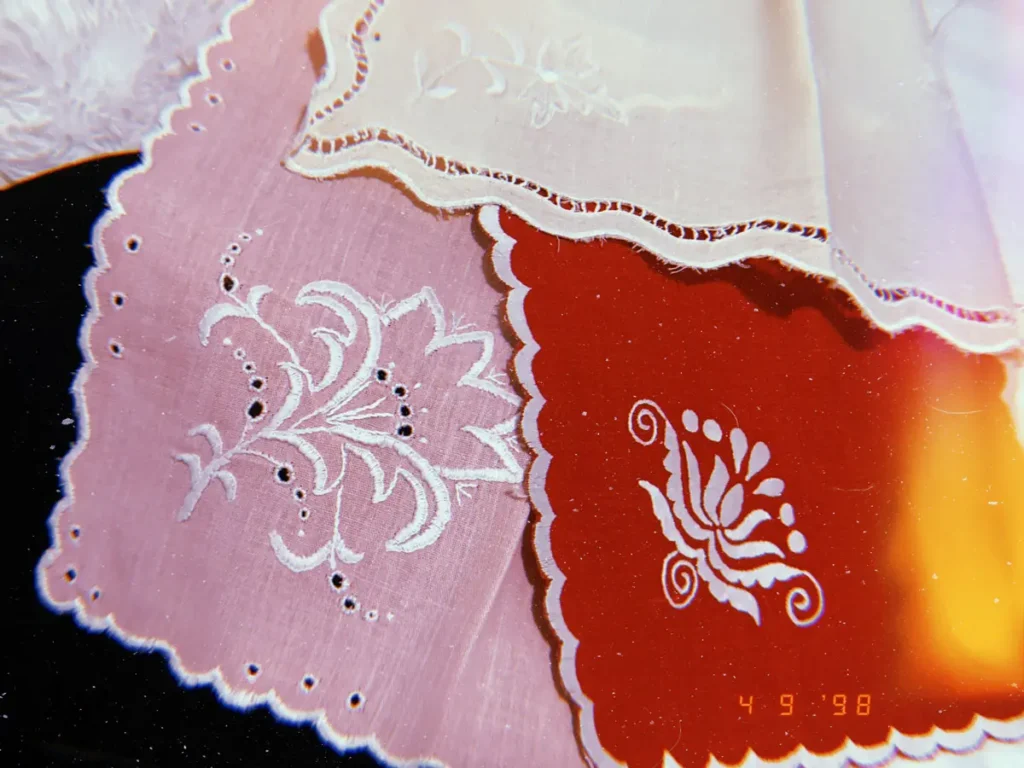
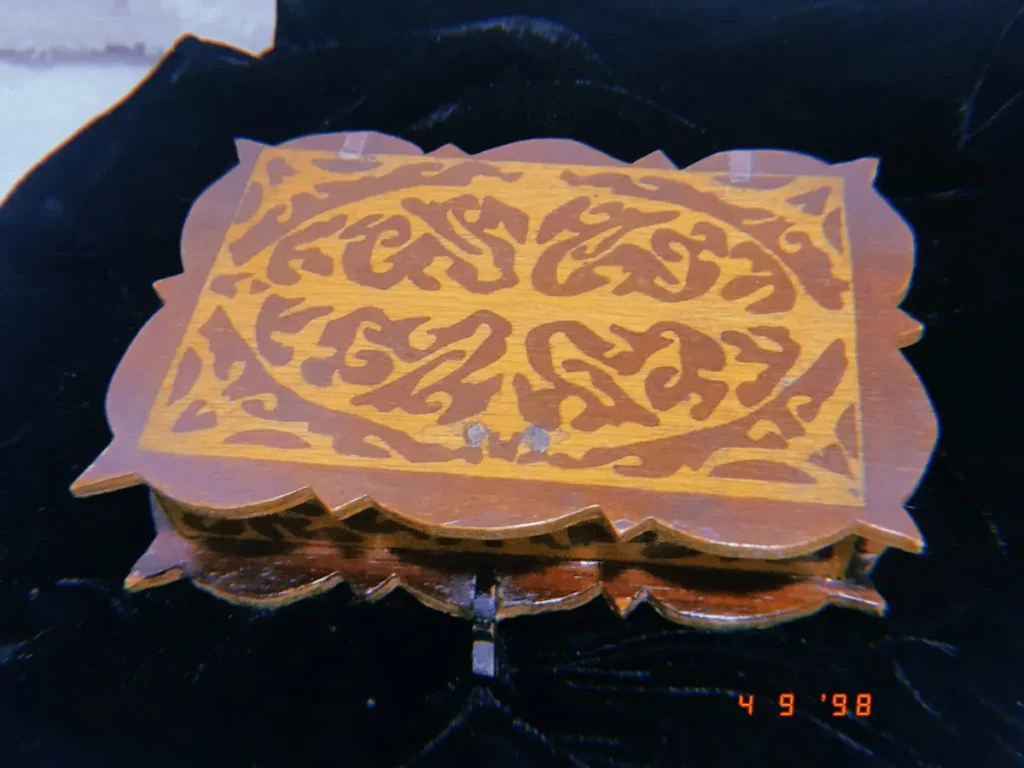
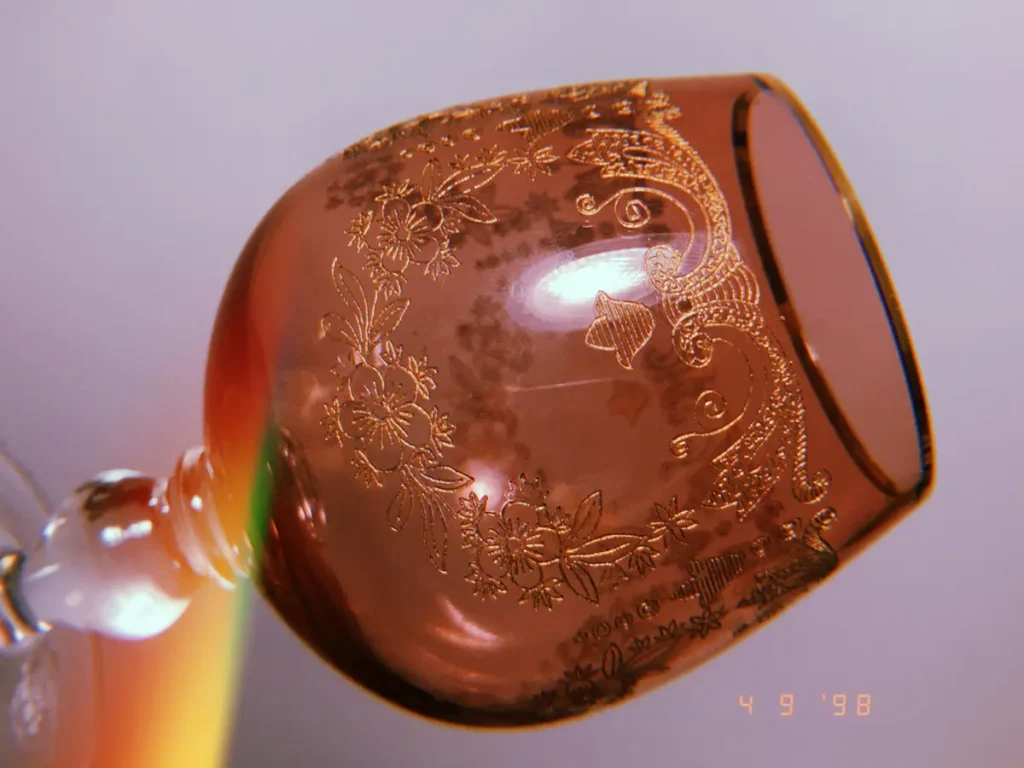
The featured images in this article were taken with the Huji Cam app. I photographed some of the items that represent traditional Slovak souvenirs found in my home. Some of them were made by my relatives, including the wooden box and Slovak folk embroidery.
Slovak Folk Embroidery
Slovak folk embroidery is one of the most distinctive souvenirs you can take home. Look for embroidered tablecloths, kitchen towels, bags, scarves, or traditional shirts and blouses decorated with colorful regional patterns. Designs vary from one part of Slovakia to another, so they can also make a nice reminder of the region you visited.
Wooden Folk Crafts
Wooden crafts have a long tradition in Slovakia, particularly in regions such as Liptov, Orava and Spiš. Look for carved spoons, bowls, small figurines, crosses, wooden toys, or traditional shepherd’s items such as valašky and carved drinking cups. The tradition is also strongly associated with Slovak woodcarving. Master Paul of Levoča famously created the elaborate wooden altarpiece in St. James’s Basilica in Levoča.
Glass and Ceramics from Slovakia
Slovakia has a long tradition of both ceramics and glassmaking. You will find everything from traditional folk pieces to contemporary design. Modra, near Bratislava, is particularly known for its distinctive blue-and-white ceramics, including plates, bowls, mugs and decorative pieces. If you prefer something more contemporary, look for handmade glass vases, bowls and other objects created by Slovak glass artists and designers. Bratislava is also a good place to discover contemporary Slovak glass, including the work of artists such as Ašot Haas.
Decorated Easter Eggs
Known as kraslice, decorated Easter eggs are a traditional Slovak folk craft and a small but beautiful souvenir. Slovak kraslice can be decorated using several techniques, including wax-resist painting, scratching, straw decoration, wirework and delicate perforation. Different regions have their own patterns and styles. Particularly in Liptov, Orava and eastern Slovakia. They are easy to pack and make a much more distinctive souvenir than a typical tourist trinket.
Souvenir shops are often easy to find in city centers, particularly around popular tourist attractions. You’ll commonly find them inside or near museums and galleries, as well as on busy pedestrian streets and other tourist-focused areas.
In Košice, for example, there is a small souvenir stand near St. Elisabeth Cathedral, while Bratislava has plenty of souvenir shops around streets such as Laurinská and Panská in the Old Town. For more unusual or locally made gifts, it is also worth checking museum shops, local markets and craft stores.
Fujara and Other Folk Instruments
The fujara, a large wooden shepherd’s flute, is one of Slovakia’s most distinctive traditional instruments and a particularly unusual souvenir. It is closely associated with the shepherd culture of central Slovakia. Especially the regions around Detva and Podpoľanie. Its traditional music is included on the UNESCO Intangible Cultural Heritage list. Smaller instruments such as shepherd’s pipes, koncovka flutes, bagpipes and jaw harps can be more practical souvenirs to take home. Even if you never learn to play one, a traditionally decorated wooden instrument can make a striking piece of Slovak folk art.
Traditional Slovak Dolls
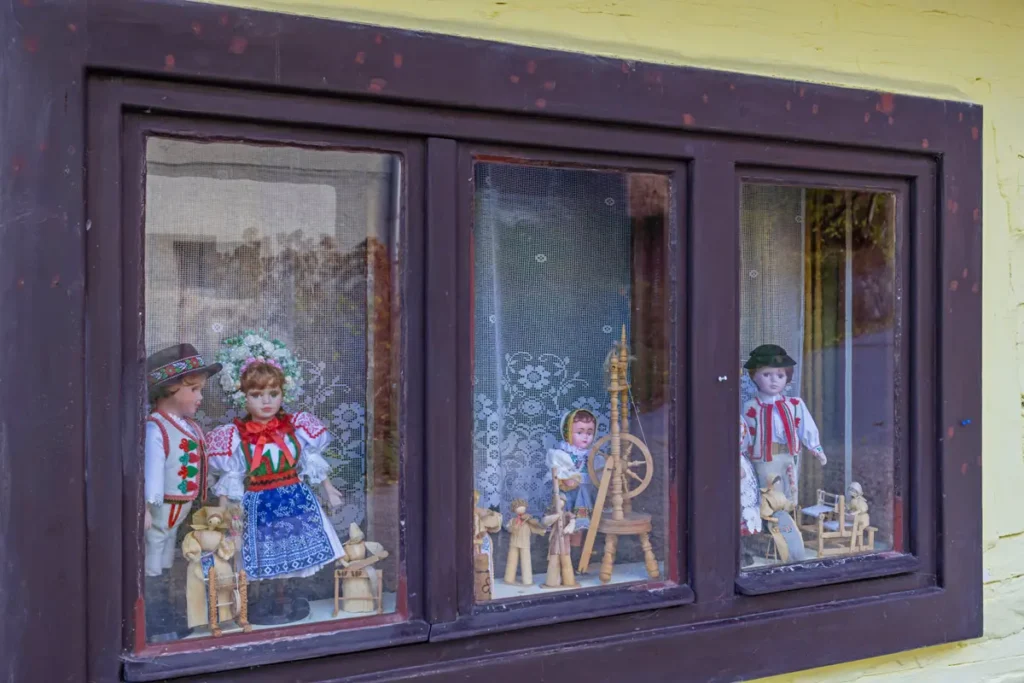
Traditional Slovak dolls dressed in regional folk costumes are one of my personal favorite souvenirs from Slovakia. Look out for handmade dolls representing different Slovak regions, as well as traditional šúpolienky. These are dolls made from dried corn husks. These natural-material dolls are particularly charming and often depict women, children, or figures in folk costumes. They are lightweight, easy to pack, and make a lovely little piece of Slovak folk art to take home.
Wool and Sheep-Wool Products
Slovakia has a long tradition of sheep farming, particularly in its mountainous regions. Sheep-wool products can make a warm and practical souvenir. Look for traditional wool socks, slippers, scarves, blankets, felted decorations, and sheepskin products. You may also come across items made from valená vlna (solitary wave), a traditional form of felted wool used in Slovak folk crafts. These products are especially worth looking for in mountain regions and at local craft markets.
Horalky and Other Slovak Sweets
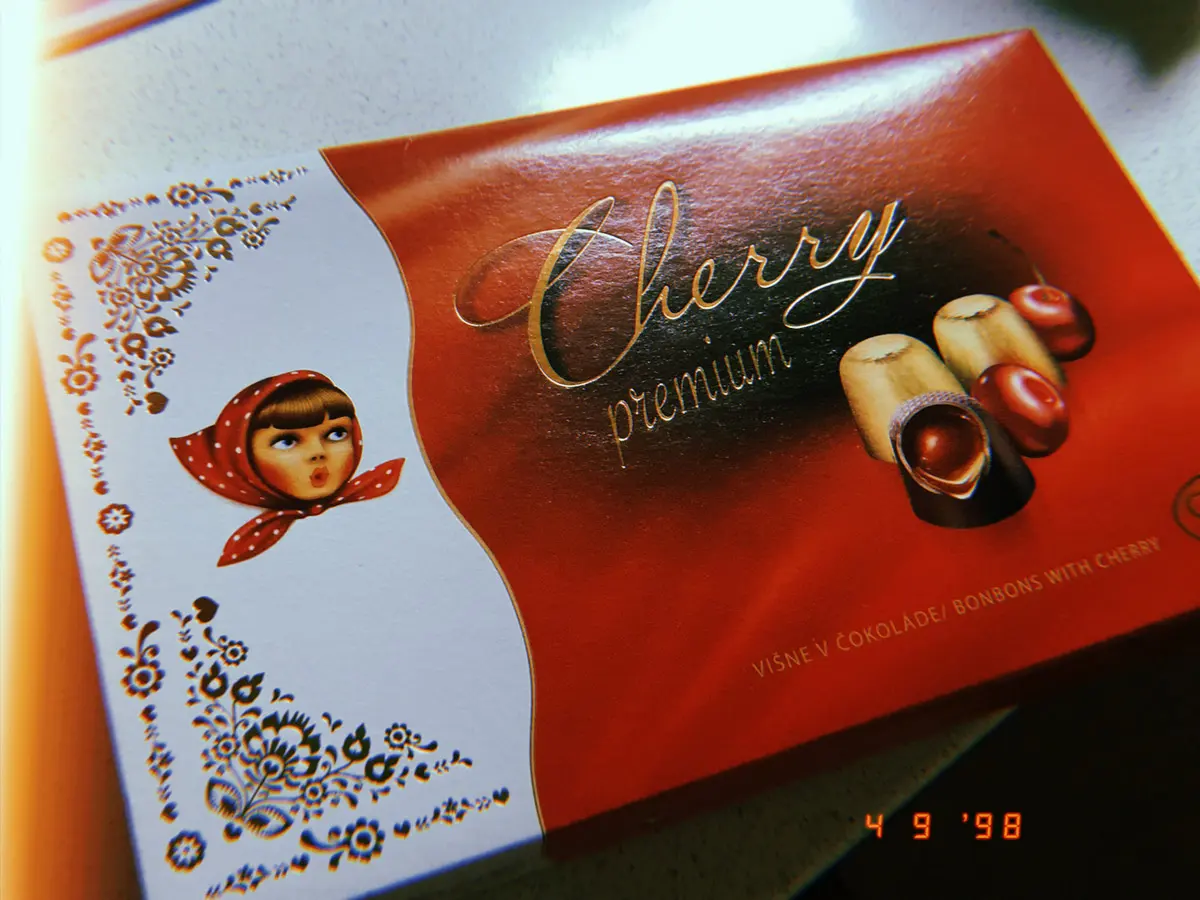
If you have a sweet tooth, Slovak supermarkets are full of inexpensive treats that make easy edible souvenirs. Horalky, with their wafer layers, peanut filling and chocolate coating, are perhaps the most iconic choice. Other popular Slovak sweets include Tatranky, Kávenky, Mila, Deva, Arizonky. They all come in different flavors and are easy to pack in your luggage. You can find them in supermarkets throughout Slovakia, so you don’t even need to visit a souvenir shop to bring home a taste of the country.
And if you have a little extra space in your luggage, you can also look for a tea named Pigi Čaj. It comes in a somewhat larger package, but its unmistakably retro look makes it a fun souvenir for people who love vintage packaging.
Slovak Honey and Mead
Slovakia has a long tradition of beekeeping, and locally produced honey can be a simple but meaningful souvenir to take home. You’ll find different varieties, including floral, forest and honeydew honey, as well as medovina (mead), a traditional honey-based drink. I also have an uncle who keeps beehives in the forests of eastern Slovakia, and his honey is mostly sold locally.
Tokaj Wine
Tokaj is one of Slovakia’s best-known wine regions and a good choice if you want to take home something more special than a typical souvenir. The Slovak part of the historic Tokaj wine region is located in the southeast of the country, close to the Hungarian border. The area is known for its small wine cellars, vineyards and sweet Tokaj wines. Hercegkút, on the Hungarian side, is famous for its traditional cellar rows, but you can also find similar small wine cellars in Slovak Tokaj villages.
Slovakia also has other interesting wine regions, including the Small Carpathian Wine Region around Pezinok and Modra, much closer to Bratislava. I haven’t tried enough Slovak wines to recommend particular bottles, so if you want to buy one, it’s worth asking at a local winery for a bottle from the region you are visiting.
Can’t find the right souvenir during your trip, or want to browse Slovak items from home? eBay has a selection of Slovakia-related souvenirs and vintage folk items, including traditional dolls, ceramics, embroidery, postcards and other collectibles.
Slivovica and Other Slovak Spirits
Slivovica, a strong plum brandy, is probably one of the spirits most closely associated with Slovakia. You’ll also come across other fruit spirits, often made from pears, apricots or cherries.
I’m not really an expert on Slovak spirits and don’t drink them myself, so I won’t pretend to recommend a particular bottle. However, small bottles and souvenir-sized versions are widely available and can be an easy option if you want to bring home a traditional Slovak drink. Just remember to check the rules for carrying alcohol if you are flying.
Local Cheese
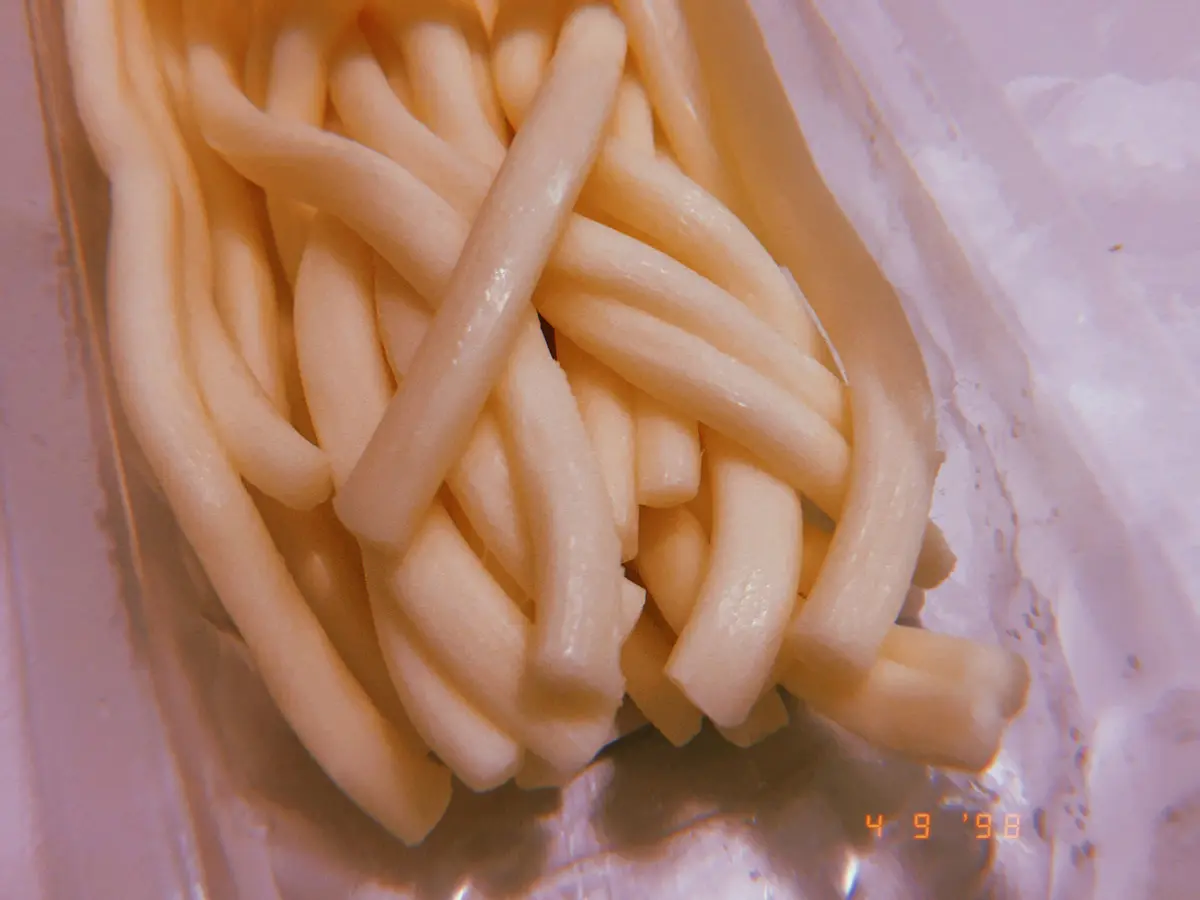
Slovakia has a strong sheep-farming tradition, particularly in its mountainous regions. Sheep’s milk cheeses are among the local specialties worth looking for. Bryndza is probably the most famous Slovak cheese, while korbáčiky – thin strips of braided smoked or unsmoked cheese – are another popular choice. You can also come across oštiepok, a smoked sheep’s milk cheese traditionally shaped into a distinctive oval form.
I’m definitely not a cheese expert, though. My personal favorite is still Gouda! If you want to try something genuinely Slovak, however, these are the ones I would look for.
Slovak Books, Prints and Design Gifts
If you’re looking for a more modern Slovak souvenir, consider a book, art print or design object by a Slovak artist or publisher. One of my favorite examples is Čierne diery, a Slovak organization documenting forgotten architecture and industrial heritage. Their books, risograph prints and illustrated maps feature old factories, railway buildings, spas and other lesser-known places around Slovakia.
Their work has also received several Slovak design awards, making it a great option if you want a souvenir that feels more like contemporary Slovak design than traditional tourist merchandise.
Conclusion
I hope you found some of these Slovakia souvenirs interesting and will consider adding one or two to your travel memories. Whether you choose a traditional handmade item, a local treat, or something completely unexpected, it can be a nice way to remember your time in Slovakia.
Sources
Sources: