
If you’re looking for things to know before visiting Slovakia, this local guide covers the essential information you should know before your trip. It answers many of the common questions first-time travellers may have, as well as a few things you might not find in a typical travel guide. The guide is divided into five main sections: money and practical tips, weather, culture and lifestyle, safety and nature, and places and experiences.
Slovakia Uses the Euro
Slovakia has used the euro as its official currency since 2009. Many of its neighbouring countries still use their own currencies, including the Czech koruna, Polish złoty, Hungarian forint, and Ukrainian hryvnia. Austria is the only other neighbouring country that uses the euro. Thus the country is a convenient destination to combine with Slovakia. Especially thanks to the close proximity and good public transport connections, including Vienna International Airport in Schwechat.
Cashless Doesn't Mean Cash-Free
In many places, it is common to pay by card. Under a new law, businesses are required to offer cashless payment options and may face penalties if they fail to do so. However, if you are visiting smaller or more remote places, it is still a good idea to carry some cash with you. Just in case the card terminal decides to stop cooperating. Technology has sometimes a funny habit of failing exactly when you need it most.
Slovakia Is in the Schengen Area
Slovakia is part of the Schengen Area, so there are no routine border checks when travelling between Slovakia and other Schengen countries. EU citizens can enter Slovakia freely with a valid national ID card or passport, making it easy to combine a trip to Slovakia with neighbouring countries such as Austria, Czechia, Poland or Hungary.
Need mobile data during your trip? An eSIM can be a convenient option, especially if you want to get connected as soon as you arrive without dealing with a local SIM card. I recommend checking Airalo for Slovakia eSIM plans before your trip.
Slovak Is the Official Language
Slovak is the official language of Slovakia, but in some parts of the country, especially near the Hungarian border, you will also hear Hungarian spoken fluently. You can generally expect younger people, particularly Millennials and Gen Z, to speak good English, especially in larger cities and tourist areas.
Many Slovaks also have connections to countries such as England, the Netherlands, Belgium, or Germany through studying, working, or living abroad. Since the war in Ukraine began, Ukrainian has also become a more common language to hear on the streets, particularly in Bratislava and Košice.
Slovakia Is Smaller Than You Might Think
Slovakia is smaller than you might think, and it is possible to travel from the capital, Bratislava, to eastern Slovakia in just a few hours. Bratislava and Košice are also connected by a direct flight that takes around one hour, making it possible to explore the capital one day and find yourself in a completely different part of the country the next. From Košice, you can continue towards Slovakia’s easternmost regions near the Ukrainian border or even travel further east.
Getting Around Slovakia
Slovakia has a good public transport network, especially in its larger cities. Buses, trams and other forms of urban transport are generally affordable, and getting around cities such as Bratislava and Košice is relatively easy.
For travelling between cities, you can use trains or long-distance buses. Trains can be a convenient option for longer journeys, although delays can occasionally happen, particularly during bad weather or when there are disruptions on the railway. Buses are another good option, especially for routes that are not well served by trains.
If you are arriving by air, Slovakia has three airports with scheduled flights: Bratislava, Košice and Poprad-Tatry. Poprad-Tatry Airport is particularly convenient if you are heading to the High Tatras, while Bratislava and Košice offer a wider choice of connections.
For checking connections, timetables and tickets, these are some of the most useful services to know:
- ZSSK – Slovakia’s main railway operator
- RegioJet – trains and buses on selected routes
- Slovak Lines – regional and international bus services, including connections to Bratislava and Vienna airports
- FlixBus – long-distance bus connections
- iMHD.sk – timetables, routes and public transport information for several Slovak cities
Slovak Lines currently operates connections to both Bratislava Airport and Vienna Airport, among other routes.
Should You Rent a Car?
Whether you need a rental car in Slovakia depends largely on where you want to go. If you are mainly visiting Bratislava, Košice or other larger cities, you can usually get around without a car thanks to public transport, taxis and trains. A car becomes more useful if you want to explore remote villages, castles, hiking areas or parts of the countryside that are less well connected by public transport. For a trip focused on cities and major tourist attractions, however, renting a car is often unnecessary.
If you arrive at Bratislava Main Railway Station, be careful when taking a taxi directly from the station. Some drivers may approach tourists and offer a ride without clearly stating the price, which can result in an unnecessarily expensive fare. It is safer to book a taxi through a reputable app or company, check the price before getting in, and avoid accepting unsolicited offers from drivers approaching you inside or outside the station.
Slovakia Drives on the Right
Slovakia drives on the right-hand side of the road, as in most European countries. If you are renting a car, remember that speed limits and other road rules may differ from those in your home country.
You Need a Vignette on Motorways
If you are travelling by car, you need a valid electronic vignette to use most motorways and some expressways in Slovakia. There is no physical sticker – the vignette is linked to the vehicle’s registration number. You can buy it online before your journey.
Slovakia Uses European Power Plugs
Slovakia uses the European Type E plug with a standard voltage of 230 V and a frequency of 50 Hz. If you are travelling from a country with different sockets, make sure to bring a suitable travel adapter. If you forget one, you can easily buy an adapter in electronics stores such as Alza, NAY or Planeo.
Tap Water Is Safe to Drink
Tap water in Slovakia is safe to drink and is commonly used for drinking and cooking. You can fill your reusable water bottle straight from the tap without any problem.
Mobile Data and SIM Cards
If you need mobile data while travelling around Slovakia, using an eSIM such as Airalo can be easier than buying a local SIM card. Getting a Slovak SIM can involve registration and identification requirements. It is not always as simple as buying a prepaid SIM at a petrol station, as you might be able to do in countries such as Serbia. An eSIM lets you arrange your data before you arrive and avoid the extra paperwork.
Wi-Fi Is Widely Available
Free Wi-Fi is widely available in Slovakia, including on some trains and long-distance buses, as well as in shopping centres, cafés and public spaces. You can also find free Wi-Fi in some city centres, for example in Bratislava. Keep in mind that some networks require you to register or provide an email address or password before you can connect.
112 – European emergency number
155 – Medical emergency service
158 – Police
150 – Fire brigade
18300 – Mountain Rescue Service
116 117 – Free medical advice line for less serious health problems
Pharmacies are called lekáreň in Slovak. If you need medication outside normal opening hours, look for a lekáreň s pohotovostnou službou (on-duty pharmacy) and check the current opening hours before heading there.
Weather & When to Visit
Slovakia has four distinct seasons, with cold winters, warm summers, and relatively mild spring and autumn months. However, summers have been getting hotter. Heatwaves with temperatures around 35–40°C or even higher can occur for several days in a row.
If you are visiting Slovakia during a hot summer, keep in mind that air conditioning is not as standard here as it is in some warmer European countries. Hotels and newer accommodation are more likely to have it, but many apartments and some Airbnb properties may not, so it is worth checking this before booking.
For a more comfortable trip, spring and early autumn can be great times to visit. Especially if you want to explore cities or go hiking without the peak summer heat. Winter is ideal for skiing and Christmas markets, while summer is the main season for swimming, hiking and outdoor activities.
Shops Don't Stay Open All Night
Many supermarkets and shops in Slovakia close relatively early compared with some other European countries. Larger chains such as Billa, Kaufland, Lidl and Tesco often close around 9 or 10 PM, although opening hours vary by location. Smaller shops may stay open a little later, and you can usually find some basic groceries at shops or convenience stores at major transport hubs such as Nivy Bus Station in Bratislava.
If you need groceries late at night, your options become more limited, especially outside the city centre. Bratislava does have a few exceptions, including Potraviny NON STOP on Mierová 85 in Ružinov, which is open 24 hours a day, 365 days a year.
There are also some newer COOP Jednota 24/7 stores around Slovakia. Their unstaffed night-time operation requires registration and identity verification through the COOP Jednota app, so they are not necessarily the most convenient option for a short-term visitor.
Public Holidays Can Affect Your Trip
Public holidays can affect opening hours in Slovakia, so it is worth checking the holiday calendar before planning your trip. You can find the current list of Slovak public holidays on Foreign Ministry of Slovakia website.
Shops and shopping centres are often closed on public holidays, although there are exceptions. Tourist attractions such as castles, chateaus, museums and caves are often open on Sundays during the main season, but their opening hours can change on public holidays. If you are planning to visit a specific attraction or restaurant, it is always worth checking its website or social media in advance, or contacting them directly.

Tipping in Slovakia
Tipping is not mandatory in Slovakia, but it is common to leave a small tip when you are happy with the service. In restaurants and cafés, rounding up the bill or leaving around 5–10% is generally appreciated.
Slovaks Don't Always Smile at Strangers
Slovaks can be a little more reserved with strangers than people in some other countries. It is not particularly common to start conversations with random people on the street, compliment someone’s clothes or hairstyle, or simply smile at strangers as you pass by. This is especially true when it comes to approaching someone for dating or flirting. Unsolicited approaches, particularly from men towards women, are not necessarily welcomed or expected. It is usually better to respect people’s personal space and wait for a more natural opportunity to start a conversation.
Take Your Shoes Off in Slovak Homes
If you are invited into a Slovak home, it is customary to take your shoes off at the door. Your host will often offer you slippers, especially during the colder months.
Vegetarian and Vegan Food
Vegetarian and vegan options are becoming increasingly common in Slovakia. Especially in larger cities such as Bratislava and Košice. Bratislava has several fully vegan and vegetarian restaurants, including Balans Bistro, Foodstock Bratislava and Vegan BEMBA – rawfood & plant-based. In Košice, you can also find vegetarian and vegan-friendly places such as VE.DOM.E Vegánske Bistro. But choices are more limited. Outside the larger cities, dedicated vegetarian or vegan restaurants are less common, so it is worth checking menus in advance if you have specific dietary requirements.
Alcohol Is Part of the Culture — But Don't Assume Everyone Drinks
Alcohol is a common part of social life in Slovakia, from having a beer or wine with friends to celebrations and family gatherings. While drinking is certainly not expected from everyone, people who do not drink alcohol may sometimes get a few curious questions or be seen as a little unusual, especially by older generations. Don’t feel pressured to drink, though — saying that you don’t drink is perfectly acceptable.
Smoking Rules Are More Restricted
Smoking is restricted in many public places in Slovakia, including inside public buildings and at public transport stops. In restaurants and cafés, smoking indoors is generally not allowed, although you may still find designated smoking areas in some places. Smoking outside buildings is generally permitted where there is no specific restriction.
One thing you may notice, however, is that people do not always follow the rules. Especially at bus stops, where you may occasionally see someone smoking despite the ban.
Slovakia Is Generally Safe
Slovakia is generally a safe country for travellers, including in larger cities such as Bratislava and Košice. Like anywhere else, however, there are areas where you may want to be more cautious, especially after dark. In Bratislava, locals may mention the area around Pentagon in Vrakuňa, while in Košice, Luník IX is a neighbourhood that tourists generally have little reason to visit and where extra caution is advisable.
For solo female travellers, Slovakia is generally a comfortable destination. As a woman living here, I have regularly travelled around Bratislava and Košice after dark, including using night public transport, without feeling unsafe. I would still avoid walking through isolated parks or poorly lit areas alone at night. For example, I would not recommend taking a late-night shortcut through Sad Janka Kráľa in Bratislava, particularly if you are completely alone.
On the other hand, using night buses or trams and walking a short distance from a stop to your accommodation is generally something I would consider perfectly reasonable. As always, basic precautions are sensible, especially late at night or in unfamiliar areas.
LGBT+ Travel in Slovakia
Slovakia is generally safe for LGBT+ travellers. But the country has become more socially and politically conservative in recent years. In 2025, a constitutional amendment defined the sexes as male and female and introduced further restrictions concerning family and LGBT+ rights. Slovakia also has a painful recent history of anti-LGBT+ violence: in 2022, two people were killed in a terrorist attack outside Tepláreň, an LGBT+ bar in Bratislava.
At the same time, LGBT+ life and events are very much present in Slovakia. Pride events take place in Bratislava and Košice, as well as in some smaller cities. During the day, LGBT+ travellers are unlikely to encounter problems in the main tourist areas, particularly in larger cities.
However, Slovakia is still a relatively conservative country. Some people may not react positively to very public displays of affection between same-sex couples. As with any destination, being aware of your surroundings and local attitudes is advisable.
Mountain Rescue Insurance Is Important
If you are planning to hike, ski or take part in other outdoor activities in Slovakia, it is a good idea to have travel insurance that covers mountain rescue. I don’t personally spend much time in the mountains, but having appropriate insurance is still something I would recommend before heading into the Slovak mountains. For travel insurance, I personally use and recommend AXA.
National Parks Have Rules
National parks in Slovakia have their own rules to protect nature and keep visitors safe. This is particularly important in the High Tatras. Some hiking trails are closed seasonally from 1 November to 31 May, while other trails remain open. Before planning a hike, check the current trail conditions and restrictions on the official TANAP website. Individual trails can also be temporarily closed for safety or maintenance reasons.
Castles and Caves Are Everywhere
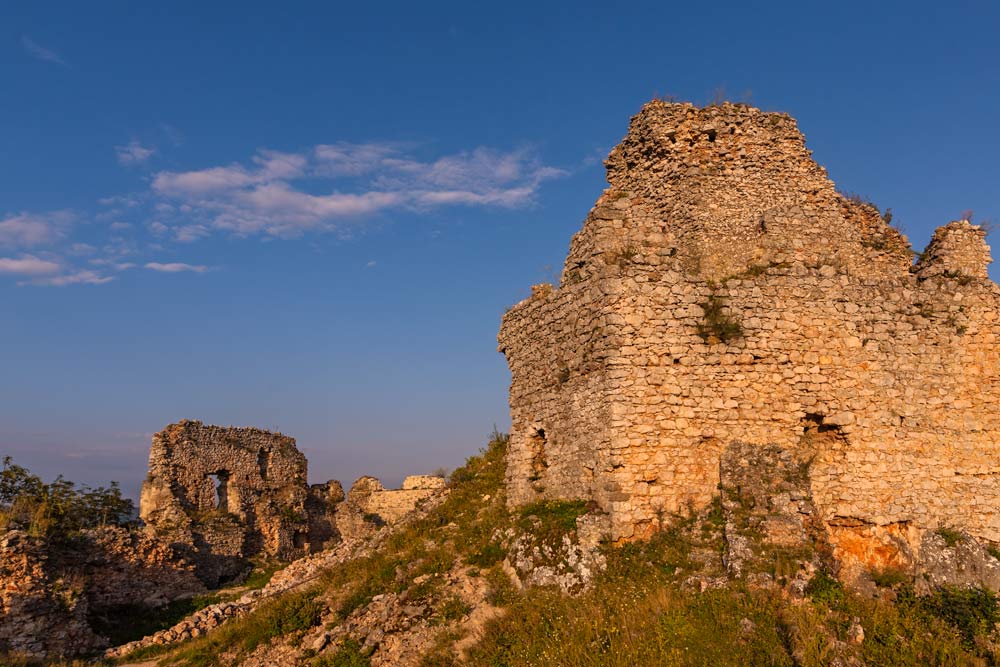
Slovakia has an impressive number of castles, chateaux and castle ruins for such a small country. There are more than 100 castles and at least twice as many manor houses, ranging from beautifully preserved castles to atmospheric ruins hidden in the countryside. One of the most famous is Spiš Castle, a UNESCO World Heritage Site and one of the largest castle complexes in Central Europe.
If you enjoy history, architecture or photography, don’t limit yourself to the best-known castles such as Bratislava Castle, Bojnice Castle or Orava Castle. Slovakia is full of lesser-known ruins, often sitting on hills with great views and accessible by a short hike. For an extensive list and map of castles, ruins and historic sites, check Hrady-Zamky.sk, which currently lists more than 100 ruins and numerous castles, chateaux and other historic sites.
Slovakia is also surprisingly rich in caves, although they are often overlooked by foreign visitors. There are more than 7,500 known caves in the country. 13 are currently open to the public, including the UNESCO-listed caves of the Slovak Karst and Dobšinská Ice Cave.
I particularly recommend visiting a cave in summer. While it can be hot outside, the temperature underground stays pleasantly cool throughout the year. Caves are not only an interesting experience, but also a very welcome escape from a Slovak summer heatwave. Just bring a light jacket, because “cool” underground can quickly turn into “I should have brought a jacket” cool.
Don't Skip Eastern Slovakia
Don’t limit your trip to Bratislava and the western part of Slovakia. Eastern Slovakia is often overlooked by foreign visitors, but it has some of the country’s most interesting and diverse places. In Košice, you can explore the historic centre and St. Elisabeth Cathedral. Further east you can visit the wine region of Tokaj, the turquoise Beňatina Lake, or the Andy Warhol Museum of Modern Art in Medzilaborce.
The region is also home to the historic town of Bardejov, a UNESCO World Heritage Site that was once visited by Empress Elisabeth of Austria, better known as Sisi. Add the High Tatras, traditional villages and the Slovak-Ukrainian border region, and you have plenty of reasons to travel beyond the more familiar tourist routes.
If you have enough time, I would definitely recommend going further east rather than turning back in Bratislava. You will see a less touristy side of Slovakia and experience a very different atmosphere from the capital.
Slovakia Has a Strong Spa Culture
Slovakia has a strong spa and thermal water culture, with more than 20 spa towns across the country. Some foces on traditional medical spa treatments and rehabilitation, while others offer modern wellness facilities, thermal pools and relaxation stays. Well-known destinations include Piešťany, Trenčianske Teplice, Rajecké Teplice and Bardejovské Kúpele.
You don’t have to book a traditional spa treatment to experience this part of Slovak culture. Many thermal pools and aquaparks are also open to day visitors and are a popular way to relax, especially in winter.
Sources
Sources: