
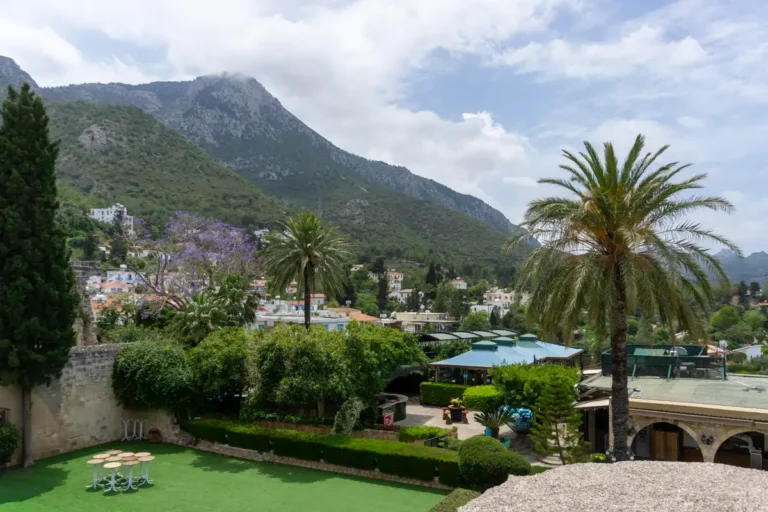
This is a collection of the most important things to know before visiting Cyprus, based on my personal experiences and visits to the island. It covers answers to some of the most common questions travelers have before visiting a new country. Besides language, currency, mobile data, and the political situation, I also cover practical information about car rentals, public transport, beaches, and opening hours.
Cyprus Has a Strong British Influence
Cyprus was under British rule from 1878 until it gained independence in 1960. The British influence is still easy to notice today. The island drives on the left, uses British-style electrical plugs, and English is widely spoken. Britain also retained sovereignty over two areas after independence — Akrotiri and Dhekelia, known as the Sovereign Base Areas. These British Overseas Territories cover parts of the southern and southeastern coast and are still home to British military facilities. You may therefore encounter British territory while travelling around Cyprus, without actually leaving the island.
Cyprus Drives on the Left
Cyprus drives on the left, a legacy of British rule. If you are renting a car, remember that the driver sits on the right-hand side and you should keep to the left side of the road. At roundabouts, traffic moves clockwise, so give way to vehicles approaching from your right. It may take some time to get used to if you normally drive on the right. Especially on smaller roads or when leaving a car park.
Cyprus Uses British-Style Electrical Plugs
Cyprus uses Type G electrical plugs, the same three-rectangular-pin system used in the UK. The electricity supply is 230V and 50Hz. So visitors from continental Europe usually only need a plug adapter, not a voltage converter.
If you forget one, don’t panic. Type G adapters are widely available in small local shops, including in smaller villages. I even found one in Mandria. Some hotels and other accommodation also provide adapters in the room or have them available at reception.
If you prefer to buy one before your trip, look specifically for a Type G (UK) travel adapter, ideally one that accepts your European Type C/F plug. I also find that the adapters commonly available in Cyprus can be smaller and more compact than some of the larger travel adapters sold in other countries.
Having your own car gives you more flexibility when planning your Cyprus itinerary. You can set your own schedule, make spontaneous stops, and combine several places in one day without being tied to bus timetables.
English Is Widely Spoken
English is widely spoken in Cyprus, and personally, I have never had a problem communicating in English, even with local residents. The official languages are Greek and Turkish. English is commonly used in tourism, shops, restaurants, and everyday communication.
In Ayia Napa, I noticed English especially often, which is not surprising given how popular the area is with international visitors. I also heard German there and met people from a surprisingly wide range of backgrounds. Including residents from places such as Kurdistan and Sri Lanka, as well as British people considering buying property on the island. I also came across quite a few Czech tourists.
For visitors, this makes Cyprus relatively easy to navigate without knowing Greek or Turkish.
The Island Is Politically Divided
Cyprus has been divided since 1974. Republic of Cyprus controlls the south. Turkish Cypriot-administered north is separated by a UN-controlled buffer zone known as the Green Line.
I personally noticed this division most clearly when using public transport. In the south, buses operate through established networks with published routes and timetables. In the north, transport is more fragmented and dolmuş minibuses are commonly used. There is no single public transport system covering the north, and schedules can be less straightforward to find or may vary by operator.
If you plan to visit both sides, keep in mind that you generally need to cross the Green Line at one of the designated crossing points and use separate transport systems on each side.
The Republic of Cyprus is generally a welcoming destination for LGBTQ+ travellers. Particularly in larger cities and popular tourist areas. Same-sex civil unions have been legally recognised since 2015, although same-sex marriage is not currently legal. You are likely to find the most visibly LGBTQ+-friendly atmosphere in places such as Nicosia, Limassol, Paphos, and especially Ayia Napa, which attracts a very international crowd.
For the Turkish-controlled north, I would be more cautious about making broad statements. LGBTQ+ travellers can visit, but the social atmosphere and legal framework are different from the Republic of Cyprus, so it is worth checking current local information if this is important to your trip.
Visas and Entry to Both Parts of the Island
If you are flying to Cyprus, there are three airports you may come across: Larnaca International Airport and Paphos International Airport in the Republic of Cyprus, and Ercan International Airport in the Turkish-controlled north. For international visitors, Larnaca and Paphos are the officially recognised entry points to the Republic of Cyprus.
Ercan Airport is different because the Republic of Cyprus does not recognise it as a legal point of entry. If you enter Cyprus through Ercan and later try to enter the Republic of Cyprus, the authorities may consider your entry illegal. You could potentially face problems when crossing the Green Line or leaving the island.
If you want to visit both the south and the north, the safest option is therefore to fly into Larnaca or Paphos. And then cross into the north through one of the designated crossing points. Your visa or entry requirements will depend on your nationality, so check the latest requirements before travelling.
The Euro and Turkish Lira Are Both Used on the Island
The official currency in the Republic of Cyprus is the euro. Turkish lira is the main currency in the Turkish-controlled north. Tourist areas in the north also widely accept euros, and you can generally pay by card at hotels, restaurants, and shops.
Personally, I had no problem paying by card when visiting the northern part of Cyprus, including Famagusta. However, I would still recommend carrying some cash with you Especially if you plan to use local transport or visit smaller businesses. When I tried to withdraw cash from an ATM in Famagusta, I found the interface inconvenient because it was not available in English, so I decided not to continue. I eventually exchanged money at a currency exchange office in Nicosia before travelling further into the north.
My tip: If you plan to visit both sides of the island, take some cash with you rather than relying entirely on cards or ATMs.
Tap Water Is Generally Safe to Drink
Tap water in Cyprus is officially considered safe to drink. Local authorities and health services monitor its quality. I didn’t drink tap water during my visits, so I cannot give my own experience with it. If you prefer to be on the safe side or simply don’t like the taste of tap water. Bottled water is easy to find and may be a more comfortable option.
One thing that surprised me in some accommodations was finding signs asking guests not to flush toilet paper down the toilet. Instead, you may be asked to use a small bin next to the toilet. You may find this a little inconvenient if you are not used to it. It is worth checking the instructions in your accommodation rather than assuming that toilet paper can always be flushed.
Check Your Mobile Data Before You Arrive
If you are travelling from the EU, your usual mobile plan may work in the Republic of Cyprus under EU roaming rules. During my visits, I used mobile data from my Slovak O2 plan without any problems in the south. However, the situation can be different in the Turkish-controlled north, so check your operator’s roaming conditions before crossing the Green Line.
When I visited Northern Cyprus, I bought a separate SIM card that also worked for me in the south. If you prefer an eSIM, Fonia Travel offers plans specifically for Cyprus and Northern Cyprus, as well as European Union+ packages that cover both sides of the island.
I also found a Fonia Travel discount code shared on Reddit: fnacad15. I tested the code (August 2026) and it was still working when I checked it, although discounts and codes can expire at any time.
Renting a Car Can Make Your Trip Easier
Renting a car can make travelling around Cyprus much easier. Especially if you want to visit remote beaches, villages, archaeological sites, and places that are not well connected by public transport. However, if you are planning to visit both the Republic of Cyprus and the Turkish-controlled north, check the rental conditions before booking.
You often cannot take rental cars hired in the south across the Green Line, or their insurance may not cover you in the north. If your rental company allows the crossing, you may need to purchase separate third-party insurance at the border. This does not necessarily cover damage to the rental car itself, so check exactly what your policy includes.
I have also come across frustrated traveller google reviews mentioning problems with insurance and rental-car rules at crossing points. For this reason, I would not simply assume that you can rent a car in the south and drive it anywhere on the island. Check the cross-border policy with the rental company in advance and get it in writing if possible.
If you’re planning to explore different parts of Cyprus, choosing the right base can save you a lot of time on the road. Consider staying in a location that fits your itinerary and makes it easier to reach the places you want to visit, especially if you plan to rely on public transport or explore by car. You can also explore accommodation options using the interactive map below.
Public Buses Are Useful, but Limited
I used public buses during my trips around Cyprus and found them quite useful, especially between the main towns. Intercity buses connect most of the major destinations. Larnaca, Nicosia, Limassol, Paphos, and Ayia Napa, and I generally found them reliable and on time. There are particularly good connections between Larnaca and Nicosia, while Ayia Napa also has frequent connections with Larnaca and Nicosia.
Buses also reach smaller villages, but they can be much less frequent. Rural services may run only a few times a day, so always check the timetable carefully and keep an eye on the last bus back.
The Turkish-controlled north uses a different public transport system, with dolmuş minibuses serving as a common option. You can find connections from Nicosia to places such as Kyrenia and Famagusta. The system can feel much less straightforward than in the south.
I personally found the situation particularly confusing when trying to get around the Deryneia crossing area. I had read about tourist buses operating there, but I did not see one or manage to catch one at the expected time. If you are crossing the Green Line on foot, I would therefore check the transport options for your exact crossing point in advance rather than assuming there will be a bus waiting on the other side.
My tip: For the south, public transport can be a very good option if you plan around the timetable. For smaller villages and trips involving the north, allow yourself more flexibility and always have a backup plan.
Hitchhiking Can Work Well Around Some Border Crossings
I tried hitchhiking around the Deryneia crossing point several times and had surprisingly good experiences. A young woman from Deryneia once stopped for me while she was heading into the north. Another time, a local man who lived nearby gave me a lift after seeing me walking along the road.
On a different visit, two men stopped after I crossed into the north and drove me directly to Salamis. One of them had previously studied archaeology, which made the ride even more interesting. On my way back, I also got a lift for several kilometres from a man from Kurdistan.
I don’t have enough experience to say that hitchhiking is common throughout Cyprus. I would not necessarily expect the same experience in the south. However, the Deryneia crossing seems to be a particularly practical place for it. There is a steady flow of people travelling between the border and nearby towns. Other travellers have also reported that getting a lift from the crossing towards Varosha can be relatively easy during the daytime.
I also noticed people hitchhiking around İsmet İnönü Boulevard in Famagusta. Particularly on the road towards the north. Still, hitchhiking always comes with personal-safety considerations. Use your judgement, avoid isolated areas, and don’t feel pressured to accept a ride.
Summer Can Be Extremely Hot
Cyprus can get extremely hot during summer, especially in July and August. I personally visited once in early September during the COVID period, and it was still very hot, including at night. During my other visit in May, temperatures felt much more comfortable overall, although walking for longer periods in direct sunlight could still become surprisingly hot.
If you plan to hike, explore archaeological sites, or spend a lot of time walking outdoors, don’t underestimate the Cyprus sun even outside the peak summer months. Bring water, sunscreen, a hat, and ideally plan longer outdoor activities for the morning or later afternoon.
Spring and Autumn Are Great Times to Visit
Spring and autumn can be excellent times to visit Cyprus if you want to avoid the busiest summer months. There are usually fewer tourists, and accommodation can also be cheaper than during the peak season. However, don’t assume that the weather will be mild. The sun can still be quite strong, especially when you are spending several hours walking or hiking outdoors.
Spring also brings greener landscapes and blooming flowers. Autumn is generally warmer and the sea remains pleasant for swimming. For photography, these seasons can also offer more comfortable conditions and fewer people at popular locations. If you are also considering a winter escape, check out my guide to Best Warm European Winter Destinations for Photography.
Not All Beaches Are the Same
Cyprus has a wide variety of beaches – organised tourist beaches with sunbeds and restaurants but also remote spots with very little infrastructure. Personally, I actually preferred many of the beaches in the Turkish-controlled north. I had encountered fewer people and found the atmosphere more relaxed. However, I noticed more litter on some beaches there. Particularly around the beach near Salamis. The level of maintenance can slightly vary.
In the south, some of the most interesting spots for me were around the sea caves and rocky coastline. You can find there smaller, quieter places away from the main beaches. The downside is that many of these spots are rocky rather than sandy, which may not appeal to everyone. If you are looking for a classic sandy beach with easy access and plenty of facilities, the organised beaches in the main resorts in Ayia Napa, Protaras, or Paphos, may be a better choice.
Cyprus Is Great for Hiking
Cyprus offers plenty of opportunities for hiking. There are some nice and easy coastal paths and shorter nature trails but also mountain routes in the Troodos Mountains. I have only done a proper hike towards Foinikas so far, but there are many other interesting routes around the island. The coastline near Petra tou Romiou (Aphrodite’s Rock), for example, has paths with sea views and rocky landscapes.
The Troodos Mountains are another great option, especially if you want to escape the heat of the coast. I would personally choose the cooler months for hiking there. Spring is particularly attractive if you want to see greener landscapes and wildflowers.
Archaeological Sites Need More Time Than You Might Expect
Some archaeological sites in Cyprus are much larger than they initially appear. Don’t plan them as a quick one-hour stop. Kourion is a good example, especially if you also want to combine the visit with the nearby beach or walk around the Zapallo Bay area. Salamis in Northern Cyprus is another site where you can choose between a shorter visit and spending much longer exploring the ruins.
How much time you actually need also depends on what you want to do. If you’re mainly interested in seeing the highlights, a shorter visit may be enough. But photographers can easily spend much longer at these sites looking for different compositions, light, and details.
Conclusion
Cyprus is a relatively easy destination to explore, but knowing a few practical details can make your trip much smoother. Some things may be different from what you are used to. My personal experiences also showed me that travelling outside the peak summer season can make exploring much more comfortable. Hopefully, these tips help you prepare better and enjoy your time in Cyprus with fewer surprises.
Sources
Sources: