
Bratislava has a great location, making it easy to reach several nearby countries within just a few hours. This guide covers not only well-known nearby cities but also some lesser-known destinations that see fewer tourists. All of the places on this list can be reached by public transport, either with a direct connection or with just one change.
Slovakia Trips
Here are the places I recommend for a day trip from Bratislava. I have already visited nearly all of them, except for the boat trips. Some combine sightseeing with wine, while others let you explore the countryside or even cross into a neighboring country on foot.
Červený Kameň Castle
Best for: castles / photography / wine / architecture / nature
How to get there: train / bus with one change
Approx. travel time: 1.5 hours
Without a car: moderate
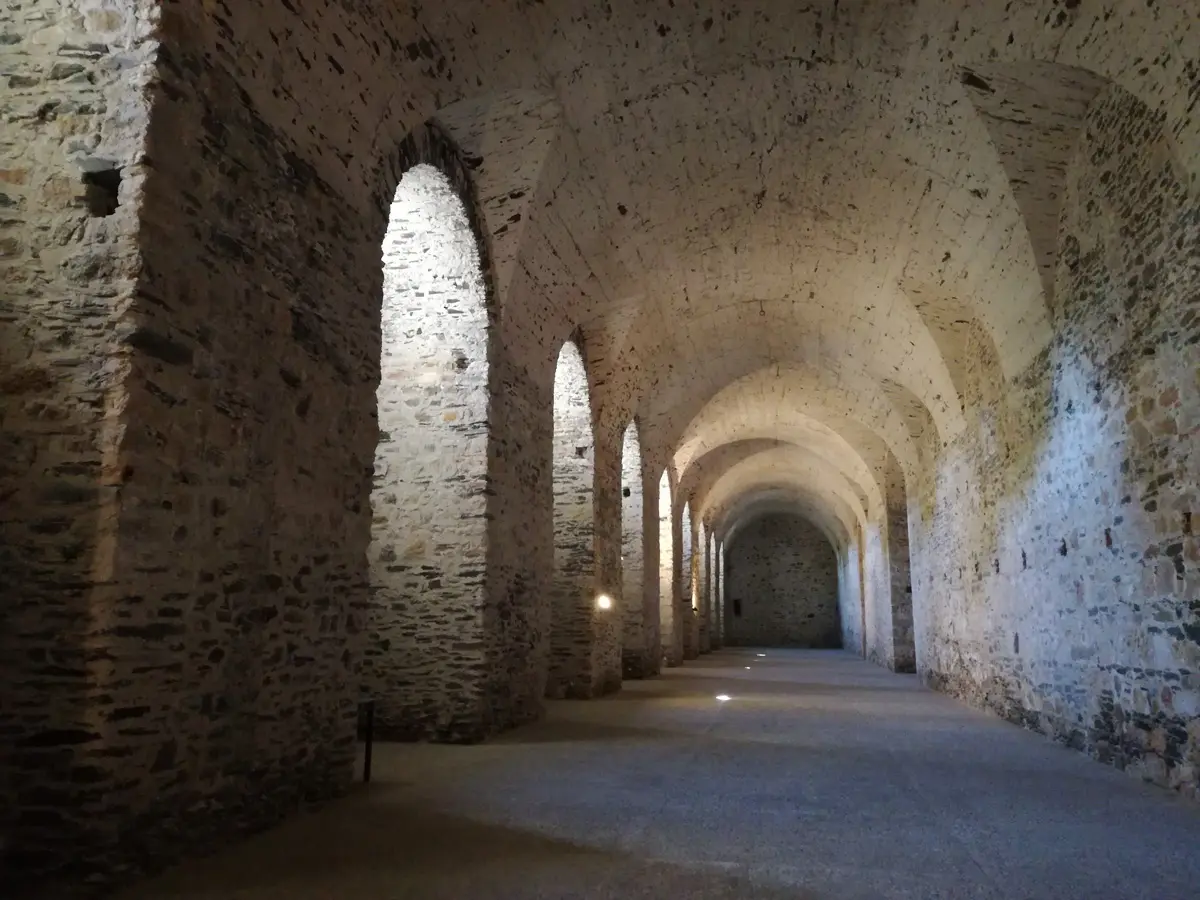
Why go: Červený Kameň is one of the best-preserved castles in Slovakia, set in the Little Carpathians. Its distinctive fortress architecture has also made it a popular filming location, including for Fantaghiro and Dragon’s Heart.
I visited Červený Kameň during the COVID period, and even then there were quite a few people around the castle. For me, however, the surrounding area was just as interesting as the castle itself. If you have some extra time, don’t leave immediately after visiting the interiors.
One of my favorite spots was the Calvary, which you can reach by following the Way of the Cross and walking uphill behind the castle’s burial chapel. It is a much quieter part of the complex. The surrounding meadows and forest paths also make the area worth exploring beyond the castle itself.
The castle is also in the Little Carpathian wine-growing region. The castle grounds themselves include a wine tavern, and wine-related tours can be a good option if you prefer an organized trip.
Tours I recommend:
Devín Castle
Best for: castles / photography / wine / architecture / nature
How to get there: Bus 29 takes you directly from Most SNP to Devín, and the main sights can be explored on foot.
Approx. travel time: 20 minutes
Without a car: Easy.
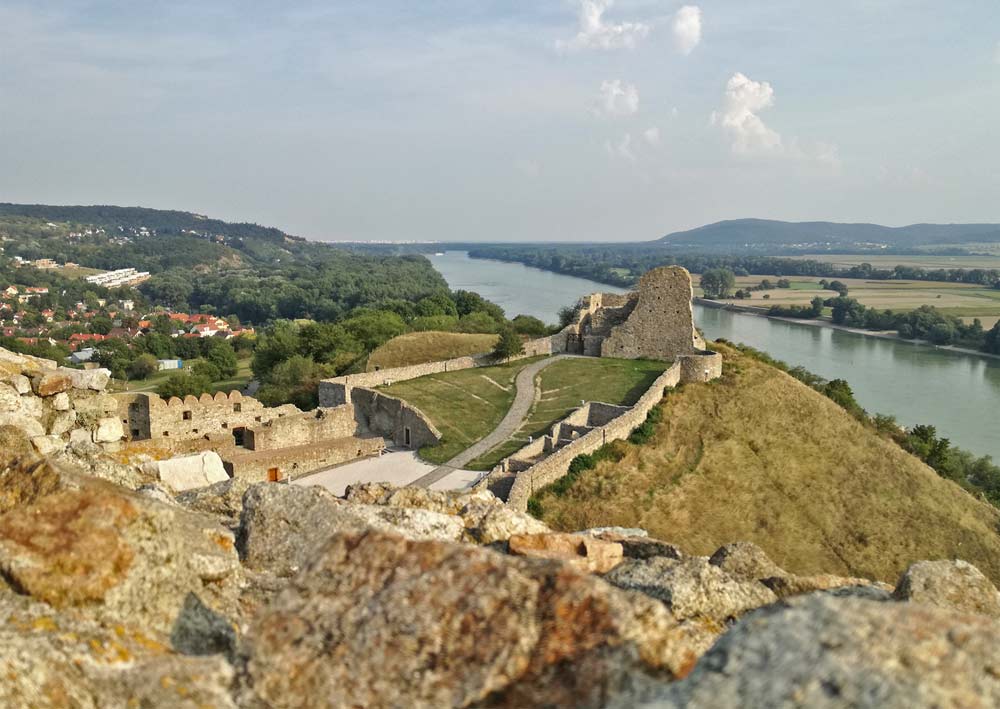
Why go: Devín Castle is one of the easiest day trips from Bratislava and offers much more than a historic castle. The ruins sit above the confluence of the Danube and Morava rivers, with views stretching across the surrounding landscape.
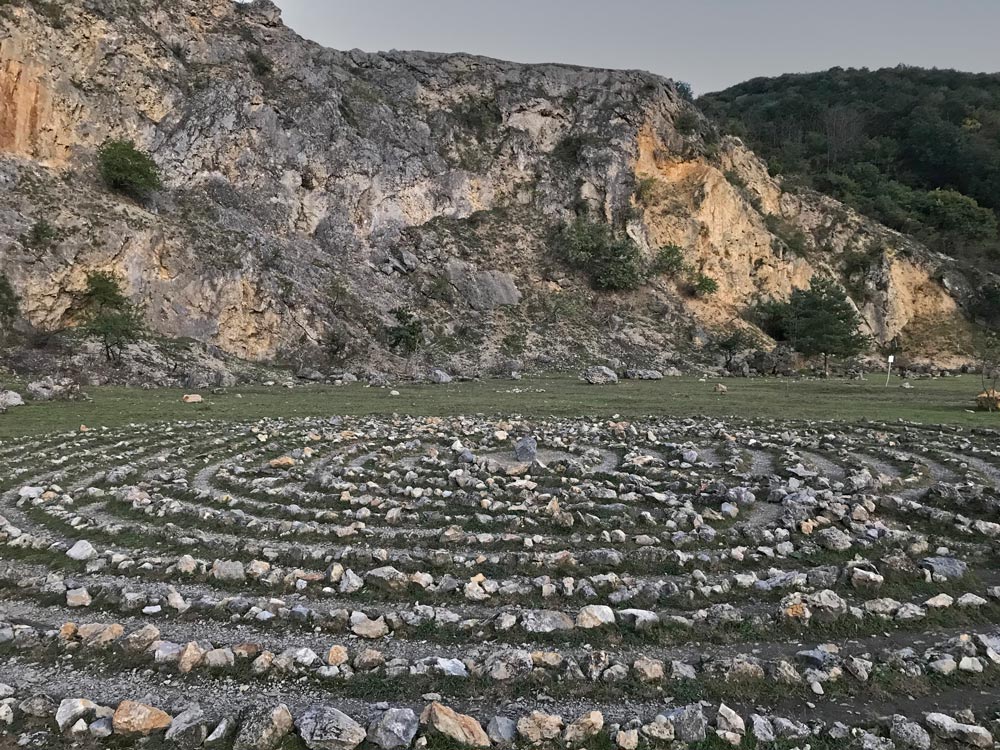
I recommend combining your visit with Sandberg. It is a former sand dune with unusual geological formations and wide views over the Morava River. You can also continue towards Waitov lom, a former quarry known for its distinctive rock formations and maze-like paths.
The area is particularly good for photography. You can combine ruins, cliffs, river views, forest paths, and unusual landscapes in one trip. If you visit in the warmer months, you can also stop at one of Devín’s wine-related spots.
Tours I recommend:
Trnava
Best for: street photography / architecture / brutalism
How to get there: direct train or bus
Approx. travel time: 30 minutes to 1 hour
Without a car: easy
Why go: Trnava is a compact city that works well for a short photography trip from Bratislava. Its historic centre is filled with churches, narrow streets, and remnants of the medieval city walls, but I also recommend looking beyond the obvious sights.
For modernist and brutalist architecture (House of Culture in Trnava, Trojičné námestie 10), check out the brutalist building in the city centre, the old water tower (Bellušov vodojem) or industrial builidng Mlyn NUPOD (Suchovská cesta 10). You can also visit Underground Trnava, which offers a different perspective on the city’s history.
Don’t skip the city walls either. Parts of the medieval fortifications are still preserved around the historic centre, making them an interesting contrast to the later architecture.
Trnava is small enough to explore on foot, so you can easily combine historic architecture, brutalism, street photography, and less obvious urban details in one afternoon.
Komárno
Best for: street photography / architecture / border with hungary by feet / millitary buildings
How to get there: direct train or bus
Approx. travel time: 2 hours
Without a car: easy
Why go: Komárno is one of my favorite places in Slovakia for street photography. The city is full of interesting architectural details, old facades, textures, unusual buildings, and small urban scenes that are easy to miss if you only follow the main sights.
The area is also interesting for industrial landscape photography. Bridges, railway infrastructure, industrial buildings, and the Danube create a very different setting from Slovakia’s historic towns.
One of the most interesting things about the area is its military history. Fortifications can be found on both sides of the Slovak-Hungarian border.
You can also walk across the bridge into Hungary, making this an unusual day trip where you can visit two countries on foot. I personally explored the Slovak side first and spent several hours photographing the city centre. Then I walked across the bridge into Hungary and visited Csillagerőd in Komárom.
There is public transport between the Slovak and Hungarian sides, but connections are not particularly frequent, so check the timetable before planning your trip.
If you want to photograph both sides of the border and visit the fortifications, start early. Komárno itself can easily take several hours if you are photographing along the way. If you add the Hungarian side, the trip can become a full-day excursion.

Danube Boat Trips
- Best for: landscape photography / architecture / border with crossings / sunsets
- How to get there: direct boat trips from Bratislava
- Approx. travel time: depends (from 45 min to 4 or more hours)
- Without a car: easy
Why go: A boat trip on the Danube is an easy way to see Bratislava and its surroundings from a completely different perspective. The river gives you opportunities for landscape and architecture photography. Especially if you want to photograph Bratislava’s skyline, bridges, riverbanks, and changing landscapes without spending the day walking between locations.
The shortest option is a 45-minute panorama cruise, which is a good choice if you simply want to get on the river and take some photos without committing to a full-day trip. Longer cruises can take you towards places such as Devín or beyond Bratislava, giving you more time to photograph the landscape and the Danube from the water.
I have not tried these boat trips myself yet, but I am planning to test one of the shorter cruises. If you are mainly interested in photography, I would probably start with the 45-minute option and see how useful the perspective from the boat is. For the best light, consider a late-afternoon or sunset cruise.
Tours I recommend:
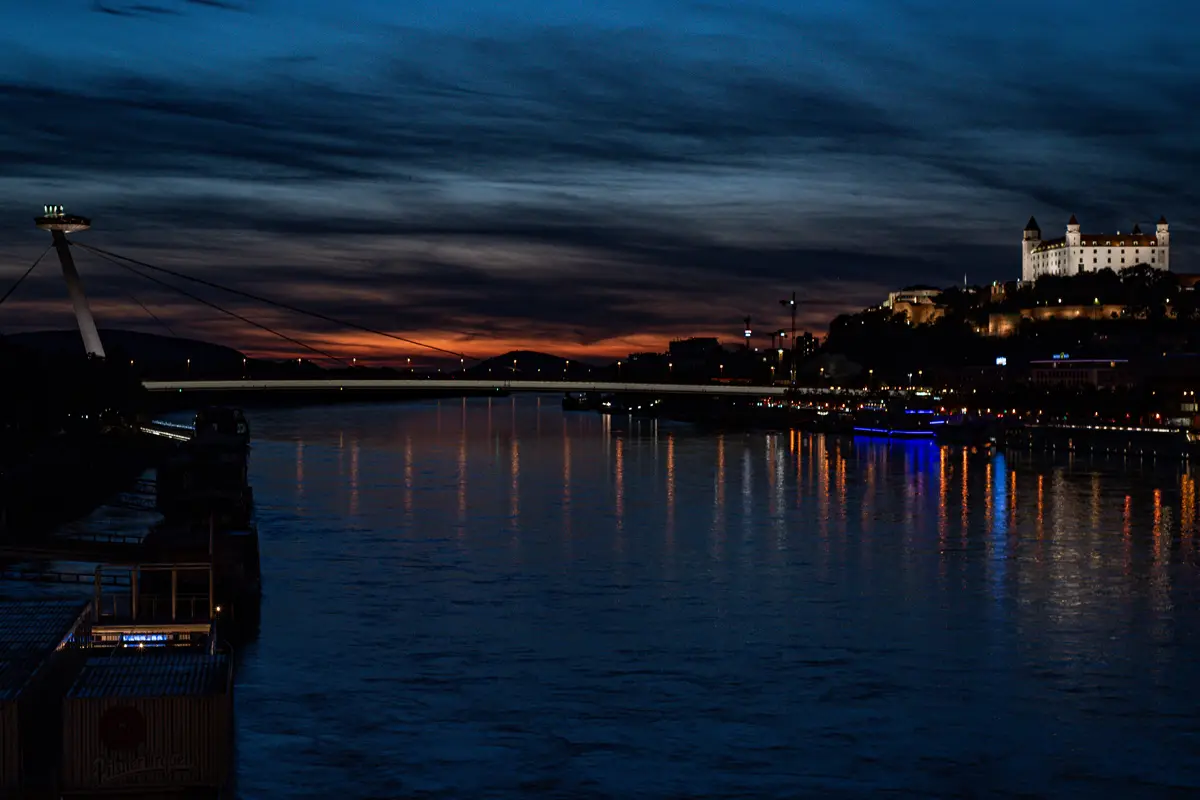
If you are planning to photograph the destination, check the golden hour and blue hour times for your chosen date. This is especially useful in winter, when daylight disappears earlier.
Small Carpathian Wine Route
- Best for: landscape photography / sunsets / architecture / street photography
- How to get there: direct bus or train
- Approx. travel time: Pezinok 20–40 minutes / Modra up to 1 hour
- Without a car: Easy
The Slovak wine region is a good option if you want to get out of Bratislava without planning a complicated day trip. Pezinok and Modra are two of the easiest places to visit, and both can be reached by public transport.
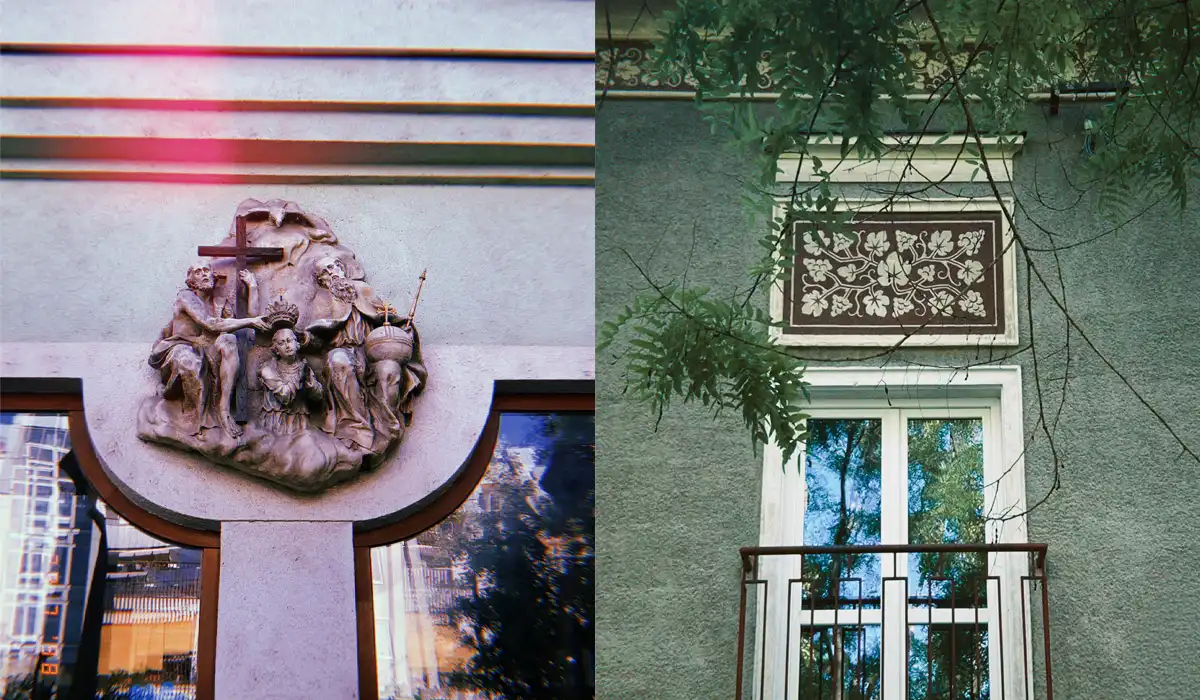
I have only visited Pezinok so far, but I found the town more interesting for photography than I expected. The historic centre is relatively small, but you can find interesting architectural details, older buildings, and a few industrial-looking areas. Some former industrial spaces have also been reused for modern purposes. For example, there is a Billa supermarket in one of these buildings.
Some local shops still have old-school graphic signs and painted lettering, which can make good subjects for street photography. You can also find wine-related details throughout the town.
One of the more unusual places to visit is Šimák Zámok Pezinok. I have not been inside the castle, but when I visited, the peacocks were walking around the grounds. There is also a replica of the Statue of Liberty nearby, which makes the place even more unusual for photography.
Modra is another good option if you want to explore more of the wine region. I would combine either town with a walk through the surrounding landscape rather than treating it only as a sightseeing trip.
Tours I recommend:
Mohyla Milana Rastislava Štefánika
- Best for: landscape photography / sunsets / architecture / hiking
- How to get there: bus and train with one change, usually in Piešťany or Jablonica. From Brezová pod Bradlom, it is about a one-hour walk to the monument on the hill, around 4 km.
- Approx. travel time: up to 3 hours
- Without a car: Moderate
The Mohyla Milana Rastislava Štefánika is a more demanding day trip from Bratislava, but it is worth considering if you want to combine photography with a hike. Public transport gets you to Brezová pod Bradlom, but the final part has to be done on foot (or take a taxi).
I walked up to the monument myself and spent several hours there photographing it and the surrounding landscape. I visited on a warm day and went after lunch, so I was photographing in direct sunlight until around 4 PM. The location is also quite windy, which is something to keep in mind when planning your visit.
The monument itself has a striking geometric design and sits on a hill with wide views over the surrounding countryside. The walk and the open landscape also make this a good place for landscape photography. If you want better light, I would consider arriving later in the day rather than doing what I did and photographing it through the strongest afternoon sun.
Because getting there takes longer and the return journey by public transport can be less convenient, I would also consider staying overnight in the area. This makes more sense if you want to explore the surrounding hiking routes rather than visit only the monument.

Vienna, Austria
- Best for: photography / architecture / history / exhibitions
- How to get there: direct bus or train
- Approx. travel time: one hour
- Without a car: Easy
Vienna is one of the easiest international day trips from Bratislava, but it is also a city where you need to set your priorities. I have visited Vienna several times, and each trip has been different because I usually focus on one particular area or activity.
For example, I have combined the Wotruba Church with the Technical Museum of Vienna on one day. On another trip, I focused mostly on the city centre. I have also visited Vienna for events, including Vienna Pride, spent a day photographing graffiti along the Danube Canal, and even planned a shopping trip that turned into an afternoon at a Banksy exhibition when it started raining.
The city is large enough that trying to see everything in one day is not realistic. Instead, I recommend choosing one or two priorities and building your day around them. This works particularly well if you are interested in photography, because moving between locations and stopping to photograph details can take much longer than expected.
Vienna also works well when the weather changes your plans. There are plenty of museums, exhibitions, galleries, historic interiors, and other indoor options that you can use as a backup when it starts raining.
If you are visiting from Bratislava for only one day, I would decide what you want to photograph or experience before you go. You can then choose locations that are relatively close to each other rather than spending most of the day travelling across the city.
Tours I recommend:

Neusiedler See, Austria
- Best for: photography / landscape / summer activities / unusual places
- How to get there: train with one change, usually in Parndorf Ort
- Approx. travel time: up to one hour
- Without a car: Moderate to complicated
Neusiedler See is a good option if you want to explore a different landscape just across the Austrian border. It is particularly popular in summer, but I actually visited during a rainy autumn day and found the atmosphere much more interesting for photography.
I started with the Tabor-Ruine in Neusiedl am See and then explored some of the town before continuing towards Podersdorf am See. I also came across the Academy of Economic Neusiedl am See, which was an unexpected architectural detail along the way.
From Neusiedl am See, I took a bus to Podersdorf to see the Leuchtturm Podersdorf am See. When I arrived, there were only two other people there who were also filming something. The weather was heavily overcast, the lake was almost empty, and the whole place had a strange, mysterious atmosphere. It felt almost like a scene from a horror film rather than a typical summer destination.
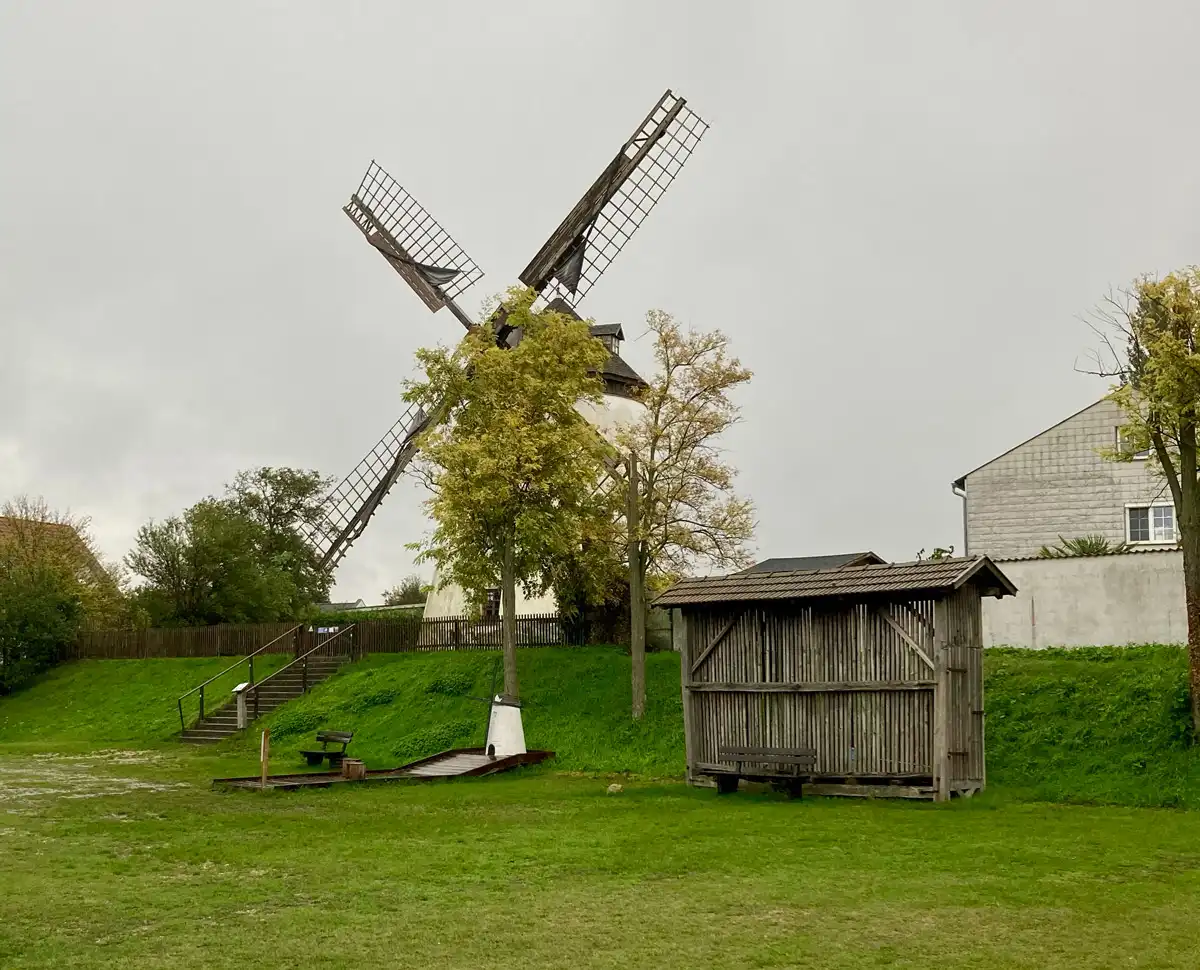
I also visited the Windmühle Podersdorf, another landmark that is easy to combine with the lighthouse. If you have more time, there are other places around the lake that could make the trip more interesting for photography. The Kriegsgefangenenfriedhof Frauenkirchen, for example, is one place I would consider adding to a future visit.
The main difficulty is getting around. Public transport can take you between some of the towns, including a bus connection from Neusiedl am See to Podersdorf, but exploring the lake properly is much easier by bike. If you want to visit several locations in one day, I would seriously consider cycling rather than relying entirely on buses.
The other side of the lake also has places worth exploring, including Rust, which is another town in the wider wine region. If you visit in summer, expect a very different experience from mine.
Tours I recommend:
Győr, Hungary
- Best for: photography / architecture / brutalism / riverside walks
- How to get there: direct bus
- Approx. travel time: up to one hour
- Without a car: easy
Győr is one of the easiest Hungarian day trips from Bratislava and a good choice if you enjoy photographing architecture rather than following a typical sightseeing checklist.
The city has a compact historic centre with Baroque buildings, small squares, churches, and narrow streets. It is also located at the meeting point of several rivers, so you can combine street photography with a walk along the waterfront and across some of the city’s bridges.
For modern architecture, look for the National Theatre of Győr, a striking Brutalist building from the 1970s. The nearby riverside areas and bridges offer more opportunities for architectural and street photography.
If you want a viewpoint, head towards Bishop’s Castle-Tower on Káptalandomb. For a quieter walk, explore the riverbanks and cross Kossuth Bridge, which has views towards the meeting point of the Rába and Moson-Danube rivers.
If you have more time, you can also consider extending the trip to Pannonhalma, which is often recommended as a worthwhile excursion from Győr.
Tours I recommend:
Brno, Czechia
- Best for: photography / architecture / brutalism / underground / nightlife
- How to get there: direct bus or train
- Approx. travel time: up to two hours
- Without a car: easy
Brno is one of the best day trips from Bratislava if you are interested in modern architecture, Brutalism, and less conventional sights.
I visited Brno mainly to photograph its architecture, including the Ingstav building. Other places worth adding to a photography route include the Vinařská dormitories and Zvonařka Central Bus Station, one of the city’s most distinctive Brutalist structures.
Brno also has an interesting underground side. You can visit underground cellars, historical tunnels, Cold War shelters, and the 10-Z bunker. The city is therefore a good choice if you prefer dark history and unusual architecture over conventional sightseeing.
For a different atmosphere, explore Brno after dark. The city has a strong student population, alternative bars, clubs, and nightlife, which makes it particularly interesting for anyone into goth, darkwave, or alternative scenes.
You can easily spend a full day photographing the city, visiting underground sites, and exploring its historic centre on foot.
Tours I recommend:
Final Words
Bratislava is a great base for exploring Central Europe without a car. You can reach castles, wine towns, historic cities, Brutalist architecture, rivers, and even neighboring countries by public transport.
The best day trips from Bratislava depend on what you want to photograph or experience. For architecture, Brno, Trnava, and Vienna offer plenty to explore. For nature and landscapes, Devín, Neusiedler See, and the Štefánik Mound are better choices. If you want something a little different, Komárno lets you cross the border into Hungary on foot, while Győr combines historic streets with modern architecture and riverside walks.
Sources
Sources: