
Limassol Castle has a great location in the city center, right next to the Old Port and Limassol Promenade. This makes it one of the historical landmarks in the city that is frequently visited by tourists. In this article, I will share my experience visiting the castle and give you some practical tips. I will also explain how it connects to the history of the Knights Templar on the island.
A Brief History of Limassol Castle
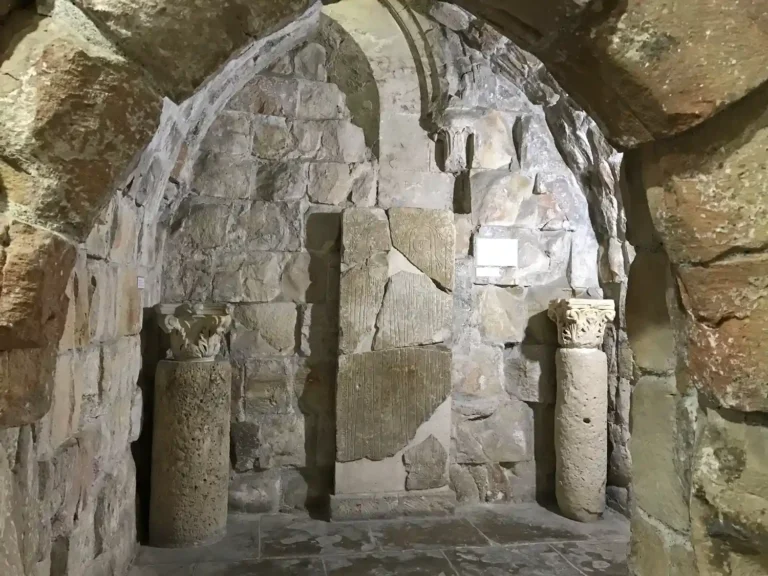
Limassol Castle has a much older history than its current appearance might suggest. Archaeological excavations revealed that the people built the castle over an Early Christian basilica dating from the 4th to 7th centuries and a Middle Byzantine monument from the 10th to 11th centuries. Archaeologists also found evidence of an important church beneath the castle, possibly the first cathedral in Limassol.
According to the medieval historian Etienne de Lusignan, the original castle was erected in 1193 by Guy de Lusignan, although the first official reference to the fort dates to 1228.
Attacks and earthquakes damaged the castle several times over the following centuries, and authorities carried out various restorations.
Richard the Lionheart and the Knights Templar
The castle is also associated with one of the most famous episodes in Cyprus’s medieval history. According to tradition, Richard the Lionheart married Berengaria of Navarre in Limassol in 1191 during the Third Crusade. He also crowned her Queen of England.
Richard’s arrival in Cyprus was also closely connected to the Knights Templar. After taking control of the island from Isaac Komnenos, Richard sold Cyprus to the Templars in 1191–1192. Their rule was short-lived, however, and after a revolt they sold the island to Guy de Lusignan. This is the main historical connection between Limassol and the Knights Templar rather than the castle itself being a Templar-built fortress.
If you are interested in the Templars’ wider role in Cyprus, I have covered their history and other places connected with the order in my guide to Templar Sites in Cyprus.
The castle continued to serve a defensive purpose through the medieval and Venetian periods. After the Ottomans took Cyprus, they incorporated the remains of the earlier castle into a new fortification. It was completed around 1590, giving the castle much of the appearance it has today. Parts of the building were later used as prison cells, which remained in use until 1950.
If you want to explore more of Cyprus beyond Limassol, having a rental car can be a convenient option. It gives you more freedom to visit beaches, villages, archaeological sites, and other attractions at your own pace.
Limassol Castle Exterior
When you enter the castle grounds, you will notice plenty of greenery, plants, and tall trees surrounding the building. The vegetation gives the area a somewhat untamed appearance and can make it difficult to see the entire castle structure from outside.
From the exterior, Limassol Castle has more of a cube-shaped fortress appearance. You can see that the building has several levels, but there are very few windows visible on its massive stone walls. The fortress looks quite simple and imposing compared with some of the more elaborate castles in Cyprus.
There are also some ruins scattered around the castle garden. If you’re lucky, you might find one of Cyprus’s famous cats sleeping or resting among them — or even sitting on top of the ruins.
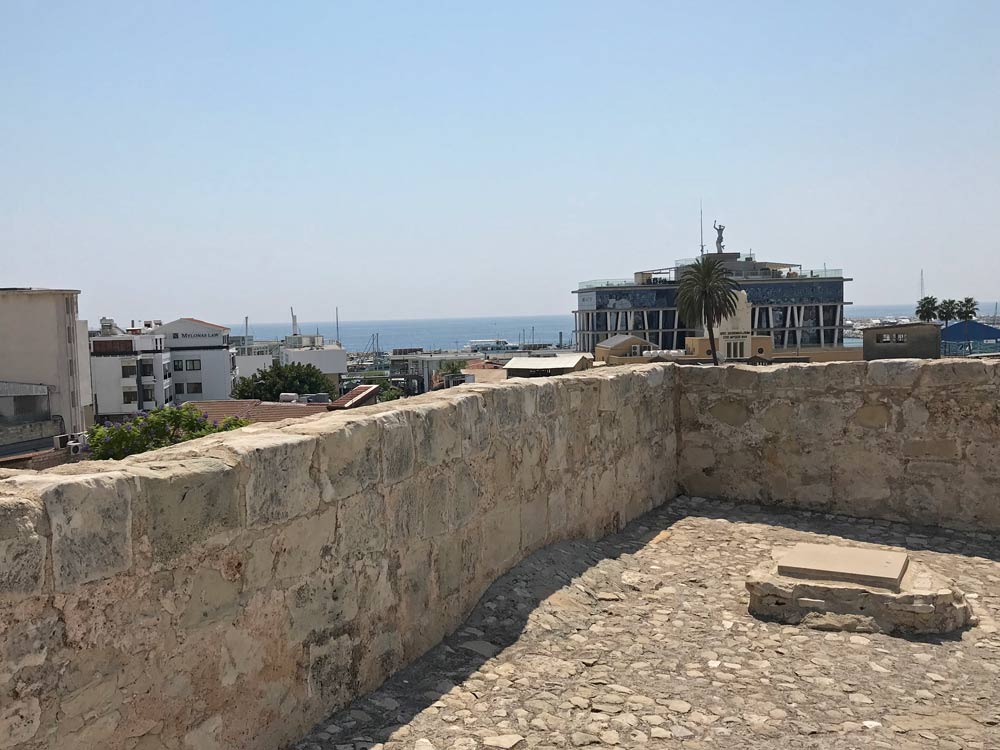
From a photography perspective, however, the castle is not particularly impressive when viewed from ground level. Its massive, cube-like shape and the surrounding vegetation make it difficult to find an interesting composition from the outside. The experience is quite different once you climb to the rooftop, where you get a better perspective of the castle and the surrounding area.
Inside Limassol Castle
Inside, Limassol Castle feels much more spacious than its compact exterior might suggest. The thick stone walls and relatively enclosed rooms also provide welcome shade from the Cyprus sun. This makes the interior a pleasant place to explore during a hot day.
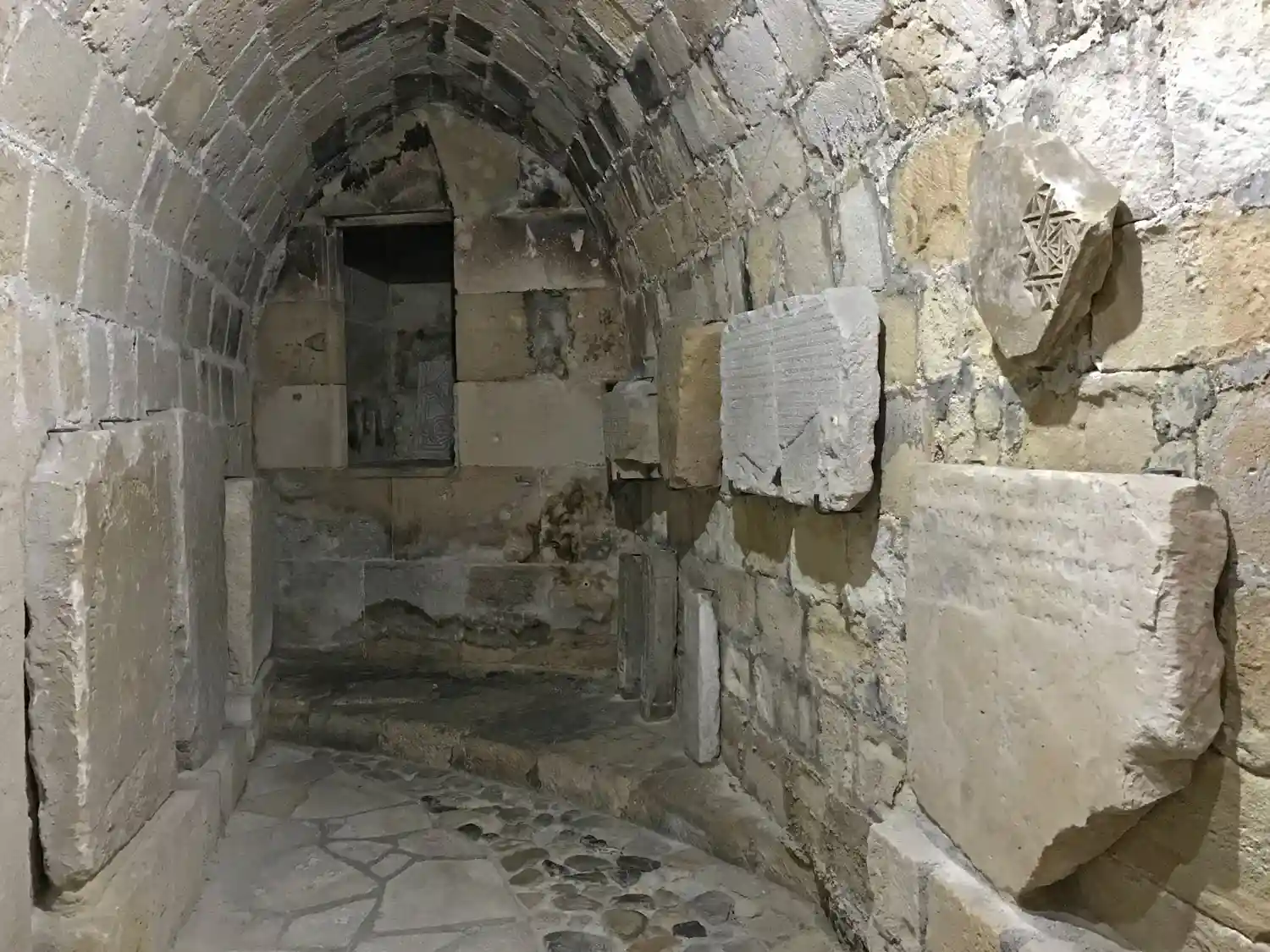
The lower levels of the castle contain traces of earlier structures, including remains associated with the churches that once stood on the site. You can also explore the basement, which gives you a better sense of the castle’s old defensive character.
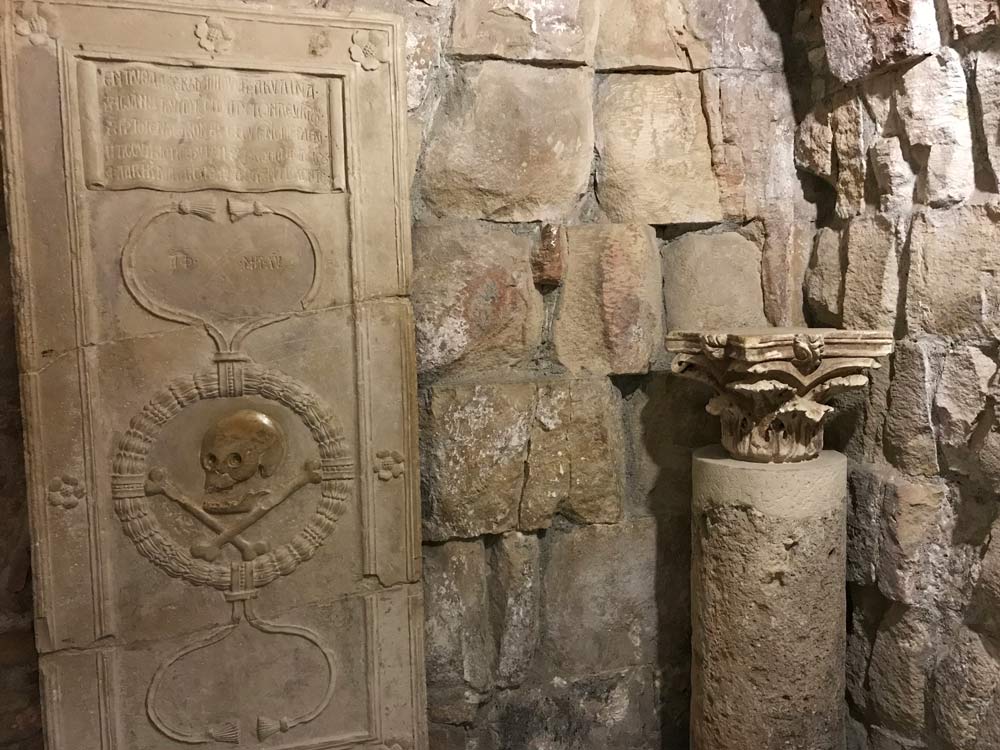
One of the details that caught my attention during my visit was the collection of tombs and gravestones. Some of the carved stones feature skull motifs and other decorative details, giving them a particularly striking and slightly macabre appearance. These are among the details I found most interesting to photograph inside the castle.
The castle also contains various architectural and decorative elements from different periods of its history. Heraldic symbols can be seen on some of the walls, while parts of the building retain features connected with its former religious and military uses.
The courtyard provides another open area to explore, with archaeological remains and historical objects displayed around the castle complex. The exterior may not offer the easiest photography opportunities from ground level. But the interior has plenty of smaller details worth looking for.
You will also learn more about Limassol's architecture and history while getting local recommendations for places to eat, drink, and explore. The small group is limited to 10 people, and the tour is currently rated 4.9/5.
Limassol Castle – Cyprus Medieval Museum
The Cyprus Medieval Museum is housed inside Limassol Castle. It covers the history of Cyprus from the Byzantine period through the medieval era and into the Ottoman period. The collection includes religious objects, coins, weapons, armour, pottery, and other artefacts from everyday life.
As you walk through the museum, you can also see architectural elements and objects connected with the different periods of the castle’s history. The collection gives you a better idea of how Cyprus changed under Byzantine, Lusignan, Venetian, and Ottoman rule.
The museum is not particularly large, so you can explore it relatively quickly. However, it adds useful historical context to the castle and is worth seeing if you are already visiting Limassol Castle.
Limassol Castle Location & How to Get There
As I mentioned earlier, Limassol Castle lies in the historic part of Limassol. It stands right in the heart of the Old Town, next to the Old Harbour. There is also an Old Harbour bus stop nearby, making it relatively easy to reach by public transport.
Several important landmarks and museums are within walking distance of the castle. You can also walk there from the main EMEL bus station. The walk takes around 15 minutes via Irinis Street.
Limassol Castle Opening Hours & Tickets
Limassol Castle is open every day. From Monday to Saturday, it is open from 9 AM to 5 PM. On Sundays, it is open from 10 AM to 1 PM. The castle is closed on public holidays.
The admission fee (2026) for a single adult is €4.50. Groups of 10 or more people can receive a 20% discount. You can also purchase a special entry card from the Department of Antiquities. The card provides access to various museums and ancient monuments. A one-day card costs €8.50, a three-day card costs €17, and a seven-day card costs €25.
Opening hours and admission fees may change. It is always a good idea to check the latest information on official tourism websites such as Visitcyprus.com before your visit.

What to See Near Limassol Castle
Since Limassol Castle lies in the heart of the city, there are plenty of other interesting places to see nearby. You can easily continue exploring the Old Town on foot after visiting the castle, with the Old Harbour, Limassol Promenade, and several historic buildings all within walking distance.
One of the buildings that caught my attention was the Ayia Napa Cathedral. A beautiful Orthodox church that is stands just couple of meters further. Its traditional architecture creates an interesting contrast with the more modern and sometimes rather rough-looking streets around it.
Limassol also has quite a lot of graffiti and urban vandalism, including around some of its historic buildings. I actually found this contrast quite interesting from a photography perspective. I photographed graffiti on a wall near the church. The combination of the old architecture and tagged surroundings reminded me of the historic centre of Bratislava, where some older buildings and walls have a similar layer of graffiti.
So if you are exploring the area with a camera, don’t just look for the obvious landmarks. Some of the more unexpected details around them can make for more interesting photographs.

Is Limassol Castle Worth Visiting?
I think Limassol Castle is worth visiting, especially if you are interested in the history of Cyprus. It is not the most spectacular castle for photography from the outside, but there are plenty of interesting historical details to discover inside.
One of the highlights for me was the rooftop. Once you climb to the top, you get a completely different perspective of the castle and the surrounding area. The castle is also a great place to take a break from the strong Cyprus sun, especially during the hotter months.
The castle is relatively easy to include in a walk around Limassol Old Town, and you do not need several hours to see it. One hour is probably enough. If you are mainly looking for dramatic castle photography, there are more impressive fortresses elsewhere in Cyprus. But for history, architecture, and a quick break from the heat, Limassol Castle is definitely worth adding to your itinerary.
Sources
- Limassol Castle — https://www.visitcyprus.com/discover-cyprus/culture/sites-and-monuments/lemesos-limassol-medieval-castle/
Sources: